
Lalit Shastri
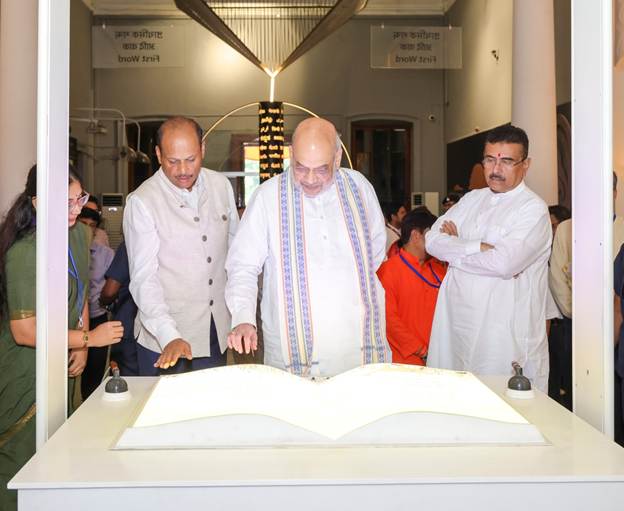
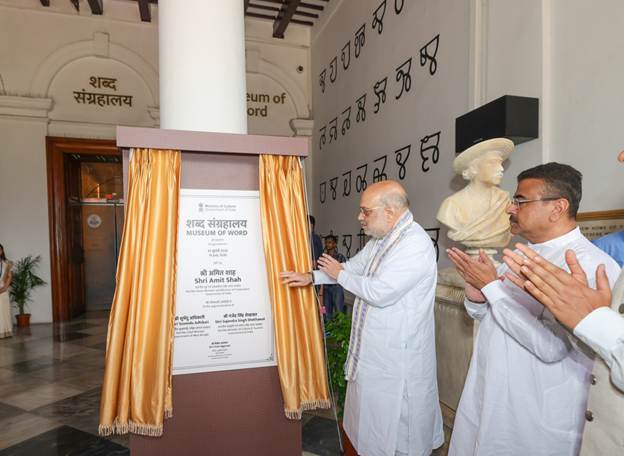
Union Home Minister Amit Shah, while inaugurating the language museum Shabdalok in Kolkata, said that language is the vehicle through which culture is expressed and that words give shape to emotions. Without passing this linguistic inheritance to future generations, he argued, India’s cultural renaissance would remain incomplete.
Amit Shah’s observation that language is the medium through which culture finds expression deserves to be viewed beyond contemporary politics. It reminds us that nations are built not merely by constitutions and institutions but also by the words through which those institutions are understood. A language is never just a collection of words. Every word carries within it centuries of memory, philosophy and civilisational experience.
Independent India witnessed this debate from its very inception.
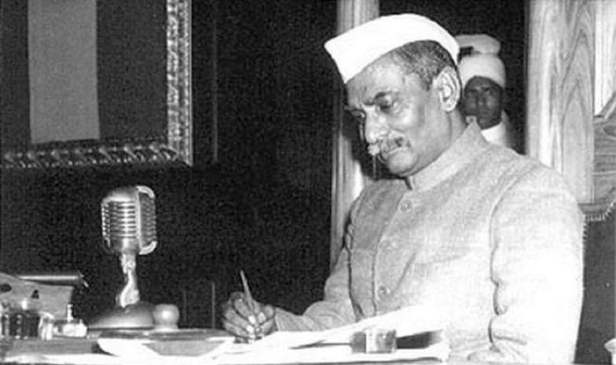
The translation of the Constitution of India from its original English text into Hindi was a collaborative effort of immense historical importance. It was done by a Hindi Translation Committee (and Committee of Experts) appointed by the President of the Constituent Assembly, Dr Rajendra Prasad, who on adoption of the Constitution became the first President of India.
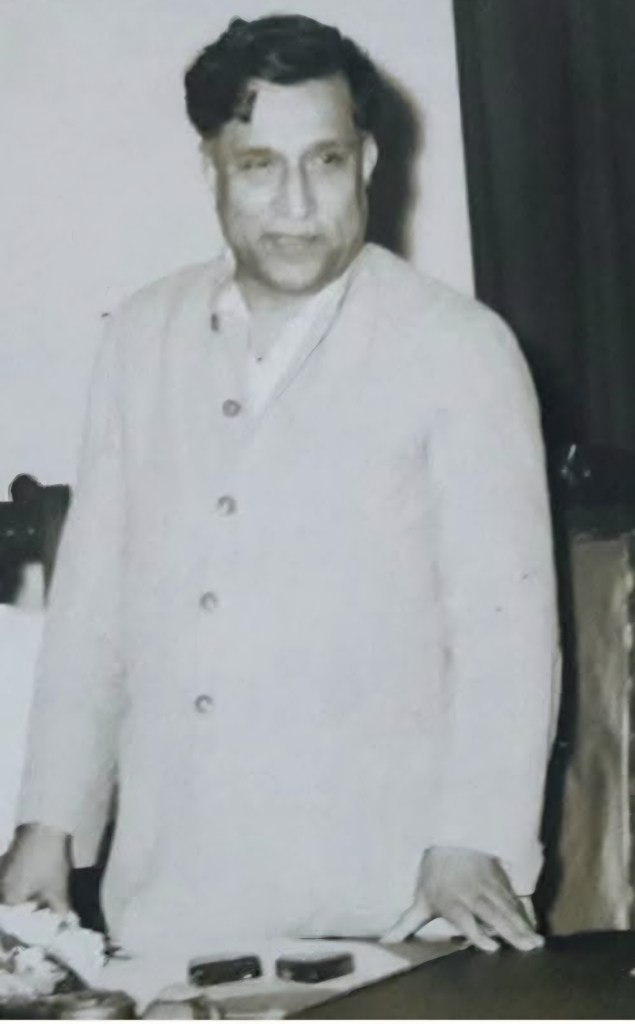
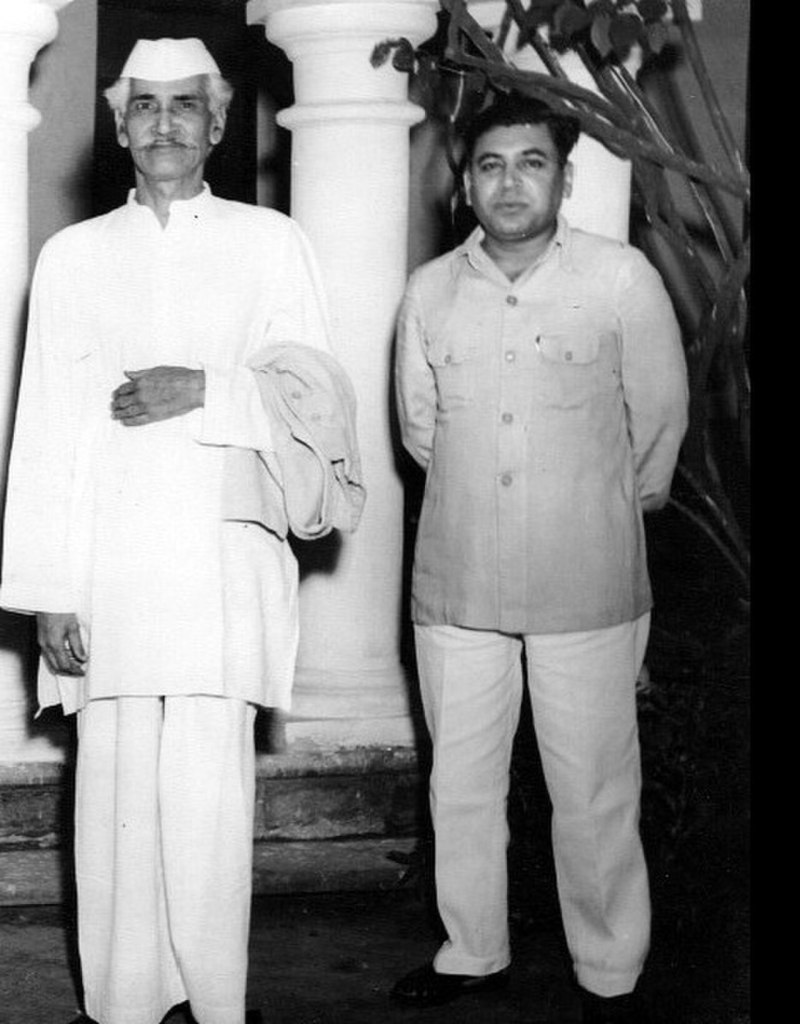
Rajkumar Dr. Raghubir Sinh, the scion of the erstwhile princely State of Sitamau in central India, a prominent scholar, historian, jurist, and Parliamentarian, was a member of the Constituent Assembly of India and contributed to the foundational debates and the drafting of the Constitution and its Hindi translation.
As recalled by my father, the late scholar, freedom fighter Anant Maral Shastri,* when the Hindi version of the Constitution was being prepared, he was in the thick of things. At the time, my father was the editor of Aajkal – a popular Hindi magazine published by the Publications Division of the Government of India. As he was was closely known to both, Dr Rajendra Prasad and Dr. Raghubir Sinh, he was asked to join the discussions and process of vetting the Hindi translation of the Constitution. He found it very painful when he gathered from these stalwarts that instead of consenting to India’s judicial institutions being known by Sanskrit-derived terms such as न्याय (Nyay) for Justice, Nyayalaya (न्यायालय) for Court, and Nyayadhish (न्यायाधीश) for Judge, Prime Minister Jawaharlal Nehru was more determined to employ persian origin expressions like इंसाफ़ (Insaaf) for Justice अदालत (Adalat) for Court and क़ाज़ी (Qazi) or मुंसिफ (Munsif) for Judge, and the extension of these terms -Munsif Adalat.
Fortunately for India, those who steered the translation of the Constitution took the firm stand that if we give up the Hindi terms derived from Sanskrit, we should even be prepared to bury not only Sanskrit but all that symbolised the best of Indian culture and civilisation. This was not merely a linguistic preference. It was a question of whether independent India would retain the conceptual vocabulary inherited from its own civilisational tradition or replace it with terminology detached from those roots.
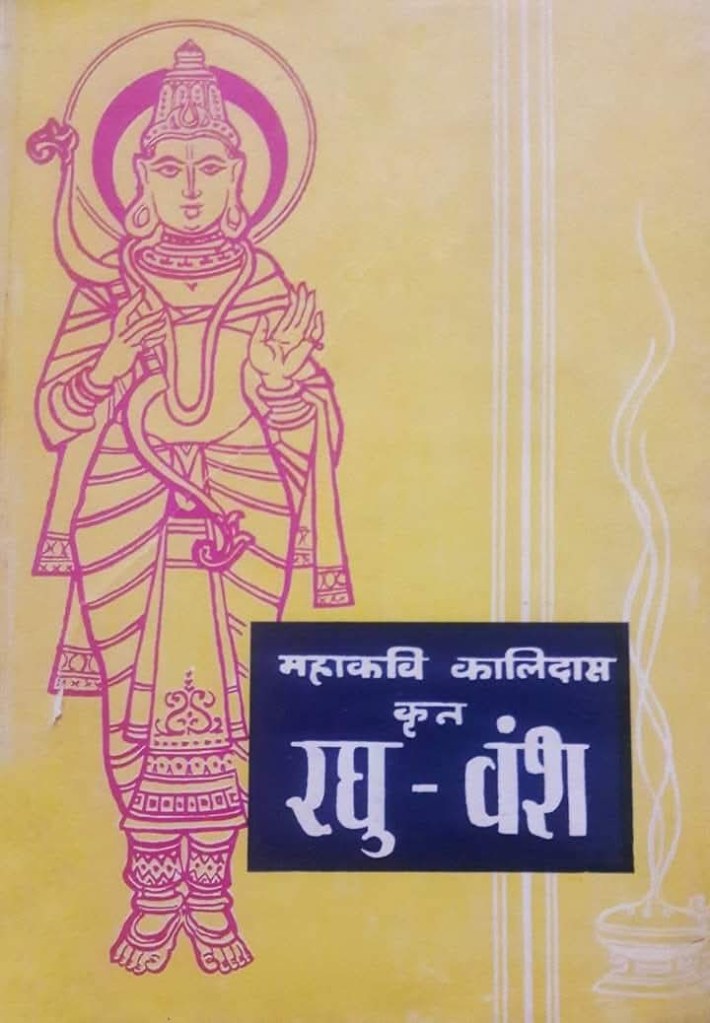
Following the formation of Madhya Pradesh in 1956, the State government decided—on the occasion of the inauguration of the National Kalidas Festival by Nehru – to publish a Hindi translation of Raghuvansha by ancient India’s greatest Sanskrit poet and playwright (originally in Sanskrit). My father took up the responsibility and completed the task of translating Raghuvansha from Sanskrit within a brief time span. Upon reviewing the translated text prior to its formal presentation, Jawaharlal Nehru had remarked that the translation was rather difficult. When Dr. Shankar Dayal Sharma—the then Education Minister of Madhya Pradesh and Chairman of the Kalidas Festival Committee – conveyed this observation during a Committee meeting, my father, in his capacity as ex-officio Secretary of this Committe, had shot a poser saying – “what does Nehru know about Hindi or Sanskrit?” He even asserted – Nehru should limit himself to English and Hindustani, and insisted that the book would reach the masses in its “current form”. This response was in keeping with the true spirit of Raghuvansha and the nation’s glorious tradition. Significantly, he refused to dilute either the Sanskritic richness of the original or the dignity of Hindi. In his view, the solution was not to simplify India’s classical inheritance but to enable readers to rise to it.
The same philosophy guided his later contribution to the preparation of the Paribhashik Shabdkosh, the monumental English-Hindi administrative lexicon prepared in Mussoorie. That work helped create a consistent vocabulary for governance, law and administration—one that continues to influence official Hindi today.
These episodes illustrate an enduring truth. Every civilisation chooses not only the institutions it creates but also the words by which those institutions are known. Vocabulary is never politically neutral. It reflects history, philosophy and cultural memory. Whether one ultimately favours Sanskritised Hindi, Hindustani or a broader multilingual approach, the debate is far deeper than semantics. It is about how a nation defines itself.
Seen in that light, Amit Shah’s remarks are not merely about promoting a language. They revive an old civilisational conversation that has accompanied India since Independence: can a cultural renaissance occur if the language of governance, education and public life becomes disconnected from the cultural traditions that gave birth to it? It is a question that scholars like Anant Maral Shastri confronted nearly seven decades ago, and one that India continues to debate today.
Postscript: One day my father, took me along when he went to meet Ramhit Gupta at his official residence at Shamla Hill in Bhopal when he was the Finance Minister of Madhya Pradesh during the Sunder Lal Patwa regime in the early 1990s. As the Minister was indisposed and bed-ridden, we were ushered into his bedroom. The first thing I saw was that a hardbound copy of Raghuvansha – translated by my father – was kept prominently on his bedside table. He immediately noticed my gaze and looking towards me said – “Do you know, its been more than three decades, I have never gone to sleep without reading a page or two from this authoritative translation of Kalidasa by your distinguished father.”
* 21 July 2026 marks the 27th Death Anniversary of Anant Maral Shastri
