
Lalit Shastri
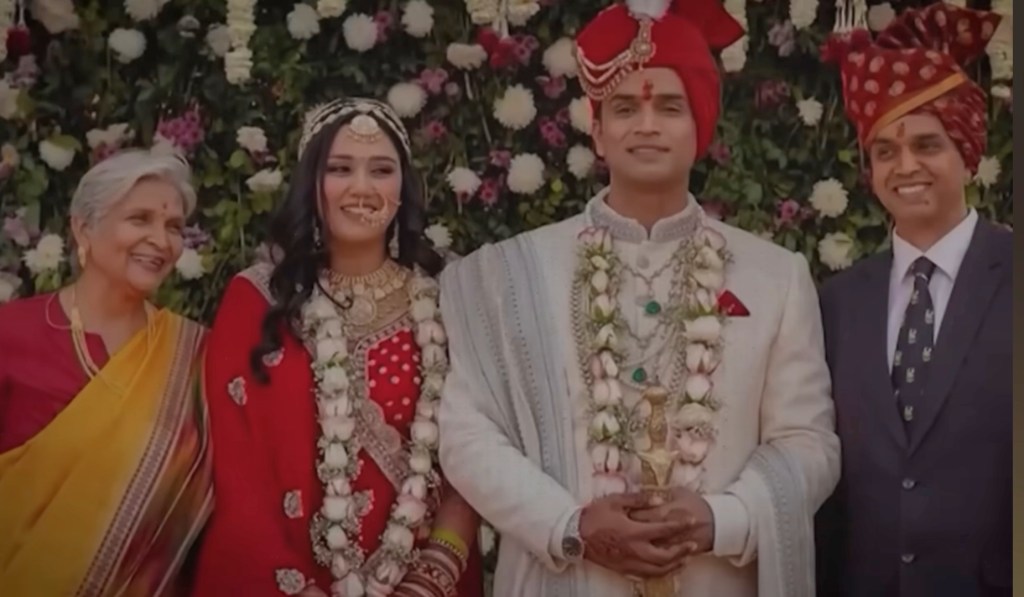
The mysterious death of Twisha Sharma has become far more than a criminal investigation. It has evolved into a national conversation about privilege, accountability, institutional morality, and the conduct expected from those who once occupied positions of constitutional authority.
The case remains under intense scrutiny, and crucial questions are still unanswered. Was Twisha driven to suicide, or was something far more sinister involved? The investigation and judicial process alone will determine the truth. In a matter as sensitive as this, restraint and fairness are essential. Every accused is entitled to due process, and guilt can only be established in accordance with law.
At the same time, developments in the case continue to deepen public attention. The Madhya Pradesh Government has now consented to a CBI probe into the Twisha Sharma death case, but only after nationwide outrage over the manner in which the initial investigation was allegedly conducted.
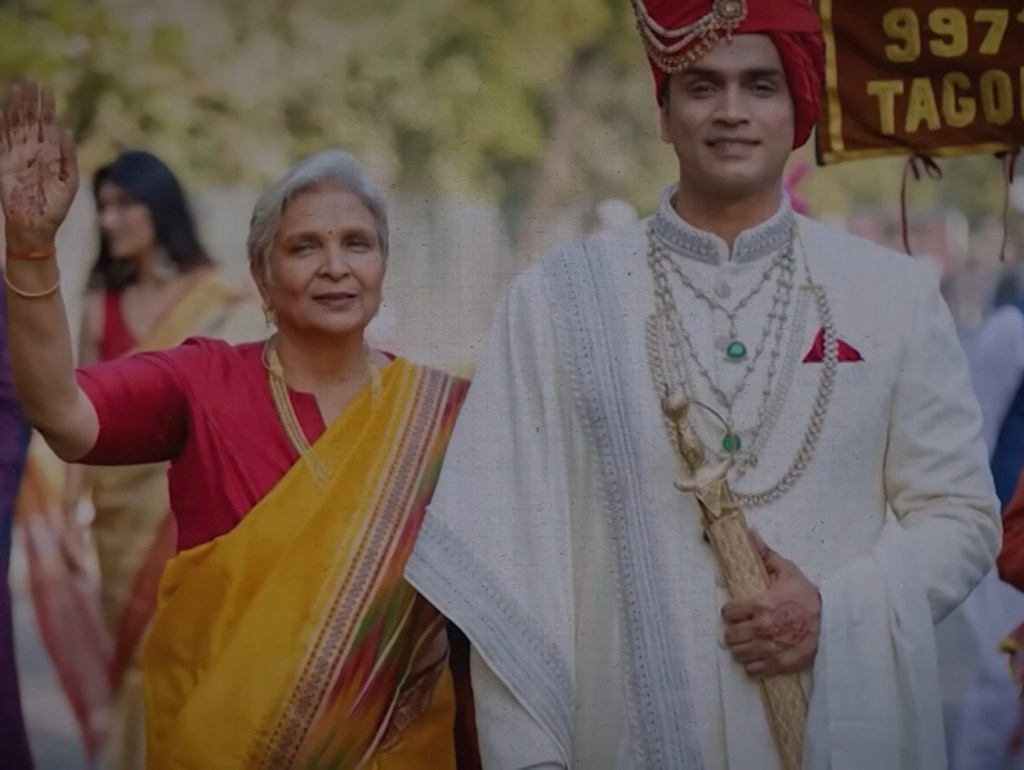
Twisha Sharma’s husband, Samarth, has now been arrested after the Madhya Pradesh High Court reportedly asked him to withdraw his bail application. Meanwhile, the appeal filed by the police challenging the bail granted by a Bhopal district court to Giribala Singh — Twisha’s mother-in-law, a former judge and President District Consumer Commission, and herself an accused in the case — is scheduled to be heard before the High Court in Jabalpur.
The seriousness of the concerns surrounding the Twisha Sharma case has now acquired constitutional recognition. The Supreme Court of India has taken suo motu cognisance of the matter under the title “In Re: Alleged Institutional Bias and Procedural Discrepancies in the Unnatural Death of a Young Girl at her Matrimonial Home.” A bench led by Chief Justice of India Surya Kant is scheduled to hear the matter.
The very framing of the proceedings is significant. It indicates that the issue before the country is no longer confined merely to the suspicious death of a young woman. The concern now extends to whether institutional responses themselves reflected inconsistency, hesitation, or possible bias.
Questions raised regarding the initial handling of the case have already disturbed public confidence. Reports suggesting that the FIR was delayed for four days triggered apprehensions regarding possible compromise of evidence. Equally troubling were concerns surrounding the grant of bail to a prime accused at an early stage while the investigation itself remained under intense scrutiny.
The matter became even more serious when the High Court intervened and directed that a specialised medical team from All India Institute of Medical Sciences conduct a second autopsy to determine the true nature of Twisha Sharma’s death, which was initially examined as a case of suicide.
It is against this extraordinary backdrop that one deeply troubling aspect of the controversy acquires larger democratic significance — an aspect that much of society appears to have missed.
A remark allegedly made by Twisha Sharma’s mother-in-law regarding Twisha’s brother, an Indian Army Major, has opened a far deeper and more uncomfortable debate. Referring dismissively to him as someone “जिसने लड़ाई नहीं देखी” (“who has not seen war”), the statement triggered anger and disbelief.
Can the worth of a soldier be measured only through participation in a declared battlefield war? Does an Army officer who joined service after Kargil deserve lesser respect because history did not place him in combat? Such thinking appears profoundly disconnected from the realities of military life and national service.
India’s soldiers are not honoured only for wars fought. They are honoured because they are ready for the supreme sacrifice and dedicate themselves to a life of discipline, and perpetual readiness. Thousands of officers serving today guard dangerous borders, confront insurgencies and terrorism, participate in low-intensity conflict operations and rescue missions, and live for years under physical and emotional hardship. Their service does not become inferior merely because they belong to a generation that did not witness a conventional war.
But the issue here is larger than an insult directed at one Army officer.
What makes the remark deeply disturbing is the identity of the person from whom it allegedly came — a former judge who now herself stands accused in a highly sensitive death case. In that context, the statement ceases to be a casual taunt. It begins to reveal something more troubling: a mindset.
Society may debate whether the remark was emotional, impulsive, or deliberate. But statements often expose subconscious hierarchies embedded within individuals accustomed to wielding power. When a former judge appears to measure the worth of an Army officer by whether he has “seen war,” the issue is no longer merely personal. It raises an unsettling democratic question about how authority sometimes internalises notions of superiority and inferiority while evaluating fellow citizens.
That is the aspect larger society seems to have missed.
Judges are not ordinary holders of authority. Citizens approach courts believing that those who sit in judgment possess constitutional balance, humility, empathy, and freedom from prejudice. Society expects judges to rise above arrogance, social hierarchy, and dismissive attitudes. Their words carry moral weight even after retirement because the office they once occupied represents justice itself.
Therefore, if such instincts surface so casually outside the courtroom, citizens are entitled to ask an uncomfortable but legitimate question: what must have been the fate of ordinary litigants who once stood before such authority seeking justice?
This question is not an attack on the judiciary as an institution. India’s judiciary remains one of the pillars of democracy. But institutions survive on public trust, and public trust depends not merely upon judgments delivered in courtrooms, but also upon the moral temperament of those who deliver them.
The Supreme Court’s intervention gives constitutional weight to precisely these anxieties. Once the apex court itself frames the matter around “institutional bias and procedural discrepancies,” the debate naturally expands beyond one family tragedy into larger concerns about whether positions of influence and authority sometimes create a psychological insulation from accountability itself.
The Twisha Sharma case has therefore resonated nationally not merely because a young woman died under mysterious circumstances, but because citizens increasingly fear that influence and status may distort equality before law.
Twisha’s brother has appeared publicly as a grieving sibling demanding answers. His uniform symbolizes service to the nation. To diminish that service through a remark implying that he “has not seen war” is viewed by many as an insult not merely to one individual, but to an entire generation of Indian soldiers.
Ultimately, courts will determine whether Twisha Sharma’s death was suicide, abetment, or murder. Facts and evidence must prevail over speculation and emotion. But outside the legal battle, another issue has already entered the national consciousness — the troubling spectacle of a former dispenser of justice appearing to mock the dignity of a soldier while herself standing accused in a deeply disturbing case.
A democracy survives not only through laws, but through the moral credibility of those entrusted to interpret them. The moment society begins questioning the moral temperament of those who once dispensed justice, the issue ceases to remain personal. It becomes a warning signal about the ethical health of power itself.
