
Lalit Shastri
A strategic examination of India’s transition from defense dependence to defense sovereignty, and the opportunities and challenges that will shape its rise as an Indo-Pacific power.
The story of India’s military transformation is often told through spectacular headlines: a hypersonic missile test in Odisha, a new fighter squadron inducted into the Indian Air Force, a naval deployment in distant waters, or a billion-dollar defense contract signed in New Delhi.
Yet these developments, viewed individually, reveal only fragments of a much larger strategic picture.
What is unfolding today is not merely military modernization. It is the emergence of a new national security doctrine that seeks to transform India from one of the world’s largest importers of military hardware into a nation capable of designing, manufacturing, deploying and exporting advanced defense technologies while projecting influence across the Indo-Pacific.
At the heart of this transformation lies a simple but profound objective: sovereignty.
Not sovereignty measured merely by territorial control, but sovereignty measured by technological mastery, industrial resilience, supply-chain security and strategic autonomy.
The significance of this transition extends beyond the armed forces. It is reshaping India’s economy, industrial policy, diplomacy and geopolitical role in the twenty-first century.
The Lessons of Dependence
For much of the post-independence era, India’s military power rested heavily upon imported equipment.
The Soviet Union supplied fighter aircraft, tanks and submarines. France provided advanced combat aviation platforms. Israel became a critical source of sensors and electronic warfare systems. The United States supplied transport aircraft, surveillance capabilities and specialist technologies.
The model delivered capability, but it also created vulnerabilities.
The sanctions imposed after India’s 1998 nuclear tests served as a reminder that military dependence could quickly become a strategic liability. Spare parts, maintenance support, upgrades and technology transfers often remained subject to political decisions taken far beyond India’s borders.
The lesson was unmistakable. No nation aspiring to strategic autonomy could remain indefinitely dependent on foreign suppliers for critical military technologies.
The transformation now underway is therefore not simply an industrial initiative. It is the culmination of decades of strategic learning. India is attempting to ensure that future military capability rests increasingly upon domestic knowledge, domestic production and domestic control.
The most important defense story of the next decade may not be a missile test or an aircraft carrier launch. It may be whether India can build the industrial and technological foundations necessary to sustain military power without external dependence.
RudraM-II and the New Logic of Air Warfare
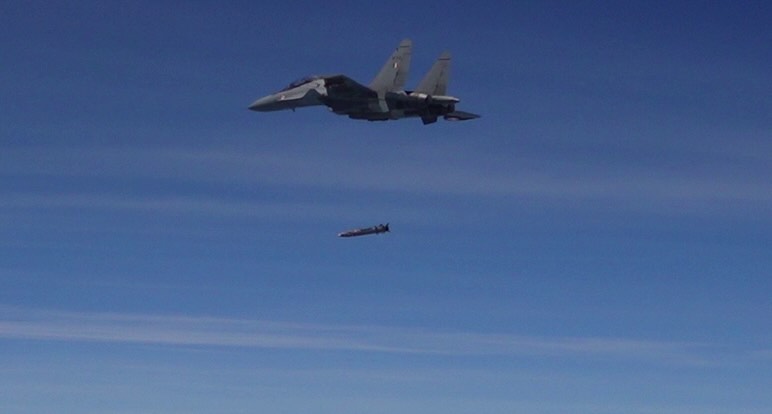
Few weapons better symbolize India’s changing approach to warfare than the indigenous RudraM-II anti-radiation missile.
Its reported combination of long stand-off range, hypersonic speed and advanced terminal guidance provides India with the ability to neutralize hostile radar systems before they can threaten attacking aircraft.
Yet the missile’s significance extends far beyond its technical specifications.
Modern warfare increasingly revolves around information dominance. Radars, sensors and electronic warfare systems constitute the nervous system of military operations. Destroying those systems can be more decisive than destroying tanks, aircraft or troop concentrations.
The RudraM-II embodies a broader shift in Indian military thinking—from attritional warfare toward precision-based deterrence. It reflects a growing emphasis on stand-off capabilities that allow military objectives to be achieved while minimizing exposure to hostile defenses.
Distance itself is becoming a weapon.
In an era where battlefield transparency is increasing and survivability is becoming more difficult, the ability to strike first, strike precisely and strike from beyond the enemy’s engagement envelope may prove decisive.
Tejas: The Maturing of Indigenous Aerospace
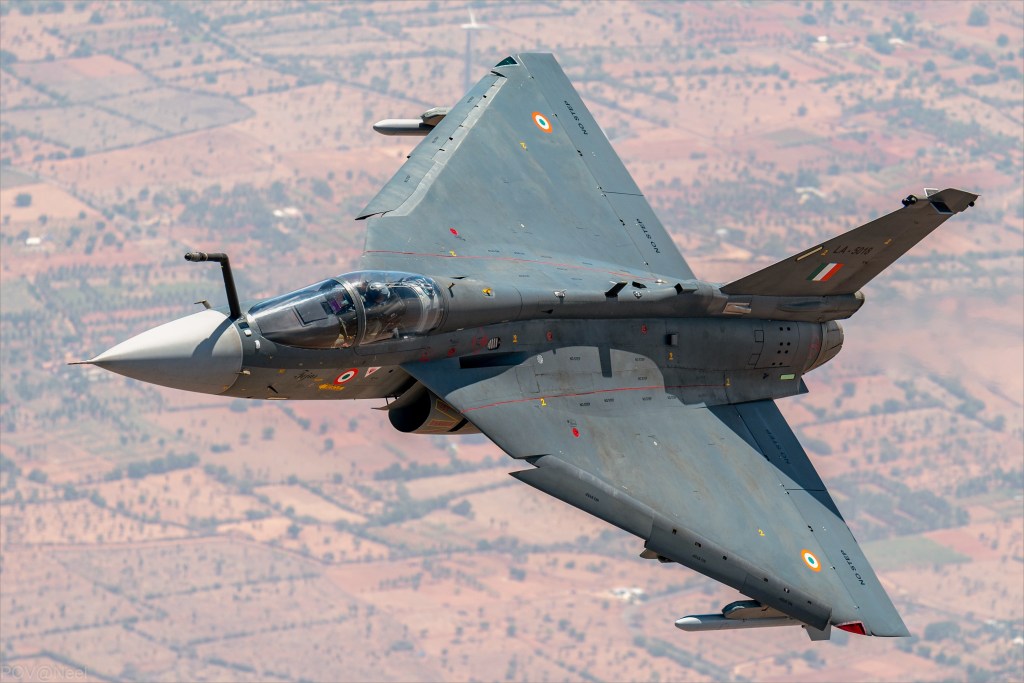
No defence programme better illustrates India’s technological journey than the Tejas Light Combat Aircraft. For years, the project attracted criticism. Delays, redesigns and testing challenges allowed skeptics to portray it as an example of bureaucratic inefficiency and technological overreach.
Yet such criticism often overlooked the unprecedented nature of the undertaking. India was not merely building a fighter aircraft. It was attempting to create an aerospace ecosystem.
The development of Tejas required expertise in aerodynamics, avionics, composite materials, flight-control software, radar integration, weapons management and systems engineering. Each challenge represented an opportunity to accumulate institutional knowledge that previously did not exist within the country.
The Tejas Mk1A therefore represents far more than a combat platform. Equipped with advanced avionics, indigenous Astra missiles, electronic warfare systems and the Uttam AESA radar, it symbolizes the gradual maturation of India’s aerospace industry.
Equally significant is the industrial architecture supporting it. Hundreds of suppliers, public-sector enterprises, private manufacturers and research institutions now contribute to the programme. This ecosystem creates capabilities that will outlive any single aircraft model.
The replacement of aging MiG-21 squadrons by Tejas carries symbolic significance as well. It marks the transition from reliance on imported legacy platforms to confidence in indigenous solutions. For decades, Indian defense planners asked what could be purchased abroad. Increasingly, now they are asking what can be designed and built at home.
The Engine Challenge: The Last Great Dependency
Despite impressive advances, one vulnerability remains stubbornly persistent – Aero-engines. The ability to produce advanced military jet engines remains one of the most exclusive technological capabilities in the world. These systems demand mastery over metallurgy, thermodynamics, precision manufacturing, advanced materials and computational engineering.
India’s continuing dependence on imported engines underscores the complexity of the challenge. The roadmap, however, is becoming increasingly clear.
The Tejas Mk2 programme seeks substantial domestic participation through technology-transfer arrangements involving the GE F414 engine. Meanwhile, future programmes such as the Advanced Medium Combat Aircraft (AMCA) aim to secure far greater technological ownership through collaborative development initiatives. Success in this domain would represent a historic milestone.
Missiles, radars and software can be acquired, adapted or reverse-engineered. Advanced military jet engines occupy an entirely different category. They represent the pinnacle of industrial capability. Whether India succeeds in this domain may ultimately determine the depth of its strategic autonomy.
Financing Self-Reliance
Military transformation begins not in laboratories or factories but in budgets. One of the least discussed yet most consequential developments in recent years has been the restructuring of defense expenditure to favor domestic procurement and indigenous innovation.
The logic is straightforward. Every rupee spent on indigenous systems not only strengthens military capability but also builds industrial capacity, creates skilled employment and supports technological innovation.
Defense spending is increasingly functioning as industrial policy. The objective is not merely to buy weapons but to create an ecosystem capable of continuously producing them. This marks a profound departure from earlier procurement models that prioritized immediate acquisition over long-term capability creation.
The emphasis today is not simply on possessing advanced military systems but on controlling the knowledge and industrial infrastructure required to sustain them.
Defense Exports: From Consumer to Supplier
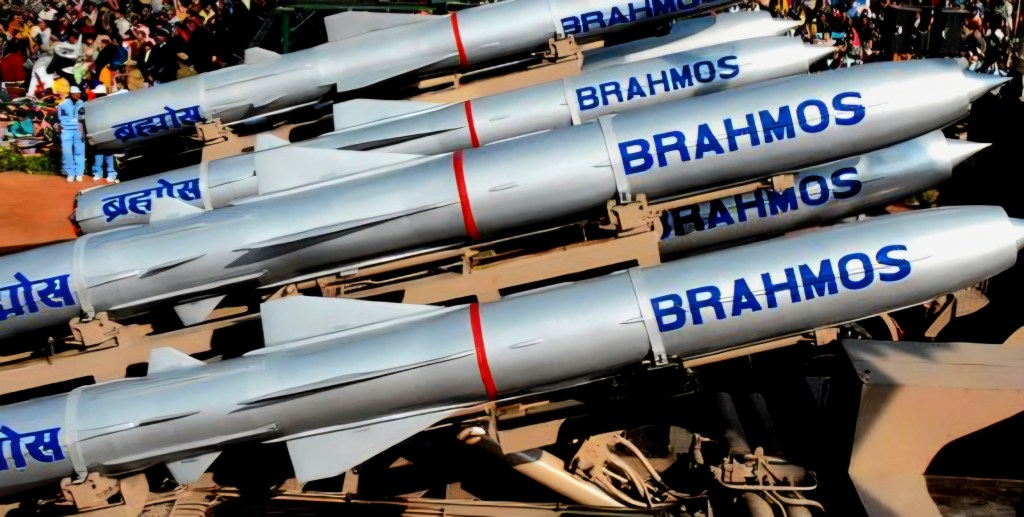
Perhaps the clearest evidence of India’s growing confidence is visible in defense exports. For decades India was known primarily as a customer in the global arms market. Today it seeks recognition as a supplier. The export of the BrahMos missile system to the Philippines represented more than a commercial transaction. It demonstrated that Indian defense products could compete in sophisticated international markets.
The geopolitical significance of defense exports is often underestimated. A missile sale is not a one-time transaction. It creates a decades-long relationship involving training, maintenance, upgrades and operational cooperation. In effect, every defense export extends a nation’s strategic footprint.
Historically, countries such as the United States, France and Russia leveraged defense industries to deepen diplomatic relationships and expand geopolitical influence. India increasingly appears to be following a similar path. Growing interest from Southeast Asia, Africa and Latin America suggests that Indian defense products are beginning to gain international credibility.
Defense exports therefore represent more than economic opportunity. They are becoming instruments of statecraft.
The Maritime Awakening
If indigenous production is one pillar of India’s transformation, maritime strategy is the other. For much of its modern history, India’s security outlook remained overwhelmingly continental. The principal threats were perceived across land borders. Today the picture is changing.
The Indian Ocean has become central to global commerce, energy flows and geopolitical competition. The sea lanes that pass through these waters carry a significant portion of the world’s trade and energy supplies. Maritime security is therefore no longer a naval issue alone. It is an economic imperative. This realization has triggered a profound reassessment of India’s strategic priorities. The Indian Ocean is increasingly viewed not as a protective moat surrounding the subcontinent but as the principal arena in which future geopolitical competition will unfold.
China’s String of Pearls and India’s Necklace of Diamonds
China’s expanding maritime presence has accelerated this reassessment. Over the past two decades, Beijing has invested heavily in ports, infrastructure projects and logistics facilities stretching from the western Pacific to the Arabian Sea. Gwadar in Pakistan, Hambantota in Sri Lanka and Djibouti in the Horn of Africa collectively provide China with increasing access to critical maritime routes. Whether these facilities ultimately become fully operational military assets remains debated. What is beyond dispute is that they have altered the strategic geography of the Indo-Pacific.
India’s response has been markedly different. Rather than investing in permanent overseas bases, New Delhi has pursued a flexible strategy built around logistics agreements, surveillance partnerships and strategic access arrangements. This approach, often described as a “Necklace of Diamonds,” includes access to facilities in Oman, Indonesia, Singapore and Mauritius while leveraging the strategic advantages of the Andaman and Nicobar Islands.
India’s emphasis is not on ownership but on reach. Not on occupation but on access. Not on infrastructure alone but on information. The objective is to create a network capable of monitoring critical maritime chokepoints while preserving strategic flexibility.
The Quad and the Emerging Security Architecture
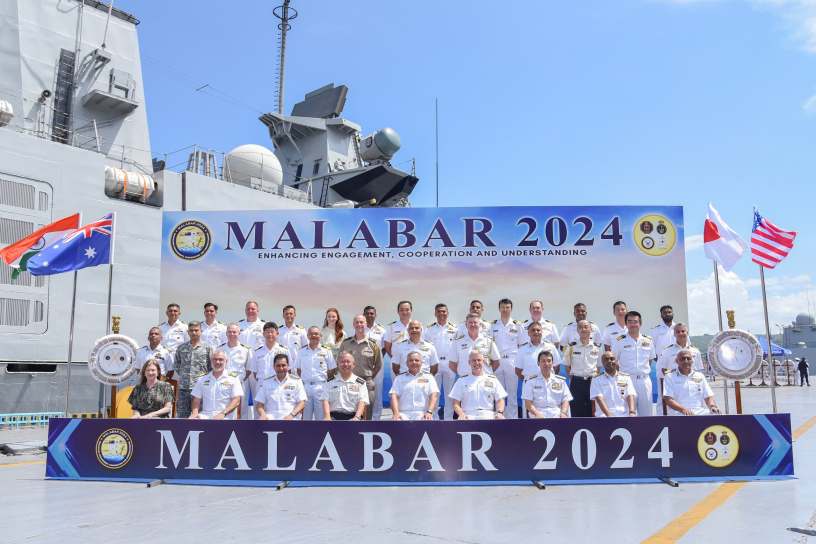
Perhaps the most important geopolitical development shaping India’s maritime future is the rise of the Quad. Unlike NATO, the Quad is not a formal military alliance bound by collective defense commitments. Its strength lies elsewhere. The emerging architecture focuses on maritime awareness, intelligence sharing, logistics interoperability and coordinated responses to regional challenges. This is where institutions such as the Information Fusion Centre–Indian Ocean Region assume strategic importance. By integrating surveillance data from multiple sources, India is increasingly becoming a central node within the Indo-Pacific security architecture.
The strategic significance of the Quad lies not in collective defense guarantees but in collective awareness. The ability to create a shared operational picture across vast ocean spaces may ultimately prove more valuable than formal alliance commitments. In a region where information is power, the ability to see first, understand first and respond first may prove decisive.
Toward Blue-Water Power
The next phase of India’s maritime evolution will likely be defined by aircraft carriers, nuclear-powered submarines and long-range surveillance assets. Projects such as INS Vishal and indigenous nuclear attack submarines signal ambitions extending far beyond coastal defense.
The debate surrounding aircraft carriers often focuses on vulnerability in the missile age. Yet carriers continue to offer something no missile can provide: persistent presence. They carry sovereign air power into distant waters, reassure partners, deter adversaries and provide humanitarian assistance during crises.
Similarly, nuclear-powered attack submarines provide stealth, endurance and sea-denial capabilities essential for monitoring and countering growing naval competition in the Indian Ocean.
Together, these platforms represent India’s aspiration to evolve from a regional maritime power into a true blue-water navy capable of sustained operations across the Indo-Pacific.
The Road to 2030: Defining Self-Reliance
Can India achieve complete defense self-reliance by 2030? The answer depends on how self-reliance is defined. Absolute self-sufficiency is unrealistic in an interconnected global economy. Even the world’s most advanced military powers remain dependent upon international supply chains.
The more meaningful objective is strategic resilience. Can India sustain critical military capabilities during crises? Can it manufacture essential systems without foreign approval? Can it maintain technological superiority without external dependence? By these measures, progress is already visible.
Inda’s missile programmes are maturing. Fighter production is expanding. Naval capabilities are growing. Defense exports are increasing. Research and development ecosystems are becoming more diversified.
Still, challenges remain. Aero-engines, semiconductors, advanced materials, artificial intelligence and autonomous systems will likely define the next frontier of competition.
Yet the trajectory is unmistakable. India is steadily building the foundations of strategic resilience.
From Stand-Off to Sovereignty
The deeper significance of India’s defense transformation lies not in any single missile, fighter aircraft, warship or budget allocation. It lies in the convergence of these developments into a coherent national project aimed at reducing strategic dependence and expanding India’s ability to shape its own security environment.
The RudraM-II is more than an anti-radiation missile. It symbolizes India’s growing mastery of stand-off warfare—a doctrine that allows military objectives to be achieved without exposing valuable assets to unnecessary risk. In strategic terms, it reflects a broader shift from reactive defense to proactive deterrence. The ability to strike adversarial air-defense networks from hundreds of kilometres away fundamentally alters the operational calculus of any potential conflict.
The Tejas programme represents something equally important: industrial confidence. For decades, India was regarded primarily as a purchaser of sophisticated aerospace technology. The Tejas changes that narrative. Despite delays and setbacks, the programme has produced far more than a fighter aircraft. It has created an ecosystem of engineers, designers, software specialists, testing facilities, production lines and private-sector suppliers capable of sustaining future aerospace ambitions. The true achievement of Tejas lies not only in the aircraft that enters service but in the institutional capacity that remains behind.
The forthcoming AMCA reflects India’s technological ambition. Every nation aspires to possess cutting-edge military equipment; very few attempt to build a fifth-generation stealth fighter from the ground up. The AMCA therefore represents more than a future combat platform. It is a declaration that India intends to compete in the most demanding domains of aerospace engineering, stealth technology, sensor fusion, artificial intelligence and advanced propulsion.
India’s growing defense exports tell a different but equally important story. Historically, nations that export advanced military systems gain more than economic returns. They gain influence. Every missile battery, radar system, patrol vessel or aircraft sold abroad creates a long-term strategic relationship involving maintenance, training, upgrades and operational cooperation. In geopolitical terms, defense exports are becoming instruments of diplomacy every bit as significant as trade agreements or development partnerships.
The rapid expansion of maritime partnerships across the Indo-Pacific reflects India’s growing appreciation of geography as a strategic asset. Access arrangements in Oman, Indonesia, Singapore and Mauritius, combined with surveillance networks stretching across the Indian Ocean, have created a flexible architecture that multiplies India’s reach without imposing the burdens associated with permanent overseas bases. This approach allows New Delhi to maintain influence across critical sea lanes while preserving the strategic autonomy that has long been central to Indian foreign policy.
The rise of the Quad further amplifies this transformation. The significance of the grouping lies not in creating an Asian equivalent of NATO but in building a framework for collective maritime awareness. Shared surveillance systems, intelligence fusion, logistics interoperability and common operating pictures enable partner nations to monitor developments across vast stretches of ocean with unprecedented precision. Within this architecture, India is increasingly emerging as the central pillar of security in the Indian Ocean region.
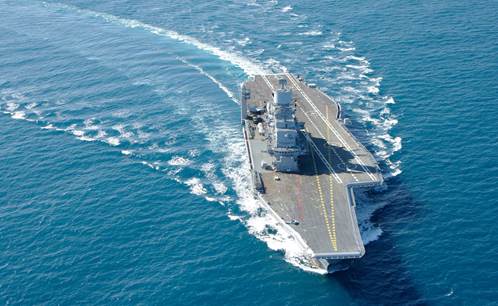
The planned expansion of aircraft carrier capabilities and nuclear-powered attack submarines points toward an even larger ambition. These platforms are not merely instruments of war; they are instruments of presence. They enable a nation to protect sea lines of communication, reassure partners, respond to crises and influence events far beyond its immediate coastline. As India’s economic interests become increasingly global, its military posture is evolving accordingly.
Viewed individually, these developments may appear disconnected—a missile programme here, a fighter aircraft there, a naval facility elsewhere. Viewed collectively, however, they reveal a larger pattern. India is systematically building the industrial, technological and strategic foundations necessary to sustain military power without excessive external dependence.
History suggests that great powers are not defined solely by military strength. They are defined by their ability to generate, sustain and adapt military capability through indigenous innovation, industrial depth and strategic vision.
Whether India achieves complete defense self-reliance by 2030 remains uncertain. Absolute self-sufficiency is an elusive goal even for the world’s most advanced military powers. Yet complete autarky is not the real objective. The true objective is strategic resilience—the ability to defend national interests without being constrained by foreign sanctions, supply disruptions or technological dependence.
By that measure, India has already crossed an important threshold. It is no longer merely a buyer in the global defense marketplace. It is becoming a designer, manufacturer, innovator, exporter and security provider.
Yet recognizing India’s achievements should not obscure the challenges that still lie ahead. The journey toward genuine strategic autonomy will require difficult policy choices and sustained investment. Accelerating indigenous aero-engine development—particularly through deeper technological collaboration with France—remains critical if India is to overcome one of its last major dependencies in military aviation. Equally important is abandoning the risk-averse “No Cost, No Commitment” mindset that often constrains private-sector participation in defense research and development. Innovation cannot flourish without long-term commitments, shared risk and clear incentives.
India must also shorten acquisition cycles to ensure that emerging technologies reach operational units before they become outdated. The experience of recent conflicts has demonstrated that wars are often decided as much by industrial endurance as by battlefield brilliance. Building substantial reserves of missiles, ammunition, fuel, spare parts and critical components will therefore be essential for sustaining operations during prolonged crises. Future battlefields will increasingly be shaped by drones, loitering munitions, artificial intelligence and precision-strike systems, making heavy investment in asymmetric capabilities a strategic necessity rather than an option.
At the same time, India’s expanding geopolitical role will require deeper military partnerships, enhanced logistics agreements and greater access to overseas naval and air facilities across the Indo-Pacific. Force multipliers such as AWACS aircraft, aerial refuellers, satellite-based surveillance and integrated command-and-control networks will be indispensable in extending operational reach across vast maritime and continental theatres. Above all, national security must extend beyond military preparedness to encompass societal resilience. In a world where nuclear weapons remain a grim reality, robust civil defence systems, protected infrastructure, emergency response mechanisms and public preparedness are essential safeguards against catastrophe. The purpose of military strength is ultimately not to wage war, but to deter it and preserve peace.
The ultimate objective of military strength is not to wage war but to prevent it.
The journey from stand-off capability to strategic sovereignty is far from complete. Yet the direction of travel is unmistakable. As the geopolitical centre of gravity shifts toward the Indo-Pacific, the consequences of that transformation are likely to shape not only India’s future but also the strategic balance of the wider region for decades to come.
IndiaDefense #StrategicAutonomy #DefenseIndigenization #TejasMk1A #AMCA #RudraMII #IndoPacific #MaritimeSecurity #DefenseExports #NationalSecurity #MilitaryInnovation #AtmanirbharBharat #IndianNavy #Quad #Geopolitics
