
ThisisNews Network
As its women producer-members assert their role in shaping the cooperative’s leadership, Looms of Ladakh exemplifies the journey from traditional skills to economic empowerment and global recognition.
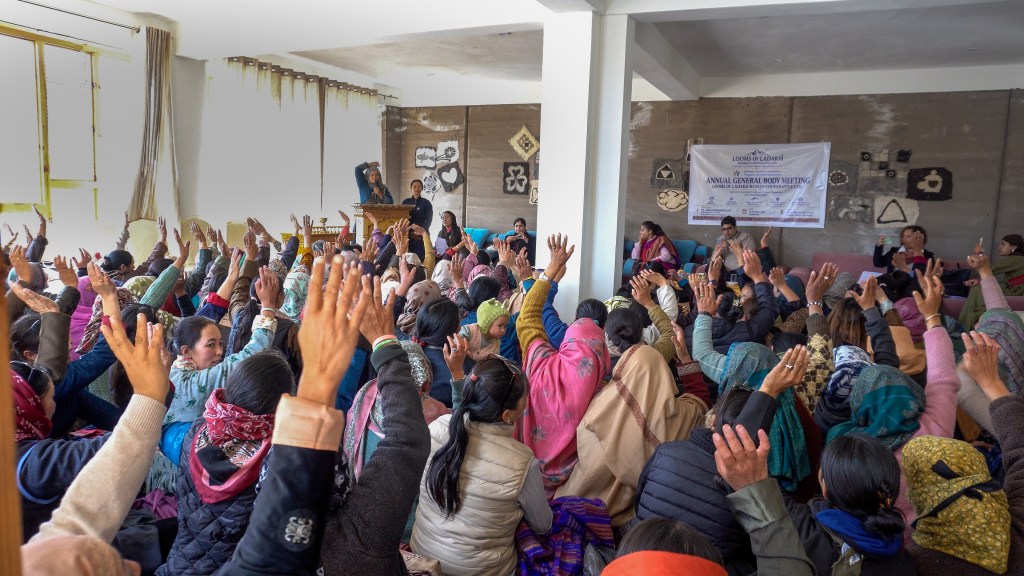
On 15 October 2026, the General Body of Looms of Ladakh Women Cooperative Society passed a resolution to amend its Articles of Association to provide for the election of the Chairperson from among the cooperative’s Ladakhi women producer-members. The resolution would now go through the process of approval in accordance with the procedure prescribed under the Articles of Association.
The significance of this decision extends beyond a question of institutional leadership. It reflects the members’ resolve to play a decisive role in shaping the future of an organisation built around their skills, labour and collective enterprise. By placing the election of its Chairperson among the cooperative’s women producer-members, the resolution reinforces their aspiration to participate directly in the governance of the institution they have helped build.
The decision also resonates with a central principle of Prime Minister Narendra Modi’s governance philosophy: “Minimum Government, Maximum Governance.” The underlying idea is that governance should empower people, strengthen their capabilities and enable them to take greater responsibility for their own progress.
In this sense, the General Body’s resolution gives practical expression to that philosophy at the grassroots. The women producers of Looms of Ladakh have formally asserted their desire to elect their own Chairperson from among their ranks. Their decision reflects the values of participation, self-reliance and local leadership that lie at the heart of an empowering institution.
The resolution follows an order issued on 8 October 2026 by the Cooperative Department of the Union Territory of Ladakh, directing the Deputy Commissioner, Leh, to assume the office of Chairman of the Cooperative society with immediate effect, in accordance with its existing Articles of Association. The order also directed the existing Managing Committee and office-bearers to extend the necessary cooperation.
The sequence brings into focus an important question of cooperative governance: how can statutory oversight and regulatory compliance operate alongside the democratic participation of the members whose collective enterprise gives the institution its purpose? The General Body has formally recorded its position on the leadership of the cooperative, and the resolution is proceeding through the prescribed approval process.
The Prime Minister’s recognition of Looms of Ladakh during Mann Ki Baat on 26 November 2023 celebrated the journey of Ladakhi Pashmina from a traditional regional product to wider Indian and international markets. The General Body’s resolution speaks to another dimension of that journey: the aspiration that economic progress should go hand in hand with the ability of local producers to participate meaningfully in decisions about their collective future.
To understand the significance of this resolution, it is necessary to look at the institution these women have helped build, the transformation it has sought to bring about in Ladakh’s traditional Pashmina sector, and the national recognition its work has earned.
From a local tradition to a global market
When Prime Minister Narendra Modi spoke about Looms of Ladakh during Mann Ki Baat, he noted that more than 450 women from 15 villages were associated with the initiative. Products that had previously found much of their market among tourists visiting Ladakh were reaching consumers across India and abroad. The earnings of women had increased, he observed, adding that “our local is now becoming global.”
The endorsement was a significant recognition of an initiative that sought to connect Ladakh’s traditional craftsmanship with contemporary markets while creating economic opportunities for women. It also drew attention to a larger question: how can communities that possess distinctive skills and valuable traditional resources secure a greater share of the value generated from them?
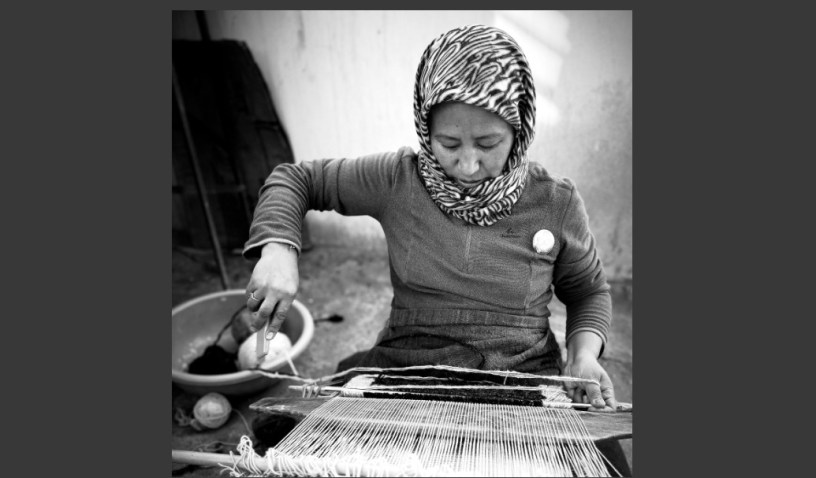
The story of Looms of Ladakh is, above all, a story of women seeking to move beyond selling raw material or providing labour to participate more meaningfully in the value created from their skills and heritage. It is also a story of institution-building in a region where livelihoods, traditional occupations and a fragile mountain environment are closely intertwined.
A vision rooted in local ownership
The vision that eventually took shape as Looms of Ladakh emerged in 2013. The cooperative was established in 2017, bringing women associated with Pashmina and wool production into a common institutional framework.
The idea was to build more than a commercial brand. It was to create a producer-led enterprise capable of connecting Ladakh’s traditional skills with contemporary design, quality standards, professional management and markets beyond the region.
Pashmina is inseparable from Ladakh’s cultural and economic landscape. Behind the fine fibre lies the work of herders, spinners, weavers, artisans and others in the production chain. Yet the value of a finished luxury textile can extend far beyond the earnings received by those at the beginning of that chain.
Looms of Ladakh sought to address this imbalance by developing local capacity for production and value addition. The objective was to create an enterprise in which women were not merely participants in a supply chain but stakeholders in an institution intended to represent their collective interests.
That distinction matters. A community can possess exceptional skills and a valuable traditional resource without necessarily controlling the commercial opportunities that arise from them. Building an institution that connects local producers with larger markets requires organisation, training, infrastructure, management and sustained engagement with buyers.
Looms of Ladakh set out to bring these elements together while retaining its roots in the community whose skills and livelihoods give the enterprise its purpose.
From traditional craftsmanship to contemporary markets
Taking Ladakhi Pashmina to wider markets requires more than a compelling story or an attractive label. It calls for consistent quality, technical capability, product development, dependable production and the ability to meet the expectations of discerning buyers.
The cooperative’s effort to strengthen local production capabilities has therefore been central to its development. Its ambition has been to improve the range and quality of products that can be made locally, expand opportunities for artisans and reduce the distance between the skills available in Ladakh and the requirements of contemporary markets.
This is a demanding process. Traditional craftsmanship must be preserved while production systems adapt to changing designs, specifications and consumer expectations. Technical training and professional management are essential if a community enterprise is to compete beyond its immediate market.
The cooperative’s broader significance lies in attempting to build this capacity within Ladakh itself. Its achievement cannot be measured only in sales. It must also be assessed in terms of skills retained, livelihoods strengthened, opportunities created and the ability of local producers to participate in a larger share of the value generated by their work.
For women in remote villages, a sustainable source of income can make a material difference to household security and economic independence. An organised cooperative can also create opportunities for collective decision-making, leadership and greater confidence in dealing with markets and institutions.
These are among the reasons Looms of Ladakh has come to represent an important experiment in community-based enterprise.
Building an institution, not just a brand
The development of a cooperative requires infrastructure and institutional capacity alongside the skills of individual artisans. Looms of Ladakh’s planned head-office complex at Kuzey, Chushot, was an important part of that ambition.
The foundation stone was laid in May 2022 by the then Chief Executive Councillor of the Ladakh Autonomous Hill Development Council, Leh, Tashi Gyalson. The proposed complex was intended to bring together functions such as an atelier, yarn bank, garment construction unit and administrative office.
The initiative received support from ICICI Bank, with a smaller contribution from Enfield. Such partnerships can help community institutions acquire facilities that would otherwise be difficult to establish through the resources of individual producers.
The growth in membership reported during the cooperative’s development reflected the effort to bring more women into an organised structure. But numbers alone do not make a cooperative successful. The more enduring test is whether members have a meaningful stake in the institution, whether it builds local capacity and whether it can sustain its activities while remaining accountable to those it represents.
Looms of Ladakh’s experience illustrates both the possibilities and the responsibilities involved in building such an institution.
Recognition for Ladakhi Pashmina
The recognition of Ladakhi Pashmina through the Geographical Indications framework is another important milestone for the region’s traditional textile heritage.
A geographical indication identifies goods whose qualities, reputation or characteristics are linked to a particular geographical origin. Such recognition can help protect regional identity and strengthen the case for authenticity in markets where consumers increasingly seek traceable products.
The official GI Registry records the Ladakh Pashmina Textile application involving the Directorate of Industries and Commerce and Looms of Ladakh Women Cooperative Limited. The registration certificate for the textile in Class 24 was issued on 28 March 2026.
For Ladakh, the importance of GI recognition extends beyond the protection of a name. It provides an opportunity to build stronger awareness of the region’s distinctive textile tradition and reinforce the connection between the product and the communities whose knowledge and skills sustain it.
Legal recognition by itself, however, cannot guarantee higher producer incomes. That requires quality assurance, traceability, effective marketing, fair value distribution and continued investment in local production.
Looms of Ladakh’s contribution must be understood within this wider effort to connect heritage with economic opportunity.
The contribution of Mrs Abhilasha Bahuguna
Behind the creation of an institution such as Looms of Ladakh lies work that rarely finds its way into the finished product or its label. Vision must be translated into systems, people must be trained, and local knowledge must be connected with the organisational and commercial capabilities required to sustain an enterprise.
Mrs Abhilasha Bahuguna deserves particular recognition for her pro bono contribution to this process.
According to the cooperative, she devoted considerable effort to helping build the institution and strengthen its capacity without seeking a personal financial stake in its ownership. The cooperative states that she is neither a member nor a shareholder.
Her contribution, as described by the cooperative, extended to developing local artisan leadership and building a management team that included local graduates. This aspect of the initiative is especially significant: a grassroots institution can achieve lasting self-reliance only when knowledge, responsibility and leadership are progressively embedded within the community it serves.
The creation of local capacity is often less visible than the establishment of buildings, the launch of products or the achievement of market recognition. Yet it can be among the most important determinants of whether an enterprise survives and grows beyond its formative years.
The contribution of those who help establish systems and then enable local people to assume greater responsibility deserves to be acknowledged as part of the cooperative’s institutional history.
Accountability and the importance of due process
The achievements of Looms of Ladakh have coincided with administrative questions concerning aspects of its governance, approvals, financial support and GI-related processes. These matters have attracted public attention, including reports of concerns raised by the Ladakh administration and their referral to the relevant authorities.
The cooperative has disputed aspects of the allegations and maintained that it has provided explanations and supporting documentation. Questions raised, matters referred for examination or requests for clarification should not, in themselves, be treated as proof of wrongdoing. Equally, questions concerning public support, financial management and statutory compliance must be addressed through transparent procedures and due process.
These proceedings should not obscure the broader achievement of a community enterprise created to strengthen the livelihoods, skills and economic capabilities of Ladakhi women. The objective must be to ensure accountability while allowing a legitimate, women-led institution to continue its work without unnecessary damage to its reputation.
The challenge is to uphold accountability without losing sight of the value of grassroots institution-building.
Empowerment as the measure of success
Looms of Ladakh has demonstrated how traditional skills can become a source of contemporary opportunity when women organise, acquire new capabilities and reach markets beyond their immediate surroundings. The General Body’s resolution adds a further dimension to that story: the aspiration of those women to help shape the leadership of the institution they have helped build.
The connection with the Prime Minister’s philosophy is particularly relevant here. Empowerment is not simply about providing assistance or creating opportunities from outside. It is also about enabling people to develop the capacity, confidence and institutional space to make decisions about their own future.
For Looms of Ladakh, the resolution represents an aspiration to strengthen that participation. Its implementation will follow the prescribed approval process, but the principle expressed by the members is clear: women producers want a meaningful role in determining the leadership of their cooperative.
The way forward lies in ensuring that statutory oversight, transparency and democratic participation work together. A strong cooperative needs sound governance and accountability, but it also needs the confidence and active involvement of the people it exists to serve.
Ultimately, the success of Looms of Ladakh will be measured not only by how far its Pashmina travels, but also by how securely the women behind it can sustain their livelihoods, preserve their heritage and participate in determining their own economic future. In that respect, their resolution is an affirmation of the larger principle that governance should empower people to become active architects of their own progress.
