
ThisisNews Network
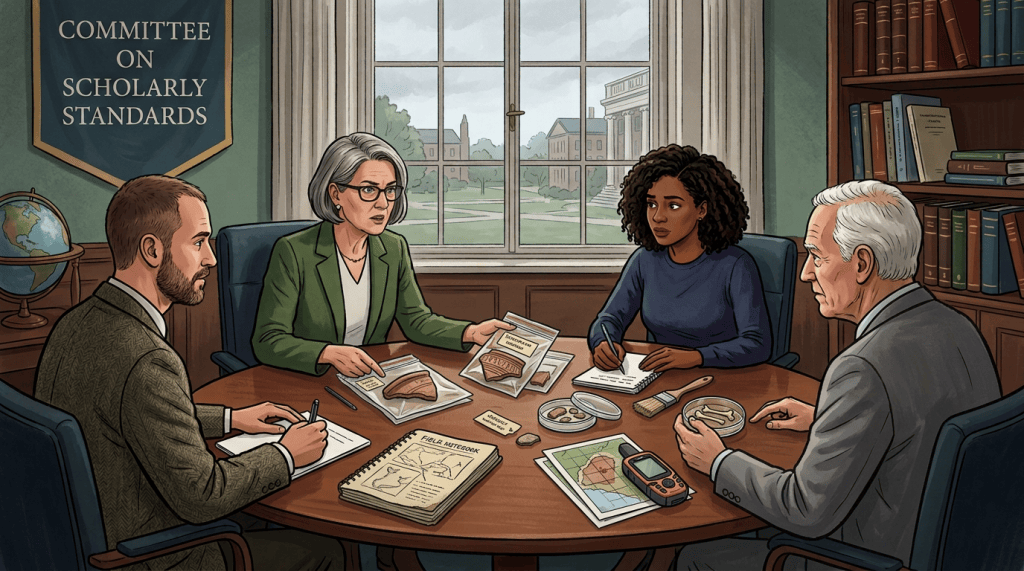
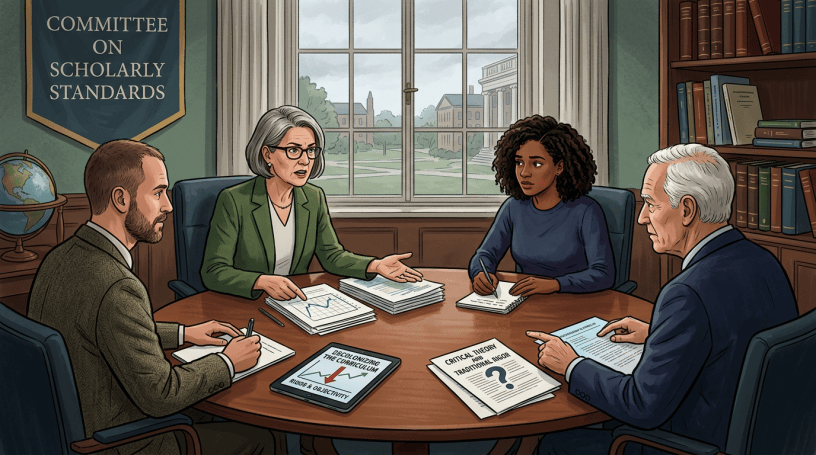
A committee of prominent US scholars has reported a deterioration in scholarly standards in parts of the humanities and humanistic social sciences, attributing the problem in part to the substitution of political criteria for scholarly criteria and to a weakening of traditional commitments to rigor and objectivity.
The findings are contained in the Report on the State of Scholarship in the Humanities and the Humanistic Social Sciences, submitted on April 5, 2026. The 30-page report was prepared by an independent committee chaired by Paul Boghossian, Silver Professor of Philosophy at New York University, and comprising scholars from New York University, Harvard University, Princeton University, the University of Chicago, Northwestern University and the University of Hawaii.
The committee was constituted following a charge from Vanderbilt University Chancellor Daniel Diermeier and Washington University Chancellor Andrew D. Martin to examine complaints about the deterioration of scholarly standards in the humanities and humanistic social sciences and to assess whether ideological values had begun to distort the pursuit of knowledge. The committee began its work in September 2025.
The study examined a representative sample of six disciplines – philosophy, anthropology, sociology, history, literary studies and music studies – drawing on detailed internal reports prepared by members of the committee and consultations with scholars in fields not represented on the committee.
The committee said its review produced a “mixed picture”, but found signs of what it described as a deterioration in scholarly standards across every field examined. According to the report, the deterioration is associated with the replacement of scholarly criteria by political criteria in the assessment of research and with a broader rejection of established ideals of rigor and objectivity.
The severity of the problem, however, was found to differ substantially between disciplines.
In philosophy, the committee said the problems were largely concentrated in a single subfield dealing with politically charged subjects. In history, the report identified streams of scholarship in which standards had been politicized in problematic ways, but said these existed alongside more dominant streams where a broad range of views continued to be tolerated and conventional scholarly standards applied.
Anthropology was identified as the most extreme case among the disciplines examined. The report said it found widespread deterioration in scholarly standards associated with what it described as a pervasive rejection of objectivity. It also described an “intellectual climate” in which reasonable dissent on politically charged subjects could be suppressed and punished.
The committee examined, in particular, instances in which scholars or academic organisations appeared to define scholarship primarily in terms of political or social objectives rather than the pursuit of knowledge and understanding. In its discussion of anthropology, the report cited published statements arguing that the discipline should serve political or advocacy purposes and questioned the rejection of truth or objectivity as central academic aims.
The report also examined what it regards as a broader intellectual shift in parts of the humanities and social sciences. It said the traditional purpose of scholarship – developing an accurate and well-supported understanding of its subject – had in some cases been displaced by an understanding of scholarship as a form of political activity.
The committee distinguished between scholarship that may have political consequences and scholarship undertaken according to political criteria. Political commitments, it said, can inspire valuable scholarly work, but the quality of such work should be determined by its intellectual rigor and contribution to understanding rather than by the politics that inspired it.
A central concern identified by the report is the repudiation of scholarly objectivity. The committee examined arguments that claims to knowledge are inevitably ideological and therefore can legitimately be assessed according to political or social considerations. It argued that such a position can undermine the standards by which academic claims are evaluated.
The report said that an academic environment in which politically acceptable conclusions are privileged can affect what research is published, taught and valued. It called institutional openness to a range of ideas an indispensable condition for serious scholarship and said academic work should not be judged according to predetermined ideological requirements.
The committee nevertheless stressed that its conclusions are provisional. It said systematic scientific study of the politicization of academic research is still in its infancy and acknowledged that, apart from some exceptions, its conclusions about the overall state and extent of the problems were not yet supported by the level of quantitative evidence normally expected in a peer-reviewed study. The examples cited in the report, it said, were intended to illustrate phenomena rather than establish their prevalence.
The report consequently cautioned university administrators against immediate or intrusive intervention. It said any investigation of individual academic departments should begin with intensive examination by disciplinary experts and experts from adjacent fields, and concluded that its findings did not warrant intervention beyond such initial scrutiny.
The committee also recorded political pressures on scholarship originating outside universities. While stating that the politicized undermining of scholarly standards it had identified was “largely associated with the academic left”, the report warned against responding by imposing political criteria from the right. It separately discussed pressures from conservative political forces, including federal and state interventions affecting teaching and scholarship in the United States.
Its stated objective, the committee said, was neither to promote one ideological form of scholarship over another nor to establish political balance between competing forms of scholarship. Rather, it called for academic work to be assessed according to rigorous scholarly standards aimed at advancing understanding and limiting ideological distortion.
The report concludes that the humanities and humanistic social sciences remain capable of producing serious and rigorous scholarship, but argues that maintaining that role requires an institutional environment in which competing ideas can be examined and scholarly claims are judged on evidence, reasoning and intellectual rigor rather than ideological conformity.
Full report: Report on the State of Scholarship in the Humanities and the Humanistic Social Sciences
