

Lalit Shastri

The terrifying ordeal aboard Flydubai Flight FZ1073 from Dubai to Tel Aviv on September 30, 2026 could easily have ended as one of the world’s worst aviation disasters. Instead, it became an extraordinary story of courage, presence of mind and collective human response, with Indian Captain Smit Machchhar at its centre. What makes Machchhar’s actions particularly remarkable is not simply that he survived a violent attack inside the cockpit, but that while seriously wounded and fighting for his own life, he remained conscious of the lives of the 174 passengers and the other crew members entrusted to him. When the aircraft began plunging thousands of feet, he understood what was happening even after he had been incapacitated, summoned what he later described as his “last push”, opened the cockpit door and thereby enabled passengers and other crew members to enter, overpower the attacker and help prevent what could have been a catastrophic crash. His actions have since drawn extraordinary praise from leaders in India, Israel, the United States and the United Arab Emirates. Israeli Prime Minister Benjamin Netanyahu called him a “true hero”; Indian Prime Minister Narendra Modi praised his courage, composure and presence of mind; and US President Donald Trump also described the badly wounded Indian captain as a hero.
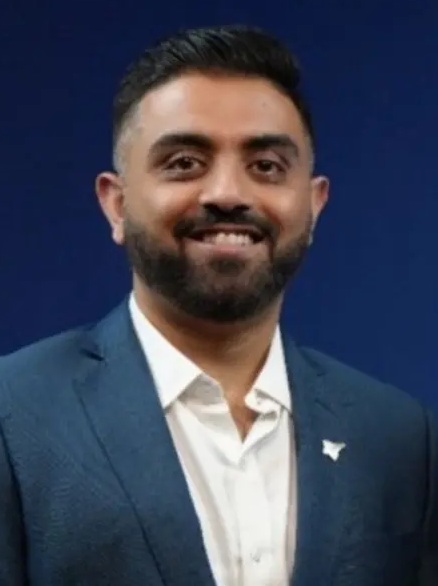
The sequence of events was frighteningly simple and devastatingly dangerous. Flight FZ1073, a Boeing 737 MAX 8, was carrying 182 people – 174 passengers and eight crew – on its journey from Dubai to Tel Aviv when violence erupted in the cockpit. The co-pilot attacked Captain Machchhar, seriously injuring him, and the aircraft entered a steep descent. Flight-tracking data indicated that the aircraft fell by roughly 14,000 to 17,000 feet in a matter of minutes, with reports putting the most rapid part of the descent at less than 30 seconds. The UAE investigation has said that the attacker used the cockpit’s crash axe. Early reports had described the weapon as a knife, reflecting the confusion surrounding the first moments of the incident. Whatever the precise sequence of blows, there is no ambiguity about the danger: the captain was seriously injured, the aircraft was descending sharply and the attacker was attempting to interfere with control of a passenger aircraft.
It was at this point that Captain Machchhar’s response assumed extraordinary importance. Lying injured inside the cockpit, he could sense that the aircraft was going down. Speaking later from his hospital bed to Prime Minister Modi, he explained that his years of flying experience enabled him to understand what was happening to the aircraft even when he was down on the floor. He had been flying for 17 years and had served as a captain for 11 years. His words reveal the extraordinary conflict he was facing: he was fighting for his own life, yet he knew that unless he acted, the lives of everyone aboard were at risk. “I was fighting for my life,” he told Modi, explaining that he realised he had to get up because otherwise the passengers could lose their lives. He eventually managed to reach the cockpit-door mechanism and open it. Passengers and crew waiting outside rushed in and helped overpower the attacker.
That decision to open the cockpit door was the critical turning point. Once the door was opened, passengers were able to enter and confront the attacker. Among them was Israeli passenger Yaniv Hayoun, a plumber, who rushed towards the cockpit and helped restrain the assailant. Other passengers and crew also intervened, while pilots who were travelling aboard the aircraft helped restore control. The aircraft was eventually diverted to Tabuk in northwestern Saudi Arabia, where it made an emergency landing. All 174 passengers survived. The passengers were subsequently flown onward to Tel Aviv on a replacement aircraft. The dramatic outcome therefore did not belong to one person alone, and the courage of those passengers and crew members who entered the cockpit and helped subdue the attacker deserves recognition. But without Machchhar’s decision, made while seriously injured, to open the cockpit door, the opportunity for that intervention may never have arisen.
There is something particularly moving about Machchhar’s own account because he does not present himself as a lone saviour. He has repeatedly acknowledged the role played by the passengers and other crew members. Yet his own action came before they could intervene. He had to make a decision in circumstances in which instinct might have told any wounded person to concentrate exclusively on survival. Instead, his training, experience and professional responsibility appear to have overridden that instinct. In the few seconds available to him, the captain of the aircraft remained a captain in the fullest meaning of the word. His own life was in danger, but the lives of those behind the cockpit door remained his responsibility.
Prime Minister Modi’s conversation with Machchhar from his hospital bed brought the human dimension of the incident into sharp focus. Machchhar, visibly injured and emotional, told the Prime Minister how he had continued fighting despite his wounds. He also said that he had recited the Hanuman Chalisa during the ordeal, drawing strength from his faith. Modi praised his courage and presence of mind and told him that the country was proud of him. The Prime Minister had earlier described Machchhar as a hero whose courage and resolve helped avert a great tragedy.
Netanyahu’s reaction was equally emphatic. The Israeli Prime Minister described Machchhar as a “true hero”, saying that despite being seriously wounded he fought back, resisted, opened the cockpit door and enabled passengers and crew to overpower the attacker. Netanyahu later spoke directly with Machchhar and heard his account of the attack. In that conversation, Machchhar explained that he had one final effort left in him and that he could not allow the passengers to die. Netanyahu told him that his courage was extraordinary and invited him and Prime Minister Modi to participate in Israel’s next Independence Day ceremony.
US President Donald Trump also publicly praised the Indian captain, saying Machchhar was in very bad shape but nevertheless had the presence of mind to open the cockpit door and seek help. Trump described him as a hero while recounting what he had learned from Netanyahu. Trump also praised the passengers who intervened, particularly Hayoun, whose actions inside the cockpit became another remarkable part of the story.
The incident has since moved beyond the story of individual bravery into a major international aviation-security investigation. The co-pilot has been identified by multiple reports as Omani national Hamam al-Hammami, although some aspects of his identity and background remain subject to official investigation. Reports have emerged that he had previously been barred from flying in Oman amid concerns over alleged extremist views, raising serious questions about how he was subsequently able to work for airlines and ultimately operate a flight to Israel. Investigators in the UAE, Israel and Saudi Arabia are examining his background, recruitment, previous aviation career and possible motive. The UAE is leading the investigation, while questions have also arisen about the sharing and vetting of crew information for flights entering Israel.
Those questions are serious and should not be obscured by the heroism of the captain and passengers. There are still important facts to be established about the attack, including the precise motive of the co-pilot and whether he acted alone. Investigators are examining reports that he had previously attracted concern in Oman, while other reporting suggests the attack may have been planned earlier. Such claims remain part of an ongoing investigation and should not be treated as established fact until authorities complete their inquiries. What is already established, however, is that a catastrophic situation developed inside a passenger aircraft and that a seriously wounded captain took a decisive action that enabled others to intervene.
The incident also demonstrates why aviation safety is never merely a matter of technology. Modern aircraft have sophisticated systems, secure cockpit doors, multiple layers of procedures and highly trained crews. Yet, in the most extreme circumstances, the decisive factor can still be the human being confronted with an impossible choice. Captain Smit Machchhar was confronted with precisely such a choice. He had been attacked by the very person who was supposed to be sharing responsibility for flying the aircraft. He was seriously injured. The aircraft was descending rapidly. He had every reason to fear that he might not survive. And yet his first decisive response after recognising the danger was to create a way for others to reach the cockpit.
That is why the praise being showered on Captain Smit Machchhar goes beyond national pride. India has every reason to be proud that an Indian pilot displayed such courage in an international emergency, but the significance of his conduct is universal. A pilot’s responsibility is ultimately to the people in the cabin, and Machchhar demonstrated that responsibility under circumstances in which his own survival was in doubt. The passengers who rushed into the cockpit, the off-duty pilots who helped stabilise the aircraft, and those who treated the wounded also deserve recognition. The final outcome was the product of several people acting decisively at the same terrifying moment. But the action that opened the way for them came from a wounded captain who understood that if he surrendered to his injuries, others might die.
There are moments when the word “hero” is used too casually. This was not one of them. Captain Smit Machchhar did not become a hero because world leaders called him one. He became one in the few critical moments when, despite being gravely wounded, he chose to act on behalf of people whose lives were in his hands. His own later description is perhaps the most powerful testimony to what happened: he was fighting for his life, but he could not let the others die. In those words lies the essence of professional duty, courage and humanity. And in an age when we often celebrate people for what they say, Machchhar’s story is a reminder of the extraordinary difference that can be made by what a person does when there is almost no time left to think.
For Captain Smit Machchhar, the flight from Dubai to Tel Aviv became a fight not merely to save an aircraft but to save the people inside it. Wounded, disoriented and confronted with an attacker inside the cockpit, he found the strength to make one last move that changed the course of the crisis. The aircraft reached the ground safely. The passengers went home. A terrible tragedy was averted. And an Indian pilot, who began that flight simply doing the job he had trained for, emerged from it having demonstrated something far greater: that even in the most extreme adversity, courage is sometimes nothing more complicated than refusing to give up when other people’s lives depend on you.
Postscript: Police and security agencies in multiple countries are carrying out intensive investigations into the background and intentions of Hamam al-Hammami, the co-pilot. His possible links to any organisation remain under active investigation. Investigators are also examining whether there were security or intelligence failures that allowed the incident to occur.
