
By Abhilash Khandekar
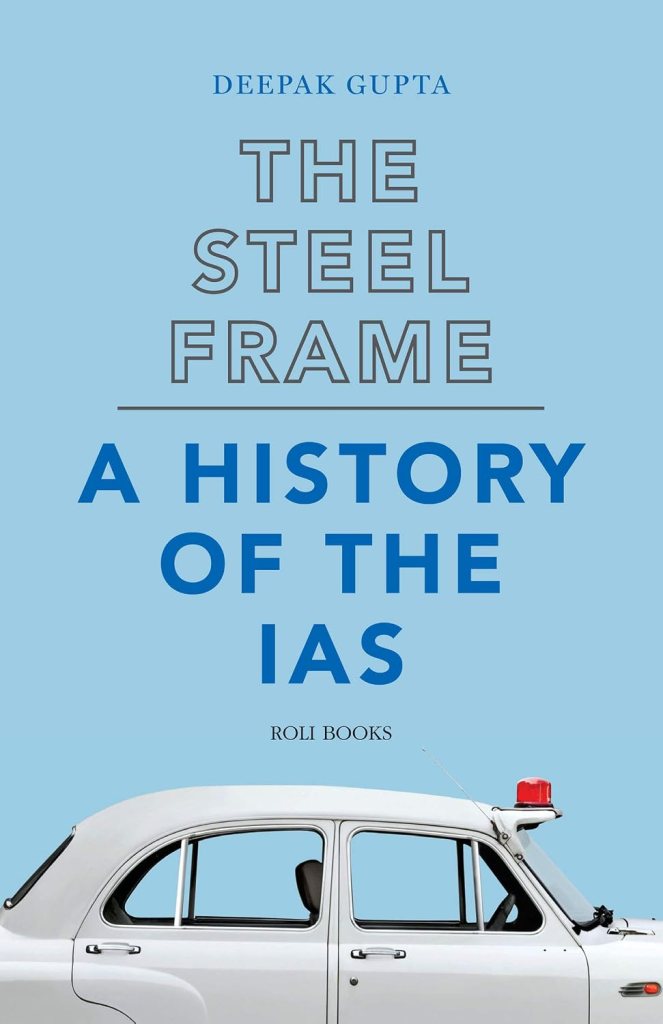
Title – The Steel Frame: A History of the IAS
Author – Deepak Gupta
Publishers – Roli Books
Pages – 354
Price – ₹395
Increasingly, people have begun taking a keen interest in the bureaucracy and in the bureaucrats who stand out from the system. Ashok Khemka, Durga Shakti Nagpal, Ashok Lavasa, Subhash Garg and a number of young district collectors have, at different times, become darlings of the press for their courage, integrity and willingness to act decisively in the public interest.
Consequently, books on the bureaucracy – its history, evolution, challenges and the many issues surrounding its functioning – are increasingly being written, both by retired bureaucrats and by others who have closely observed the system.
This book is penned by a distinguished IAS officer of 1974 batch of Bihar cadre who went on become the chairman of the Union Public Service Commission (UPSC) between 2014 and 2016.
In nine well-researched chapters, he not only traces the history of the elite Indian Administrative Service (IAS) and its predecessor, the Indian Civil Service (ICS), but also documents how the British political establishment governed India through its own civil servants – and how, for a long time, it had no intention of ever relinquishing control of the country.
Son of a former Royal Air Force officer, who had topped the Civil Service examination in 1934, Gupta comes from an illustrious family. His two brothers Harsh and Madhukar were also bureaucrats having retired as Home Secretary and Chief Secretary (HP), respectively. He thus has unparalleled insight into how the Indian governance system, headed by the IAS works.
The sobriquet ‘Steel Frame’ came to be associated with Sardar Vallabhbhai Patel, the first Home Minister of independent India, who strongly defended the need for an independent, all-India civil service. As Patel famously argued, “You will not have a united India if you do not have a good all-India service which has the independence to speak out its mind.” The IAS-led administrative system was subsequently seen as the ‘steel frame’ of the new Republic – a sturdy institutional structure capable of bearing the enormous burden of implementing policy, maintaining administrative continuity and helping shape a new India after Independence in 1947.
However, much before India could throw off the foreign yoke, British Prime Minister David Lloyd George had made clear in the British Parliament on 2 August 1922 how indispensable the colonial administration considered the British civil service to the continuation of British rule. He declared: “Britain will in no circumstances relinquish her responsibility for India… I can see no period when they (the Indians) can dispense with the guidance and assistance of this small nucleus of the British Civil Service… they are the steel frame… if you take the steel frame out, the fabric will collapse.”
Lloyd George was speaking of the British Civil Service in India and expressed unreserved confidence in its abilities.
But author Deepak Gupta, who served as Collector of Rohtas in Bihar, then one of India’s more backward states, in the mid-1980s, takes a far more critical look at the evolution of the service. He cites the recommendations of numerous committees constituted over the past seven decades to reform the IAS, make it more accountable and responsive, and orient it more firmly towards public service. The question is: has the service really been revamped?
Over the years, several expert committees examined different aspects of the civil services, including the Kothari Committee in 1976, the first major committee to review the pattern of the All-India Civil Services examination, followed by the Satish Chandra Committee (1986), the U.C. Agarwal Committee, the Alagh Committee (2001), the Khanna Committee, the Nigvekar Committee and, most recently, the Baswan Committee (2016). These committees examined a wide range of issues concerning the civil services examination and the making of the future administrator – from the age and profile of candidates and training modules to the introduction of new subjects, including medicine. They also considered the number of attempts that should be permitted for general and SC/ST candidates, as well as the upper age limits for appearing in the examination. Each committee submitted its recommendations to the Government of India. The book points out that, at one stage, candidates were allowed as many as eight attempts to appear for the UPSC examination.
Gupta cites the example of young officers such as Durga Shakti Nagpal, who took on the sand mafia in Noida but was suspended after the demolition of an illegal wall of a mosque. Her suspension was revoked following a public outcry, but, according to the author, the illegal activities continued unabated. “People wanted such courageous actions from the IAS officers,” Gupta observes. He also praises Rajiv Chawla, a Karnataka cadre officer, for launching ‘Bhoomi’, an initiative to digitise land records to make them more accessible to farmers and other citizens.
As a reviewer, I am impressed by the author’s argument for the need to “reinvent the IAS”, a service that has increasingly come under criticism for corruption, arrogance and an inadequate responsiveness to the needs of the public. Gupta puts the problem starkly: “…there is an overwhelming perception that corrupt bureaucrats are despised but thrive; the honest are respected but do not rise; and the idealist end up in boondocks. These issues, if left unaddressed, can only lead to further institutional decline.”
N.N. Vohra, a former Governor, once observed that the prospect of the public services curing themselves from within was bleak.
Gupta feels that, even if the chances are bleak, the effort must be made, because the IAS has traditionally been known for the neutrality and commitment of its officers.
My own observations as a journalist who has watched the bureaucracy in Madhya Pradesh, Maharashtra and New Delhi for more than 30 years suggest that a steep decline has set in within what was once an elite and widely respected service. It is increasingly difficult to find an absolutely honest and committed officer who is genuinely interested in public good, willing to innovate and, at the same time, prepared to take on the mafias operating with impunity. The new breed of politicians must also share the blame; the decline cannot be attributed to bureaucrats alone. A large number of IAS, and even IPS, officers appear to be pursuing land and other immovable assets on a scale that would have been unthinkable in an earlier era, while the Income Tax Department and other anti-corruption agencies seem content to catch a patwari here or a junior police officer there. As a senior officer once confided to me, the perception within the system is that many IAS officers now serve the political party in power first, the government second and the public last. Ideally, and constitutionally, the order should be the other way around. That was broadly how the system was perceived to function until the 1980s. An unusually candid article by IAS officer Dipali Rastogi, known for her integrity, published in The Hindu in July 2018 under the title ‘The Philosophy of Power and Prestige’, offers a revealing insider’s account of the bureaucracy. Anyone interested in understanding the system from within would do well to read that remarkable, matter-of-fact piece.
Well, after graduating in engineering from an IIT or qualifying as a doctor, an increasing number of young professionals are opting for the more lucrative civil services, the book tells us, while examining the pros and cons of this growing trend. Do civil servants ‘earn’ more than a super-specialist doctor? The answer, though disturbing, is known to most readers.
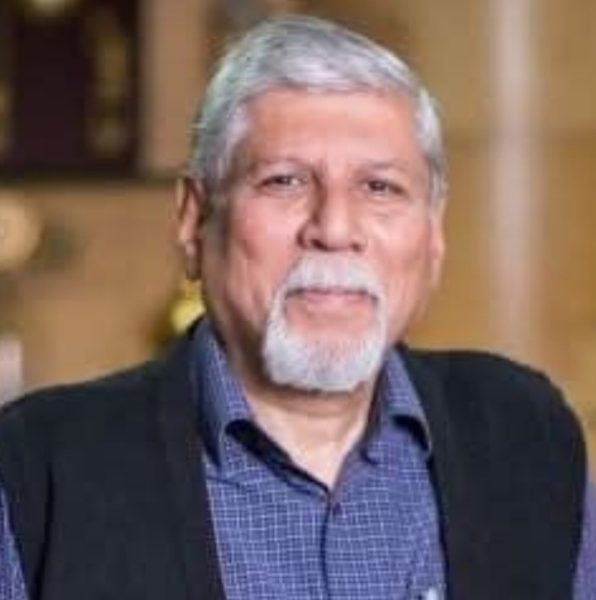
Abhilash Khandekar, is a veteran journalist, conservationist, former Member Madhya Pradesh Wildlife Board and ex-President Madhya Pradesh Cricket Association
