
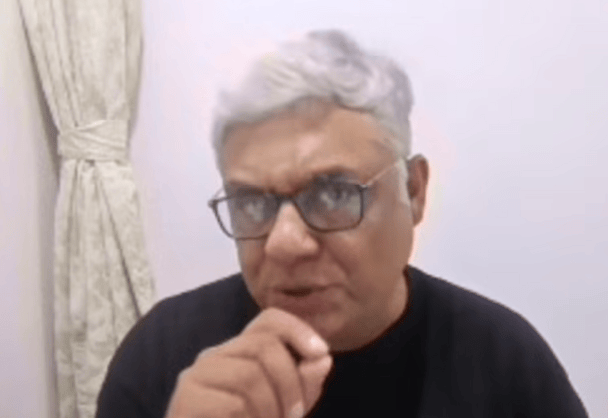
By Lalit Shastri
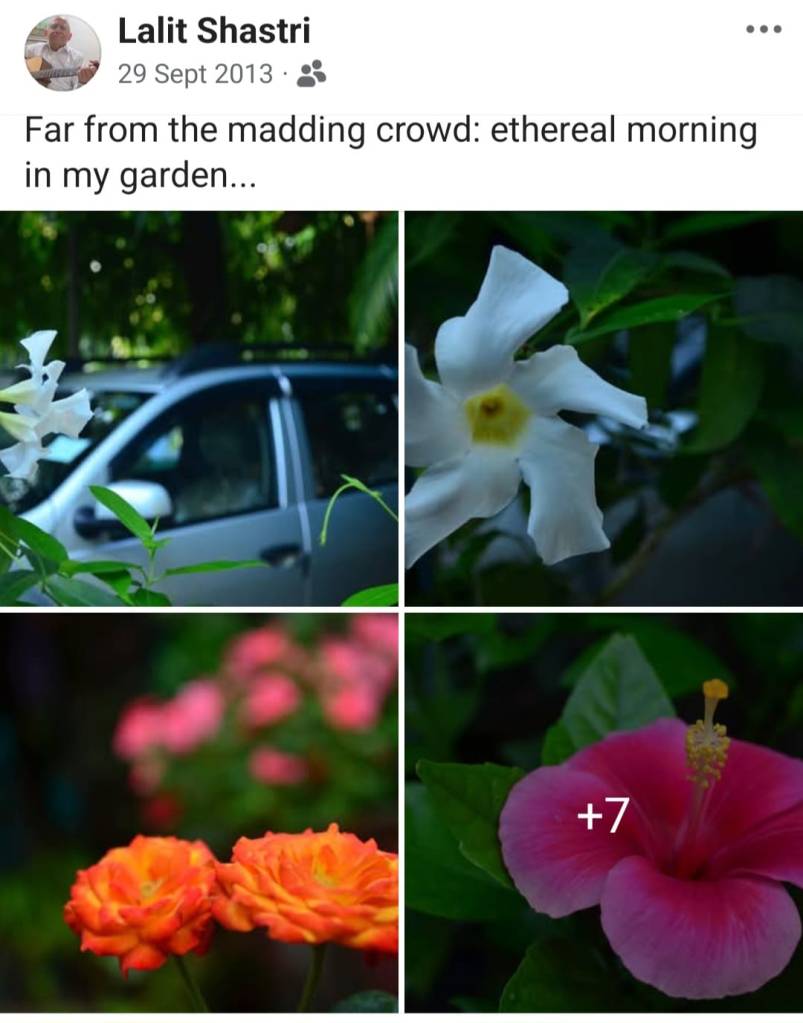
I posted an old Facebook memory today. It was from September 29, 2013 – thirteen years ago. The post carried a few photographs from my garden and a simple line: “Far from the madding crowd: ethereal morning in my garden…”
I had almost forgotten the world that surrounded those photographs. Then came a comment from Sujay Gupta.
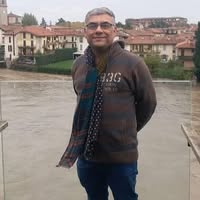
Sujay and I go back to the days when journalism was a very different profession. When he was in Bhopal, he was the Madhya Pradesh Bureau Chief of The Statesman. I was heading the Madhya Pradesh Bureau of The Hindu. We belonged to competing newspapers, but competition in those days did not necessarily mean distance. There was a camaraderie among journalists that grew out of long hours, shared frustrations, deadlines, cups of tea and the peculiar fellowship of people who lived by the news.
Sujay’s comment brought all of that rushing back.
He wrote about the best times at E-7/26 Char Imli, the house where my girls grew up. He remembered the endless cups of tea and “mapping Goa”. He remembered the familiar sound of the modem as I dialled up to send stories for The Hindu. And he remembered how we struggled to fax stories from the local post office.
Then he wrote something that stayed with me:
“Those were the days of pure joy of just doing journalism.”
How beautifully he put it.
The strange thing about memory is that it rarely returns in chronological order. It comes back through sounds, smells, faces and small details that we had stopped noticing while we were living them.
Today, the word modem itself sounds almost archaeological. But I can hear that sound. That strange electronic handshake when the computer tried to connect to the outside world. We waited for it. Sometimes it connected. Sometimes it didn’t. And when it did, a story could finally begin its journey to the newspaper.
There were no smartphones. No WhatsApp. No instant transmission of photographs and documents. No social media to tell us immediately what everyone else was thinking. There were deadlines. There were telephones. There were fax machines. There were bulky computers – a disc operating system and the modem for transmitting stories. There were post offices. And there were journalists.
We did not have today’s extraordinary technology, but somehow we had time for one another. A reporter could walk into another journalist’s house, sit down, have tea, talk about a story, argue about a fact, discuss politics, and then perhaps spend another hour simply talking.
At E-7/26 Char Imli, journalism often continued after the task of filing stories had ended for the day.
Sujay’s recollection also reminded me of something else. We were not simply filing stories. We were living journalism. The profession was demanding, sometimes exhausting and occasionally maddening, but there was an unmistakable pleasure in it.
Perhaps that is what he meant by “pure joy”.
Looking back, I realise how much of our professional life was built around such apparently insignificant moments. A cup of tea. A conversation. A colleague dropping in. Typing stories. A map, papers full of jottings or files spread out on a table. A modem struggling to establish a connection. A hurried trip to the post office because the copy had to reach Delhi.
Today, a reporter can send a story from the middle of a forest with a device in his hand. Photographs arrive instantly. Video can be transmitted in seconds. The entire world is connected.
And yet something was lost along the way. The technology became faster, but journalism became more hurried. We had fewer means but, perhaps, more conversations.
Sujay himself went on to have a remarkable journalistic career, eventually spending close to two decades with Herald Goa, Goa’s oldest and largest newspaper, where he became Group Editor. He later moved into communications and media in the education sector. But when he looked at that old Facebook post, he did not write about designations or achievements.
He remembered Char Imli. He remembered tea. He remembered Goa, where he now lives and runs the people centric media network – Ink Goa. He remembered the modem. He remembered the post office. And he remembered journalism.
That moved me. I replied to him:
“How beautifully you took a trip down memory lane, my dear Sujay Gupta! Yes, E7/26 Char Imli.”
That was all I needed to say. Because sometimes another person’s memory completes your own.
When I had posted those photographs in 2013, I was thinking about my garden. Thirteen years later, a friend looked at that post and opened a completely different door – one leading back to a house, a profession, a friendship and an era that has quietly disappeared.
The flowers in those photographs have long since faded. The garden has changed. The modem is history. The fax machine is history. The local post office is no longer where a journalist rushes to send a story. Even the rhythms of journalism have changed beyond recognition.
But for a brief moment today, Sujay and I were back at E-7/26 Char Imli.
There were cups of tea on the table. There was a story to be filed. Somewhere, perhaps, the modem was making that strange sound. And we were young enough – and foolish enough – to believe that this was simply our everyday life.
We did not know then that one day we would look back and call it the pure joy of doing journalism.
