

ThisisNews Network
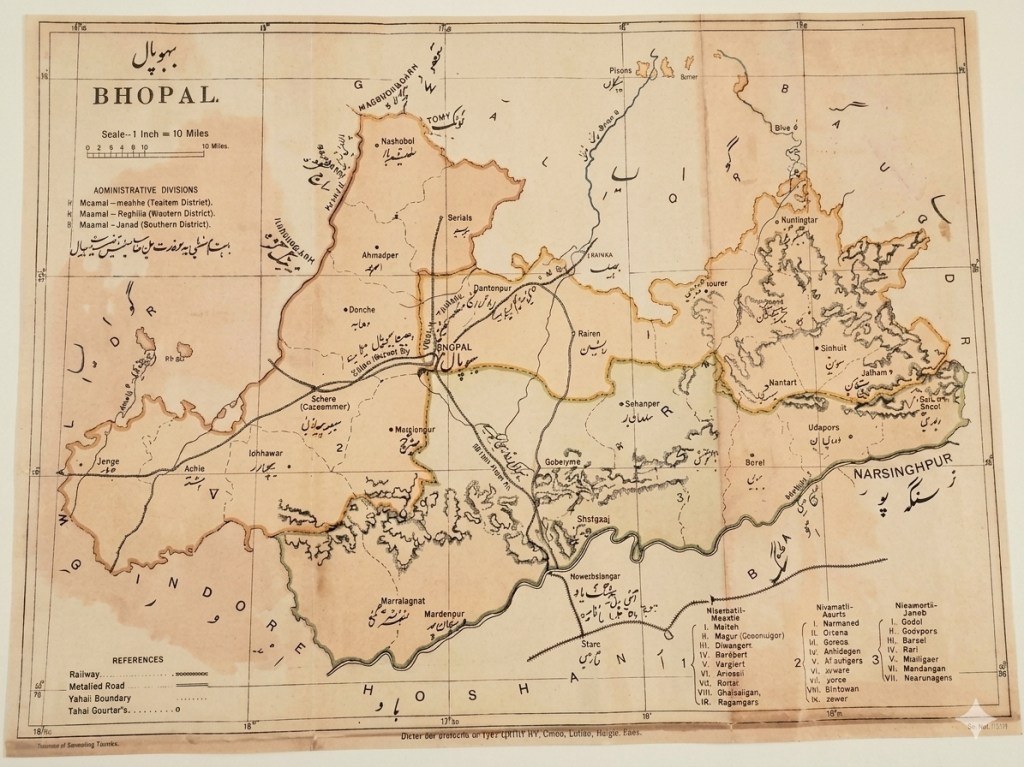
Joint exercise to reconstruct property holdings as of April 30, 1949; khatauni, khasra, old settlement records, merger documents and mutation history to be scrutinised; field verification ordered
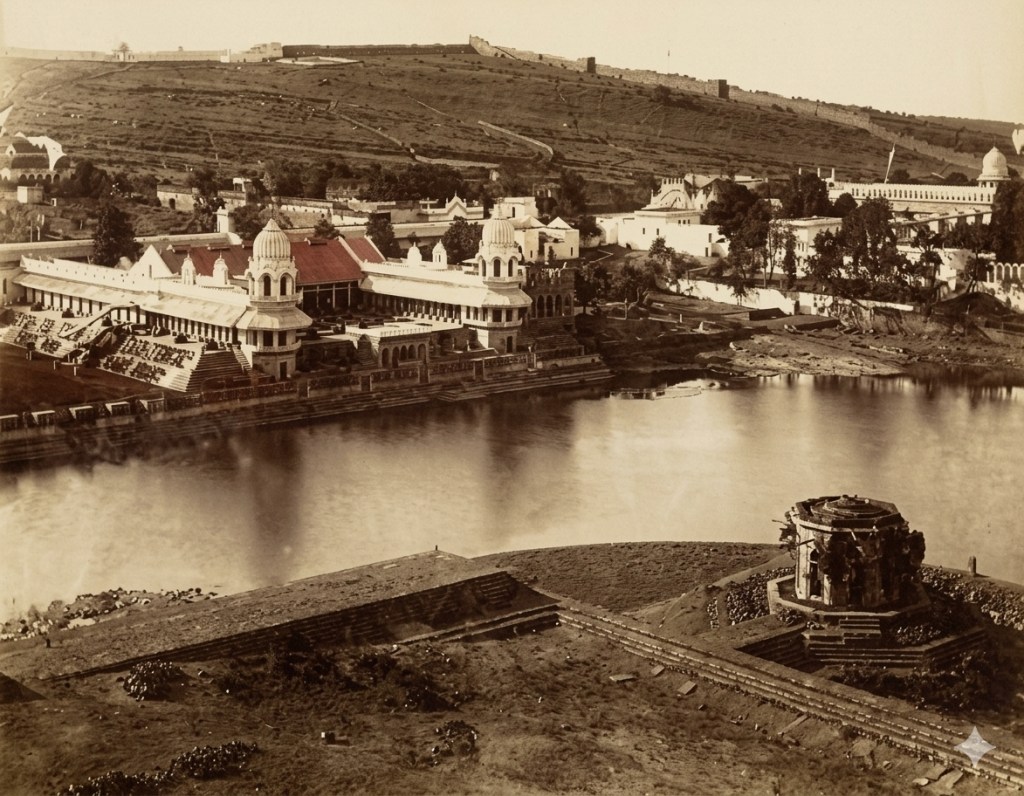
Bhopal: Nearly eight decades after the end of the princely era, the Government of India and the Bhopal district administration have launched an extensive exercise to identify and verify properties associated with the former Bhopal ruling family that could potentially fall under the category of enemy property.
The exercise covers properties linked to the former Nawab of Bhopal and members of the erstwhile ruling family, including Abida Sultan, Aftab Jahan Begum and Sajida Sultan. It involves not merely a paper examination of revenue records but a reconstruction of the family’s property position as it existed on 30 April 1949, followed by documentary verification and, wherever required, physical inspection of the properties.
The initiative assumes significance because the administration has directed revenue officials across Bhopal district to establish, from historical records, how much property stood in the name of members of the Nawab family in their respective areas on April 30, 1949, and to furnish detailed reports along with supporting documents.
Centre-district coordination
The exercise followed a video-conference meeting held on August 4, 2026, involving officials of the Custodian of Enemy Property for India (CEPI), Mumbai, and senior officers of the Bhopal district administration.
Among those involved in the process were Bhopal ADM Sumit Kumar Pandey, SAS officer Ravish Shrivastava, CDO (Revenue), Bairagarh, and Assistant Custodian of Enemy Property Patricia Fialho, besides officials associated with the Custodian’s office in Mumbai.
The decisions taken at the meeting were subsequently formalised through directions issued by ADM Pandey on August 20, 2026.
The next significant step came through a communication dated August 25, directing the SDMs and tehsildars of Bhopal district to furnish information sought by the office of the Custodian of Enemy Property, Mumbai.
The communication specifically asks the field administration to ascertain, on the basis of the genealogy of the Nawab family supplied to it, the properties held by members of the family in their respective jurisdictions on April 30, 1949. Detailed information, reports and documentary evidence were to be furnished within 15 days.
Nine categories of records under scrutiny
The investigation has been designed to go substantially beyond a simple search of present-day land records.
The joint teams have been asked to examine khasra and khatauni records, khasra panchsala, jamabandi, mutation proceedings, old settlement records, maps and land records, besides documents connected with the erstwhile Bhopal State and the merger agreement.
Records relating to properties standing in the names of Abida Sultan, Aftab Jahan Begum and Sajida Sultan are also specifically within the scope of the exercise.
For each property identified, the administration is expected to compile details including the survey or khasra number, area, previous and present ownership, mutation orders and present use. Where necessary, certified copies of supporting documents are also to be attached.
From files to the ground

Significantly, the exercise is not intended to remain confined to archival records.
The joint teams are expected, wherever necessary, to visit properties and compare the documentary record with the actual position on the ground. Possession, construction, present use and the physical character of the land are to be recorded and matched with the revenue record.
The teams include revenue officials such as the concerned tehsildar or naib tehsildar, revenue inspector and patwari, along with a surveyor appointed by the Custodian of Enemy Property.
This field component could prove particularly important in cases where the present physical status of land does not correspond with historical descriptions in revenue records.
Why the April 30, 1949 cut-off matters
The most striking feature of the exercise is the insistence on establishing the property position of the Nawab family as on April 30, 1949.
That requires the administration to work backwards through nearly eight decades of land records and ownership changes. The exercise will therefore have to trace the chain from historical records through subsequent mutations, transfers, partitions, sales, leases, court proceedings and changes in land use.
The records associated with the merger of the erstwhile Bhopal State with the Indian Union are also being brought within the ambit of the investigation.
In effect, the administration is being asked to reconstruct a historical property map and then determine what happened to each relevant parcel over the decades that followed.
A potentially consequential exercise
The scale of the exercise is evident from the fact that the Centre’s Custodian establishment and the district administration have been brought together in a joint mechanism rather than leaving the matter to routine revenue verification.
The immediate objective, however, remains identification and verification. No property can legitimately be treated as enemy property merely because it was once associated with a member of the former Nawab family. The documentary trail, ownership history and applicable legal status will ultimately have to establish that.
That distinction is important because the present exercise appears to be at the investigative and record-reconstruction stage. The documents and orders available so far do not establish that any particular property has already been declared enemy property.
Editorial | The real question begins after the files are opened
What makes this exercise important is not the glamour or history attached to the former Bhopal ruling family. It is the possibility that seven decades of fragmented land records may now be brought together for the first time in a systematic manner.
If the exercise is conducted with the rigour indicated in the official directions, it could produce something more valuable than a list of properties: it could establish an auditable chain showing what the Nawab family owned in 1949, what happened to those properties subsequently, under whose names they were mutated, whether transfers were supported by valid documents, and what their present status is.
That is precisely where the exercise could become consequential.
Historical land records are often difficult to reconstruct. Files disappear, records change hands, names are altered, mutations accumulate and generations of transactions can obscure the original title. A serious investigation must therefore resist the temptation to jump from an old royal connection to a modern conclusion.
But the reverse is equally important. Historical complexity cannot become a permanent shield against scrutiny.
If the records reveal nothing irregular, the investigation should say so clearly and put the matter to rest. If, on the other hand, the documentary and physical evidence reveals unexplained transfers, questionable mutations, discrepancies between records and possession, or properties that meet the statutory test for enemy property, those findings too should be placed in the public domain and acted upon according to law.
The significance of the present exercise, therefore, lies less in the identity of the former owners than in a much larger principle: after 77 years, the State is finally attempting to reconcile the historical record with the land that exists on the ground today.
And that is an exercise worth watching closely – not because it concerns a former royal family, but because the integrity of land records and the rule of law should be tested equally, whether the property once belonged to a Nawab or an ordinary citizen.
