
Lalit Shastri
There comes a point when silence ceases to be neutrality. For someone trained in history, it can become an abdication of intellectual responsibility. I have spent much of my life studying India’s past. I therefore cannot accept, merely because it has become fashionable or politically convenient, a simplified account of Indian civilisation in which the entire history of the subcontinent is retrospectively reduced to an immutable and uniformly oppressive caste order, and in which every subsequent State intervention is presented as an inevitable correction of that single historical narrative.
I do not accept that proposition. Nor am I prepared to remain silent simply because questioning it may place me outside the prevailing intellectual consensus.
What makes the question even more compelling today is that caste is not merely a subject of historical or sociological debate. The State itself continues to institutionalise it. The Narendra Modi government has decided that caste enumeration will be included in Census 2027, extending caste enumeration beyond the Scheduled Castes and Scheduled Tribes to the population as a whole. The decision, taken by the Cabinet Committee on Political Affairs in April 2025, means that independent India is preparing to undertake a comprehensive caste enumeration as part of its next census.
The decision deserves a much deeper national conversation than the political arguments surrounding it have so far allowed. If caste is an evil from which Indian society must ultimately liberate itself, why is the State continuing to expand the institutional importance of caste as a category? If the constitutional promise is of equality and the eventual transcendence of caste, should the direction of public policy not progressively reduce the importance of caste in the life of the citizen rather than repeatedly reaffirm it?
Yes, one is left wondering, is the decision to conduct the next nationwide census on caste lines been taken by the Modi government due to political expediency and only to upstage the leader of the Opposition and Congress leader Rahul Gandhi, who was crying hoarse about the reserved categories and their share in terms of jobs and positions of power?
Mine is not an argument against collecting facts. But the larger constitutional question cannot be evaded: does measuring caste help India overcome caste, or does it risk making caste an even more permanent feature of the Republic’s architecture?
That question becomes unavoidable when caste enumeration is considered alongside reservations in legislatures, educational institutions, and government employment; reservations in promotions; age relaxations and other concessions; and a special criminal law whose operation can alter the procedural position of an accused on the basis of the caste identities involved.
The danger is not merely administrative. A comprehensive caste enumeration, undertaken in a political environment already saturated with competing claims over reservation, representation and entitlements, carries the potential to deepen caste consciousness rather than diminish it. Once the State formally counts every citizen by caste, the numbers inevitably become the basis for competing political claims – who is under-represented, who is over-represented, who deserves a larger share, who has received less and who must receive more. Instead of gradually making caste less consequential in the life of the citizen, the exercise could encourage every community to look at itself increasingly as a political bloc competing with other communities for a larger share of the State’s resources and opportunities. That is not a trivial consequence. In a country as socially diverse as India, the preservation and possible intensification of caste identities as political constituencies can carry a serious risk to social cohesion and the larger constitutional objective of fraternity.
A caste census may tell us how many castes India has and the aggregate of the deprived, well off, and very well off under different caste categories, but a more important question is whether, seventy-five years after the Constitution, we should be building a Republic in which citizens increasingly think of themselves first as members of those castes.
We say we want to abolish caste. Yet the State continues to count it, classify it, legislate around it, reserve on its basis, mobilise politically around it and, through special legislation, attach significant legal consequences to it.
At some point we must ask a question that has become almost too uncomfortable to ask: how can caste disappear from Indian society if the State itself continues to make caste an indispensable administrative identity?
Through history, there were inequalities, conflicts, deprivation, exploitation and practices that deserve to be understood. There were periods and places in which social exclusion became harsh and hereditary. But history cannot be written by taking the worst features of a civilisation, freezing them in time and projecting them backwards across thousands of years as though nothing else existed.
Nor can a civilisation as vast, diverse and continuously evolving as India be reduced to one social formula.
History is not a catechism
My own approach to this question goes back to my training as a student of ancient Indian history. History, as I learnt it, was not a catechism. It was an inquiry into evidence, chronology, institutions, texts, inscriptions, material conditions and competing interpretations.
Historical categories cannot simply be transplanted from one civilisation to another and assumed to mean the same thing. They have to be tested against the evidence of the society to which they are being applied.
That principle is particularly relevant to the way India’s social history is discussed today.
There is a tendency to describe the entire history of the Indian subcontinent through the single, undifferentiated expression “the caste system”, as though a uniform structure existed unchanged from antiquity through the medieval period and into modern times. That proposition is historically difficult to sustain.
The distinction between the conceptual framework of “varna” and the multitude of “jatis” and other social formations that evolved across regions and periods cannot simply be erased.
“Varna”, in its classical conceptualisation, was associated with social function, qualities, duties and vocation. Whatever the distance between that formulation and its actual practice at particular times and places, it cannot simply be equated with every rigid hereditary caste formation that subsequently emerged.
The historical development of “jatis”, occupational communities, tribal groups, guilds, sectarian formations, landed communities and political elites was considerably more complicated.
India’s social history was not static.
Communities changed occupations. Political power shifted social status. New groups entered established social orders. Old groups were absorbed or transformed. Kingdoms rose and disappeared. Religious movements challenged established practices. Economic change altered relationships between occupations and status. Local social structures varied enormously from one region to another.
To compress all of this into one timeless caste hierarchy is therefore not an explanation of Indian history. It is a retrospective simplification.
And simplification becomes dangerous when it is subsequently converted into public policy.
Poverty was never the monopoly of one caste
The historical record must confront inequality, exclusion and suffering wherever they existed.
We cannot take the existence of inequality and assume that its cause, character and intensity were identical everywhere and at all times. Nor can we assume that every person belonging to a particular social category shared the same material condition.
Poverty, after all, has never been the monopoly of one caste. For example, a large number of Brahmins lived lives of considerable material hardship, particularly those without land, patronage or institutional access. The popular image of the Brahmin as uniformly privileged is no more historically satisfactory than the proposition that every member of a historically disadvantaged community occupied the same social and economic position.
Those who stood close to power – rajgurus, influential temple establishments, court officials, landed elites or individuals enjoying royal patronage – could occupy positions of considerable authority. But their position tells us little about the condition of the ordinary person belonging to the same broad social category.
The distinction between social identity and actual power is crucial. It also remains crucial today.
A Cabinet minister, senior bureaucrat, judge, military commander or captain of industry may exercise extraordinary power over the lives of ordinary citizens. Access to such people is limited precisely because their institutional position gives them authority. Yet nobody would seriously argue that every person belonging to the same professional category automatically possesses the same wealth, power or social privilege.
Why, then, should historical society be understood differently?
The more useful historical questions are: Who owned or controlled land? Who cultivated it? Who controlled political power? Who had access to education and patronage? Who collected revenue? Who exercised customary authority? Who was dependent upon whom? Who could move socially or economically? And what was the actual material condition of the individual?
These questions take us much further than simply attaching a caste label to a person and assuming that the label explains everything.
Rome, Europe and India were not the same
The same caution applies to the description of India’s agrarian order as “feudal”.
The Roman latifundium, the medieval European manor and the agrarian systems of pre-colonial India were not interchangeable institutions.
Roman latifundia represented forms of highly concentrated landed wealth and, in important periods and regions, could be worked substantially through slave labour. Medieval Western European manorialism developed a different structure: the lord possessed extensive economic and often jurisdictional authority, while peasants cultivated holdings under a variety of customary obligations.
Serfdom was not slavery. But it represented a structured form of dependence, involving hereditary obligations, rents, labour services and restrictions that distinguished the serf from a genuinely free cultivator.
India’s experience cannot simply be placed inside this framework.
The debate among historians over the applicability of the European feudal model to India is itself evidence of the problem. A school of historians has argued that, unlike the structured dependence of the peasantry upon lords in medieval Europe, pre-colonial Indian society in significant respects displayed self-dependent or free peasant production. That historiographical argument remains contested, as serious historical arguments should be, but its very existence should caution us against mechanically importing a European model into Indian history.
The Indian peasant was not everywhere a landless labourer attached to a lord’s manor.
Cultivating households could possess direct, customary or community-based rights in land. The village was an intricate economic organism containing cultivators, artisans, pastoralists, service groups, headmen, revenue intermediaries and landed interests. The peasantry was itself internally differentiated, and its condition varied enormously between regions and periods.
There were certainly landless labourers. There were certainly powerful zamindars and other landed elites. There were certainly revenue pressures, indebtedness, coercion and agrarian exploitation. But the existence of these inequalities does not make the Indian cultivator identical to the European serf.
A small peasant household with a direct or customary stake in the land it cultivated could be economically vulnerable, sometimes severely so, but it occupied a fundamentally different structural position from a serf whose relationship to the manor involved hereditary obligations and restrictions on mobility.
Precarious ownership is not the same thing as serfdom. Poverty is not synonymous with caste. And hierarchy is not synonymous with one particular historical model of hierarchy.
The Roman latifundia, medieval European manors and Indian agrarian formations can illuminate one another precisely because they were different.
That distinction matters because the contemporary narrative sometimes commits two historical compressions simultaneously. It takes a vast and changing Indian social order and compresses it into one timeless caste system. It then takes every form of agrarian inequality and compresses it into one European-style feudal structure.
Both shortcuts distort history.
And bad history eventually produces bad policy.
The State has made caste permanent by trying to abolish it
This brings us to the central paradox of contemporary India.
We say that caste must disappear.
Yet the State continues to make caste relevant to an extraordinary number of decisions affecting citizens.
Caste determines or influences representation in legislatures. It determines access to reserved seats in educational institutions. It influences recruitment to government employment and, within the constitutional and judicial framework, promotions. It brings age relaxations and other concessions. It shapes political mobilisation. And in the case of the SC/ST (Prevention of Atrocities) Act, the caste identity of the complainant and accused can have profound consequences for the criminal process itself.
At some point we must ask the question without fear: how can caste disappear from Indian society if the State itself continues to preserve caste as an indispensable administrative identity?
This is not a question about whether the State should protect the vulnerable. It should.
It is a question about whether protection requires the permanent institutionalisation of the identities that the Constitution ultimately promises to transcend.
A corrective mechanism was supposed to help India move towards equality. It was never supposed to become a permanent substitute for equality.
Justice is not achieved by making inherited identity destiny
This is where the modern philosophical idea of Justice as Fairness becomes relevant.
Fairness does not mean pretending that everyone begins life from exactly the same starting point. It means recognising genuine disadvantage and designing institutions that provide people with a fair opportunity to overcome it.
But fairness also requires looking at the individual.
A poor child from an unreserved community does not become privileged merely because another child is poorer. A child born in a historically disadvantaged community does not become undeserving merely because another member of the same category is wealthy.
The State must be capable of seeing both.
Poverty, educational deprivation, unemployment and the absence of social capital are not confined to one caste. A poor child born into an unreserved family does not become privileged merely because the administrative category into which he or she was born carries no reservation benefit. Nor does a child belonging to a reserved category cease to deserve assistance because another member of that category has achieved prosperity. The State’s responsibility should therefore be to identify disadvantage rather than permanently equate caste identity with disadvantage.
This is where the present reservation regime increasingly collides with the principle of fairness.
If the purpose of affirmative action is to compensate for disadvantage, then the State must become progressively better at identifying actual disadvantage rather than treating inherited identity as an eternal proxy for it.
The child should be the focus, not the caste label.
When does a corrective measure end?
This is the question India has avoided for decades. Every serious public policy needs an objective and some means of measuring whether that objective has been achieved.
Reservation has an objective. The SC/ST Act has an objective. But what is the exit strategy?
What measurable condition would tell the Republic that a particular form of reservation has done what it was intended to do? What level of social mobility, educational representation, economic independence, social equality or political representation would justify a reassessment?
At what point does the State review the necessity of the measure rather than simply renew it?
These questions are uncomfortable because the answers would disturb established political constituencies. But a democracy cannot allow political convenience to become constitutional destiny.
A corrective mechanism without an exit strategy becomes a permanent institution. A permanent institution built around caste cannot possibly produce a casteless society.
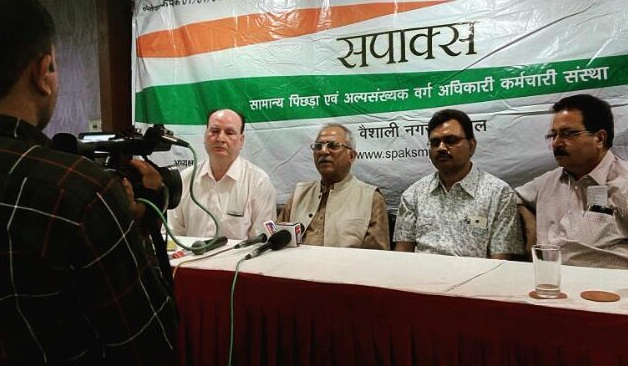
My own journey to SAPAKS (“Samanya Pichchda Alpsdankhyak Kalyan Samaj Sanstha)
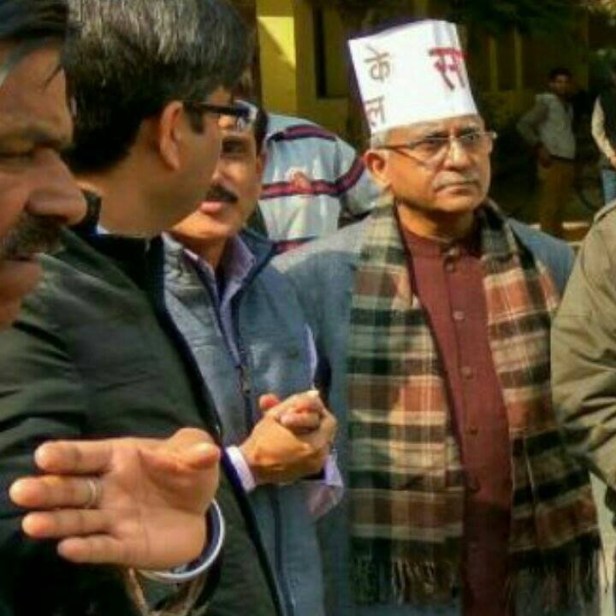
I have been making this argument for years.
During the SAPAKS mobilisation in Madhya Pradesh, particularly during the intense debate of 2016-18, I became actively involved as one of the founders of this organisation or call it the SAPAKS Movement, because I believed that the issue could no longer be treated as merely another political dispute over reservation.
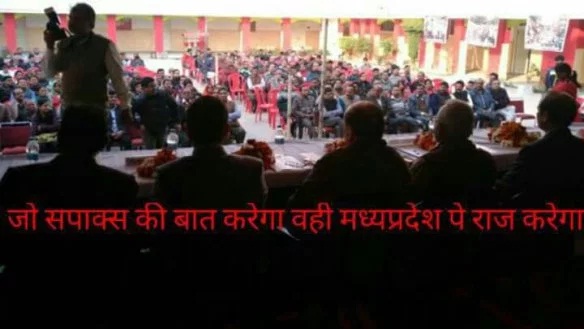
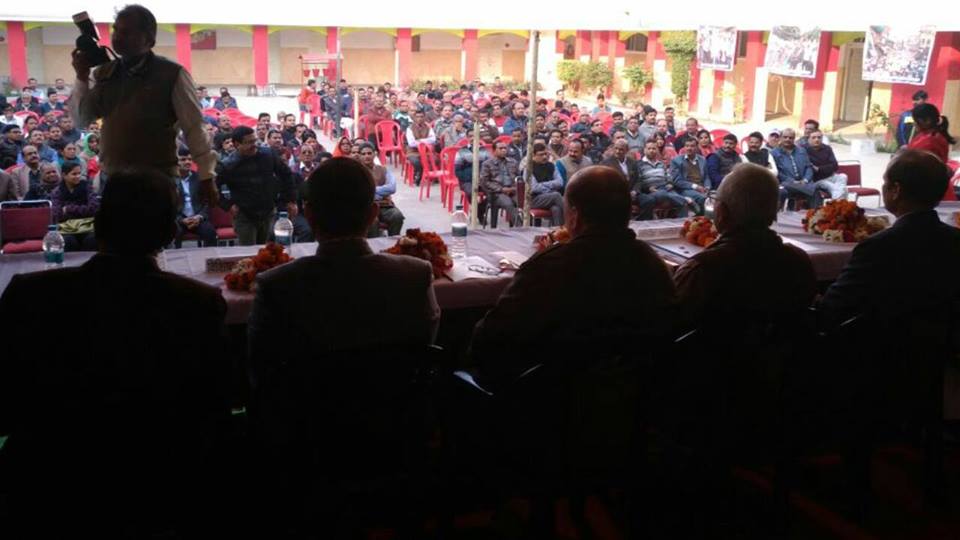
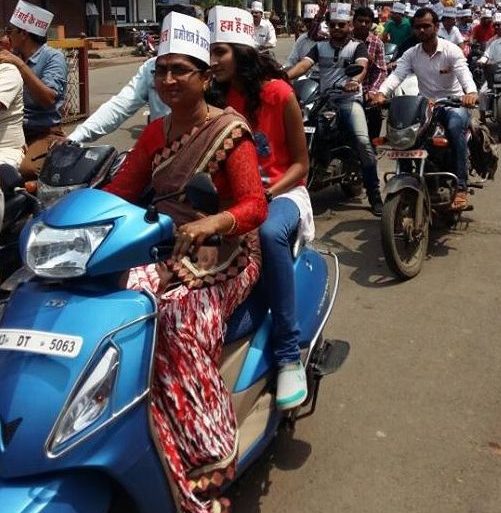
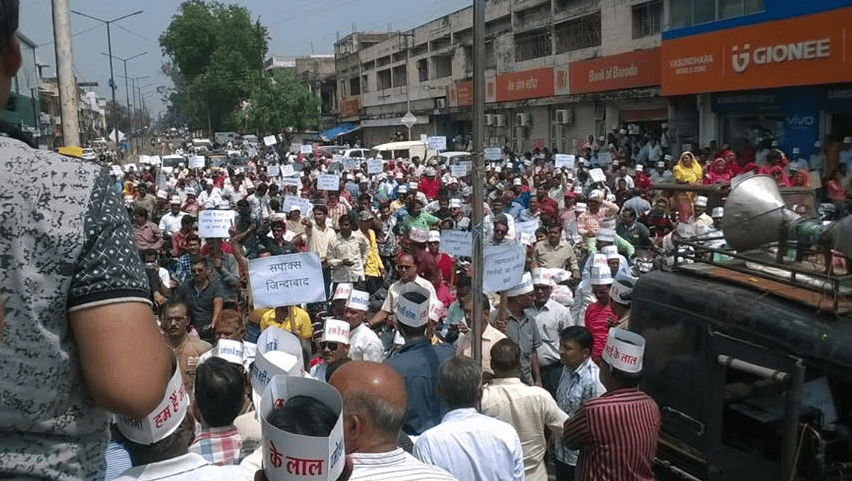
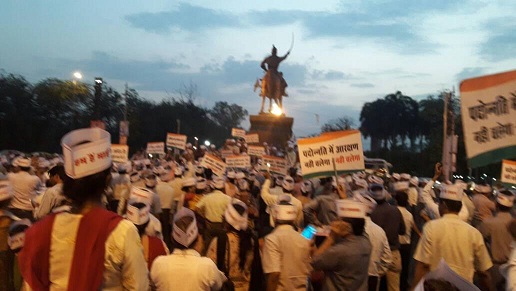
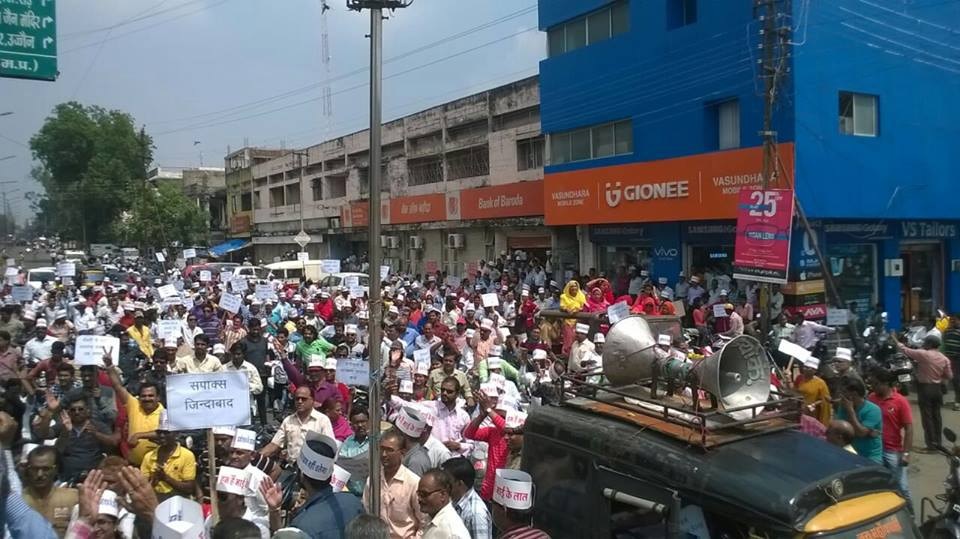
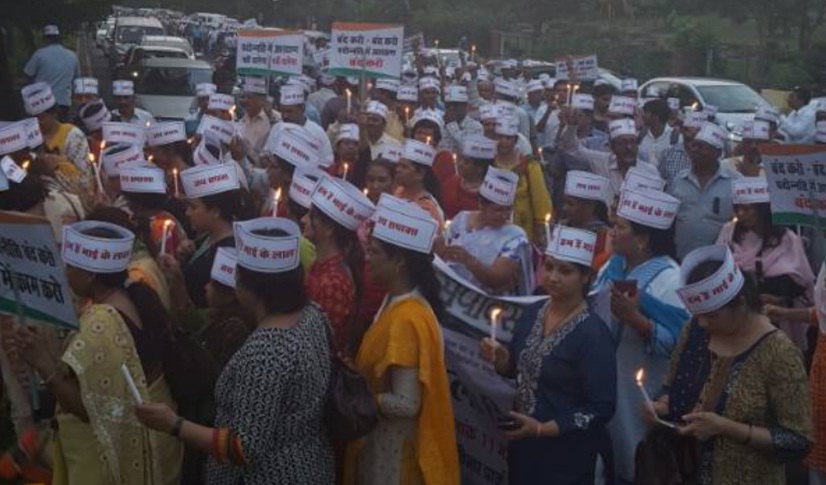
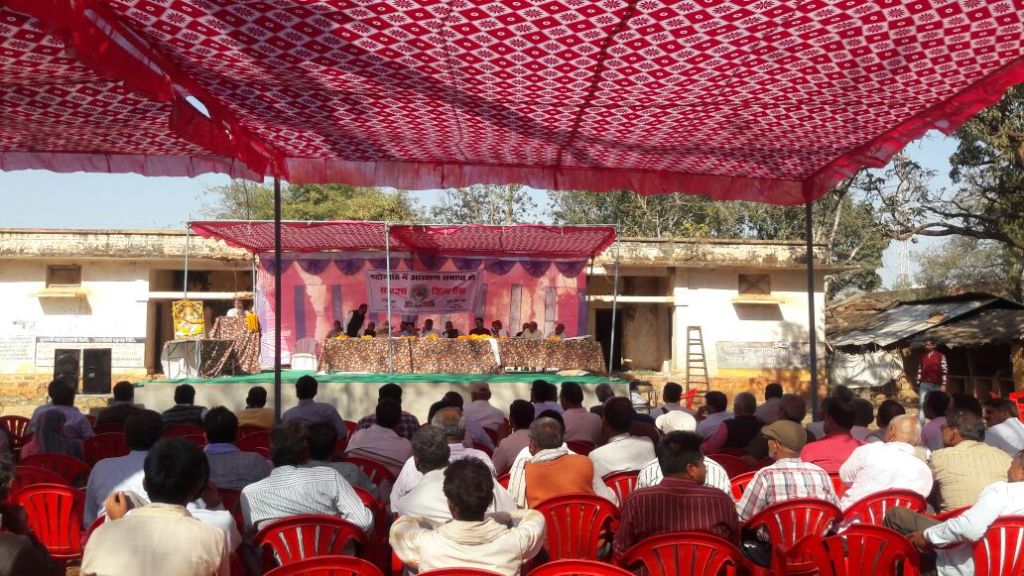
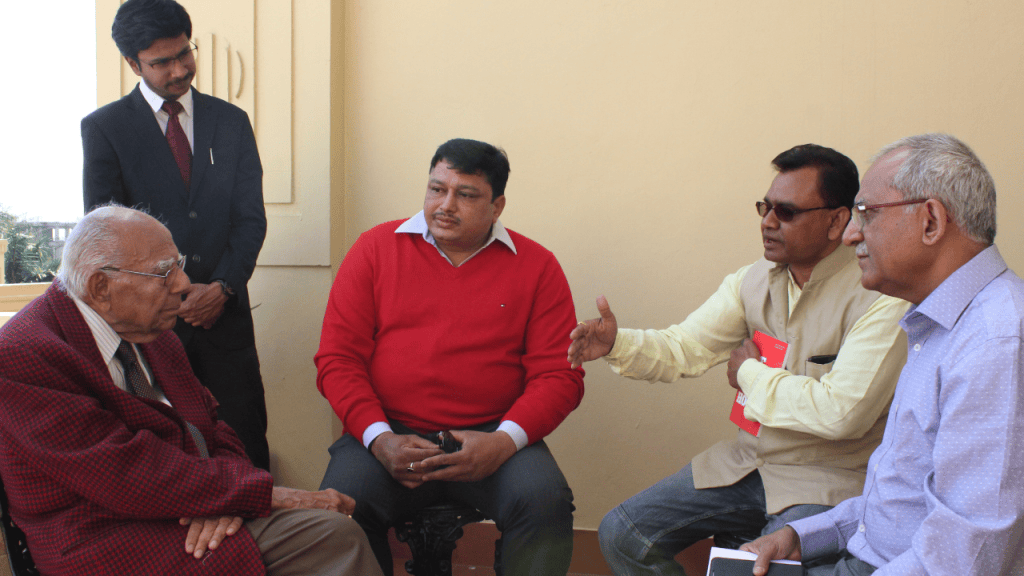

The larger question was whether India was creating a permanent architecture of caste rather than dismantling one.
We questioned the indefinite expansion of caste-based reservation. We questioned the absence of a credible exit strategy. We questioned the extraordinary criminal machinery of the SC/ST Act and the possibility that its provisions could be invoked in circumstances where ordinary criminal law should have been sufficient. We argued that merit mattered. We argued that genuine disadvantage should be addressed. And we argued that the State had an obligation to protect every citizen, including those who happened to fall outside the reserved categories.
Those arguments were often caricatured. Opposition to reservation was equated with opposition to social justice. Questioning the Atrocities Act was equated with hostility towards SC and ST communities.
That was never my position. My position was, and remains, much more fundamental: social justice cannot mean permanent social classification.
The purpose of social justice must ultimately be to make inherited disadvantage irrelevant. It cannot be to make inherited identity permanently decisive.
The Atrocities Act: why a separate criminal regime?
This is where the SC/ST (Prevention of Atrocities) Act deserves a much more searching constitutional examination.
The Act was enacted in 1989 against the background of serious caste-based violence and the perceived inadequacy of existing mechanisms to protect members of SC and ST communities.
But the fact that a social problem is serious does not end the constitutional inquiry.
The question is whether the extraordinary machinery created to address that problem remains necessary, proportionate and compatible with the fundamental rights of every citizen.
India already has a comprehensive criminal law. The Bharatiya Nyaya Sanhita criminalises murder, hurt, intimidation, wrongful restraint and confinement, sexual offences and numerous other forms of criminal conduct.
If a person commits a crime because of caste hatred, the caste motive can and should have serious consequences for the punishment.
But why should the State create a parallel procedural architecture in which the identity of the complainant can fundamentally alter the legal position of the accused before guilt has been established?
That is the question. It is a constitutional question.
The 2018 turning point
The issue became particularly sharp after the 2018 amendment to the SC/ST Act.
Section 18A provides that a preliminary enquiry is not required for registration of an FIR under the Act. It also provides that an investigating officer does not require prior approval for arrest, if arrest is necessary, and it excludes the application of Section 438 of the Code of Criminal Procedure to cases under the Act.
The 2018 amendment was Parliament’s response to the Supreme Court’s earlier safeguards concerning arrest and preliminary enquiry. The Court subsequently upheld the constitutional validity of the amendment, while judicial decisions have continued to recognise that the statutory bar on anticipatory bail cannot be applied mechanically where the complaint does not disclose a prima facie offence under the Act.
The legal position therefore contains an important judicial safeguard: the mere insertion of the Act into a complaint does not make every allegation automatically immune from judicial scrutiny. But the underlying concern remains.
The architecture is more onerous than ordinary criminal procedure. The accused can be confronted with an FIR without a preliminary enquiry. The statutory route to anticipatory bail is excluded. The possibility of arrest becomes an immediate concern. And the accused may have to approach the courts to establish at the threshold that the special statute is not even prima facie attracted.
The question therefore remains: why should an allegation made under a special identity-based criminal statute create a procedural environment different from that applicable to another citizen alleging the same underlying criminal conduct?
If the underlying crime is assault, punish assault. If it is intimidation, punish intimidation. If it is sexual violence, punish sexual violence. If it is murder, punish murder.
A point that should not be overlooked is that the criminal justice system should not turn the allegation of a crime motivated by caste hatred itself into a punishment.
IIT Bombay: when an allegation becomes the story
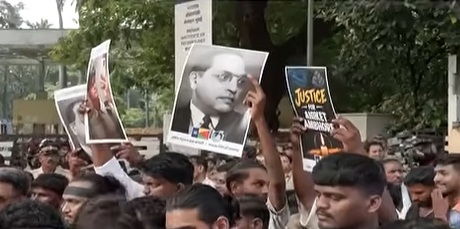
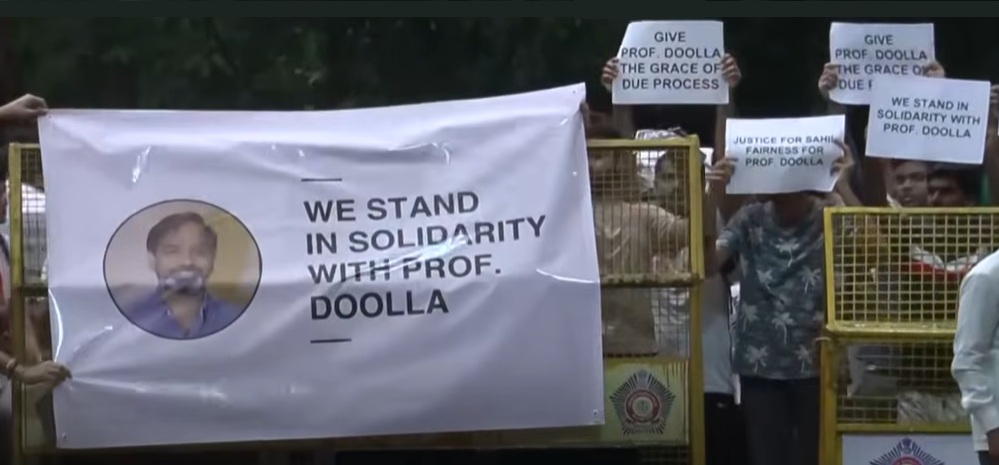
That question has acquired a human face in the controversy surrounding the death of 20-year-old IIT Bombay student Sahil Wakode.
Sahil died by suicide after an examination episode in which Professor Suryanarayana Doolla was the invigilator. His family subsequently alleged caste discrimination, harassment and abetment to suicide, and an FIR invoked provisions of the SC/ST Act.
These are serious allegations. But an allegation remains an allegation until evidence establishes it. That elementary distinction has become particularly important because contemporaneous evidence concerning the examination episode is now available.
CCTV footage from the examination period is being examined by the Mumbai Crime Branch as investigators reconstruct Sahil’s final hours. Reporting on the footage indicates that it captures the interaction in the examination hall and Sahil subsequently being asked to leave. Investigators are also examining campus and hostel footage, digital evidence and witness accounts.
The CCTV footage cannot establish whether there was caste-based harassment at some other time. Its significance is fundamental. It provides contemporaneous evidence concerning an incident that immediately preceded the tragedy.
And if an invigilator discovers that a student is using an unauthorised device or material during an examination, he has a professional duty to act.
What kind of educational institution would India have if an invigilator could simply ignore cheating because disciplinary action might subsequently expose him to accusations? Academic integrity is not an oppressive principle. It is the foundation upon which competitive education rests.
The father’s allegation must be investigated – not presumed
Sahil’s father has alleged that his son had spoken about caste-based harassment before his death.
Investigators must establish precisely what was allegedly said, when it was said, what conduct was described, whether any person was identified, whether there are contemporaneous messages or other communications, whether any complaint was made to the institution, whether the SC/ST cell was approached, and whether there are witnesses or other corroborating evidence.
The evidence has to be examined in its entirety.
Also, a tragedy deserves compassion. An allegation deserves investigation. A victim deserves justice. But an accused person deserves due process.
These propositions are not contradictory. They are the foundations of a civilised criminal justice system.
The professor cannot be convicted by public emotion
The IIT Bombay Faculty Forum has publicly backed Professor Doolla and said that he was acting within institutional rules. It has also said that the student had not approached the institute’s SC/ST cell with a complaint. Faculty members have rallied behind him. Students themselves have not been unanimous: some have demanded stronger action, while other students have called for a fair investigation and expressed support for the professor’s right to due process.
The student protests have raised legitimate questions about institutional accountability, student welfare and mental-health support, and students have submitted a substantial charter of demands. The institute has also taken administrative action concerning Professor Doolla while the investigation proceeds.
None of this determines criminal guilt.
That is precisely the point.
An administrative response is not a criminal conviction. A protest is not evidence. An FIR is not a conviction. A grieving parent’s allegation is not a judicial finding.
And CCTV evidence, while highly relevant, must itself be interpreted in the context of the complete investigation.
Evidence must decide. Not the mob. Not the media. Not the politics of identity.
What if the allegation is true?
Then the guilty must face the full force of the law. There is no qualification to that proposition. But the reverse must also be stated with equal clarity.
What if the allegation is not established?
And if an allegation is eventually established to have been knowingly and deliberately fabricated, the legal system must be capable of dealing with that as well.
There is a fundamental distinction between a complaint that cannot be proved and a complaint that is knowingly false.
The first is a problem of evidence. The second is a matter of culpability.
The State must not confuse the two.
But neither should the State be so afraid of the possibility of misuse that genuine victims are denied protection.
The answer is not to choose the victim over the accused. The answer is to create a system in which truth protects the victim and truth protects the innocent accused.
The wider backlash cannot be ignored
The reaction outside IIT Bombay is also significant.
In Madhya Pradesh, renewed protests against reservation and the SC/ST Act have surfaced, including a large demonstration in Rewa in September 2026, where protesters publicly expressed opposition to both the reservation system and the Act.
Whatever one thinks of the language or methods of individual protesters, the underlying discontent cannot simply be dismissed.
It would be politically foolish and socially dangerous to pretend that a generation of young Indians has no grievance.
They are competing for a limited number of seats in educational institutions and a limited number of government jobs. They prepare for years. They appear in competitive examinations where a single mark can alter the course of a life.
To tell a young person that he or she is “privileged” merely because the official category is “unreserved” is sometimes to deny the actual circumstances of that person’s life.
The State must listen.
This is not a war against social justice
The most intellectually dishonest feature of the reservation debate is the false binary it has created.
One is either for reservation or against social justice. One either supports the SC/ST Act or supports One either speaks for the reserved categories or one speaks for the “privileged”.
This is nonsense.
One can recognise historical injustice and still question contemporary policy. One can support affirmative action and still ask whether it requires reform. One can believe that historical discrimination existed and still refuse to accept a simplified account of Indian history.
These are not contradictions.
They are the essence of a mature constitutional democracy.
The unreserved young Indian has a future too
There is another constituency whose voice has been inadequately heard.
The young Indian who falls outside the reserved categories is often treated as though “unreserved” means “privileged”.
It does not.
A poor rural family can be unreserved. A first-generation college aspirant can be unreserved. A small farmer’s child can be unreserved. A family struggling to pay tuition can be unreserved. A child without coaching, books, technological access or educated parents can be unreserved.
The administrative label does not reveal the actual circumstances of the individual.
This is where the present reservation regime increasingly collides with the principle of fairness.
If two children begin from materially different circumstances, the State should help the disadvantaged child. But if the State assumes that one child is automatically privileged and the other automatically disadvantaged solely because of inherited caste categories, it risks confusing identity with circumstance.
And when such classification continues generation after generation, it creates something else – resentment.
That resentment should not be dismissed.
It should be addressed.
The problem of the permanent beneficiary
The constitutional idea of affirmative action was not to create permanent beneficiaries. It was to correct historical exclusion. That distinction is crucial. A remedy must have an objective.
If a person or family has crossed the threshold of genuine disadvantage, should the State continue treating that person exactly like the most deprived member of the same category?
If benefits accumulate generation after generation among sections that have already achieved substantial social mobility, does that necessarily advance the cause of the most disadvantaged?
These are not anti-reservation questions. They are questions about whether reservation is actually reaching the people who need it most.
The Supreme Court’s evolving jurisprudence has itself recognised that beneficiary categories are not always socioeconomically homogeneous and that questions of internal differentiation and exclusion deserve constitutional attention.
That should encourage a more sophisticated debate, not a defensive one.
We need an exit strategy
India must therefore stop asking only how much reservation there should be and begin asking under what conditions reservation ceases to be necessary.
That question cannot be avoided forever.
Reservation in legislatures raises one set of constitutional considerations. Reservation in education raises another. Reservation in public employment raises another. Reservation in promotions raises yet another. Age relaxation and other concessions raise still further questions.
They should not all be treated as one indivisible political entitlement.
Each should have measurable objectives. Each should be periodically reviewed. Each should be judged against actual outcomes.
And the system must have an exit strategy.
Otherwise the State is effectively telling every generation that caste will remain relevant because caste must remain relevant.
That is not social emancipation.
That is institutionalised caste consciousness.
The State must invest in equality before competition
There is a much larger solution that India has neglected.
Instead of endlessly debating who gets a reserved seat after competition has already begun, the State should focus on making the starting conditions more equal.
Excellent government schools, nutrition, healthcare, scholarships, libraries, digital access, coaching, language support, hostels, mentoring, career counselling, access to information and support for first-generation learners can substantially narrow the distance between social groups before the child reaches the university gate or the competitive examination hall.
That is the kind of affirmative action that ultimately makes reservation less necessary.
The tragedy is that India has often found it politically easier to reserve a seat than to transform the school from which the child comes.
The first is administratively simple. The second requires governance.
We must stop transferring historical guilt
There is another principle that must be confronted.
A child born today did not create the social arrangements of a thousand years ago.
Nor should a child born into a historically disadvantaged community be condemned to carry that history as an eternal disability.
The purpose of civilisation should be to ensure that each generation is less burdened by the injustices of the preceding one.
We cannot build a just future by transferring historical guilt indefinitely from one generation to another.
The child born today is not responsible for the conduct of ancestors. The child born into a historically disadvantaged community is not responsible for the disadvantages of ancestors either.
The Republic should liberate both.
India must have the courage to dissent
I have no interest in following a herd merely because the herd is large.
If my study of history has taught me anything, it is that every established narrative deserves examination. That does not mean rejecting every established narrative. It means refusing to surrender one’s judgment to it.
India needs that intellectual courage today.
We need the courage to say that historical discrimination can be acknowledged without turning historical identity into permanent citizenship. We need the courage to say that reservation may have been justified in particular circumstances without accepting that every form of reservation must continue forever. We need the courage to say that caste atrocities deserve severe punishment without accepting that an allegation should become punishment. We need the courage to say that a bereaved family deserves compassion without allowing compassion to substitute for evidence. We need the courage to say that an unreserved young Indian also has legitimate hopes and aspirations.
And above all, we need the courage to say that the ultimate purpose of social justice must be to make caste irrelevant.
The unfinished constitutional promise
The Constitution gave India a magnificent destination: equality before the law, equality of opportunity and equal citizenship. It also recognised the extraordinary historical conditions that required special measures. But a constitutional remedy cannot automatically become a permanent constitutional destiny.
The fact that a remedy was necessary yesterday does not prove that the same remedy must remain unchanged forever.
Constitutional morality requires periodic examination. It requires asking whether the instrument still serves the objective. It requires asking whether the remedy has itself begun producing unintended consequences. It requires asking whether the next generation is actually becoming freer.
That is the test. Are we moving towards a society in which caste matters less? Or are we creating a society in which caste matters in more and more aspects of public life? If the latter is happening, we must have the courage to say so.
The choice before India
The choice before India is not between social justice and merit. It is between permanent caste consciousness and eventual equality.
It is not between protecting SC/ST citizens and protecting accused citizens. It is between a criminal justice system based on evidence and one in which identity can profoundly alter the process before guilt has been established.
It is not between reservation and abandoning the poor. It is between inherited classification and assistance targeted at actual disadvantage.
It is not between remembering history and forgetting it. It is between allowing history to imprison the future and using history to liberate it.
India cannot continue asking one generation after another to inherit either grievance or guilt.
The Republic must give them something better to inherit: equal opportunity, equal dignity and equal citizenship.
I have spent enough of my life watching public debate bend itself around fashionable narratives. I would rather be wrong after examining the evidence than be right merely because I followed the herd. That, to me, is the minimum intellectual obligation of anyone who has studied history.
India’s future cannot be built by teaching every new generation whom it should blame, whom it should fear and whom it should compete against on the basis of an inherited identity. It must be built by giving every child the confidence that the Republic sees him or her first as a citizen – not as a caste, not as a category, not as a beneficiary and not as a victim, but as an equal.
That is the unfinished promise of India. And that is why the country must finally find the courage to do what it has postponed for generations: bury caste – not perpetuate it.
