

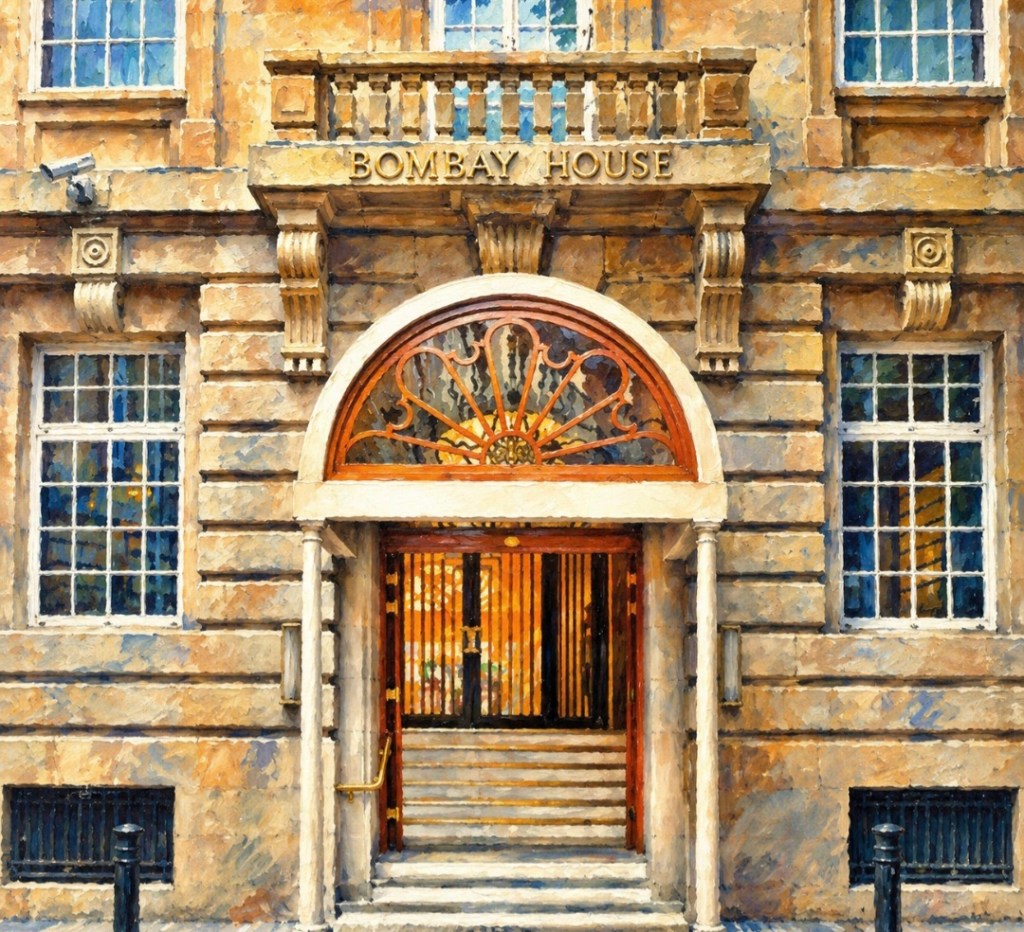
After the RBI Decision, Bombay House Has Less Time – and Less Room – for Private Answers
Lalit Shastri
EDITOR’S NOTE: This article is based on publicly available news reports, regulatory material, official records, legal proceedings and other public-domain information. It is a journalistic analysis of events and their significance. Where competing claims or allegations are discussed, they are attributed to the persons or institutions that made them. The article does not rely on confidential corporate records, private communications or unverified inside information.
Proligue – The RBI has closed one door
The Reserve Bank of India has done something that Tata Sons had spent more than two years trying to avoid: it has made the holding company’s private status much harder to preserve.
On September 12, 2026, Tata Sons received the RBI’s rejection of its application to surrender its registration as a Core Investment Company. The application had been made in March 2024, after Tata Sons repaid more than Rs. 21,000 crore of debt in an effort to restructure itself as a holding company outside the NBFC regulatory framework. The RBI’s decision keeps Tata Sons within the Upper Layer of the NBFC framework and brings the prospect of a stock-market listing back to the centre of the Tata story.
This is, at one level, a regulatory decision. At another, it may prove to be one of the most consequential corporate developments in the modern history of the Tata Group.
For decades, Tata Sons has occupied a peculiar position in Indian capitalism. It is the holding company of a sprawling group whose businesses touch information technology, automobiles, steel, airlines, consumer products, financial services, defence, aerospace and emerging technologies. Yet the apex of this empire has remained a closely held private company, controlled predominantly by Tata Trusts and shielded from the continuous disclosure and market scrutiny that accompany a listed company.
The RBI decision changes the pressure around that arrangement. Revised rules that took effect in June 2026 brought a threshold-based approach under which NBFCs with assets of Rs. 1 lakh crore or more fall within the Upper Layer. Tata Sons’ standalone assets were reported at more than Rs. 2 lakh crore as of March 2026.
The immediate question is therefore no longer simply whether Tata Sons wants to list. The question is how it will now respond – and what a listing, or the struggle over one, will do to the balance of power inside Bombay House.
But there is a second clock running at the same time.
N Chandrasekaran, who has led Tata Sons for almost a decade, has said he will not seek reappointment when his current term ends on February 20, 2027. His announcement followed months of uncertainty over his continuation and reported differences with Tata Trusts chairman Noel Tata over governance, strategy and the direction of major investments.
Thus, as the RBI closes the route to a private holding company, Tata Sons is simultaneously approaching a change at the very top of its operating structure.
That makes time the essence.
The Tata Group is not approaching one transition but several at once: a regulatory transition from private opacity towards greater public disclosure; a leadership transition at Tata Sons; a continuing reconfiguration of Tata Trusts; and a strategic transition involving enormous investments in aviation, defence, semiconductors, digital businesses and other new-age sectors.
The deeper story is not about an IPO alone. It is about who will shape Tata Sons when the company can no longer rely on the old assumption that the most consequential questions can be settled entirely within the Tata family and its trusts.
And that is where Vijay Singh enters the story.
The man who brought the Trust battle into the open
Vijay Singh is an unusual figure in the Tata story because his career crosses two worlds that rarely meet so directly: the highest levels of the Indian state and the governance of one of India’s most powerful business houses.
A 1970-batch IAS officer of the Madhya Pradesh cadre, Singh served as Defence Secretary from 2007 to 2009. He entered the Tata ecosystem in 2013 and subsequently occupied important positions in Tata Trusts as well as the Tata Sons board. The original material for this article describes his role as part of the group’s effort to bring institutional and governmental experience into a rapidly expanding defence and aerospace business.
That background mattered. The Tata Group was moving beyond its traditional industrial base into a defence environment in which procurement rules, government policy, national security priorities and long-term relationships with foreign manufacturers were inseparable from commercial strategy.
Under Tata Advanced Systems, the group expanded its defence and aerospace ambitions through relationships involving Airbus, Lockheed Martin and Boeing. The C-295 programme in Vadodara became the most visible symbol of that transformation: a Rs. 21,935-crore programme involving the manufacture and assembly of 56 aircraft and the establishment of India’s first private-sector final assembly line for the aircraft.
Singh’s supporters could therefore see his presence as more than an honorary corporate appointment. His experience of the defence establishment gave him a vocabulary – and a network of institutional understanding – that could be valuable to a group seeking a much larger role in strategic manufacturing.
But the same background also placed him in a potentially sensitive position when the Tatra-Vectra procurement controversy became a major political issue in 2012.
Singh had served as Defence Secretary from 2007 to 2009. The CBI subsequently filed a closure report in the relevant procurement case, stating that the allegations investigated could not be substantiated. That distinction matters. The existence of a high-profile procurement controversy, and Singh’s position in the defence establishment during part of the period, are matters of public record; they do not, by themselves, establish any wrongdoing on his part.
Singh’s later confrontation with the Tata establishment became consequential for a different reason. He was not simply a trustee who disagreed with another trustee. His public interventions came to represent a different conception of how a large institution should be governed — one placing greater emphasis on formal accountability, regulatory oversight and institutional checks.
His position eventually brought him into conflict with the Tata leadership over the direction and governance of the trusts. His removal from the Tata Sons board in September 2025 marked a decisive break. That episode should be understood cautiously: the precise internal deliberations of trustees are not public, and descriptions of factions or motives are interpretations rather than established facts. What is clear is that Singh’s direct role on the Tata Sons board ended, while his association with Tata Trusts continued for a period afterwards.
Then Singh did something that changed the character of the dispute.
He took a question that might otherwise have remained an internal trust matter and put it before a statutory authority.
The 833 shares: A dispute that left the Boardroom
In June 2026, Singh sought an independent inquiry by the Maharashtra Charity Commissioner into the 1989 transfer of 833 Tata Sons shares from the Navajbai Ratan Tata Trust to Naval H Tata. The complaint raised questions about whether charitable assets had been transferred lawfully and whether the transaction had been properly valued and authorised.
The allegation was serious. But it is equally important to record what happened next, because the later regulatory outcome materially changes how this episode should now be written.
The Maharashtra Charity Commissioner subsequently disposed of the complaint. Reporting on the decision said the regulator found that the transfer was properly documented, supported by valuation and consideration, and complied with the applicable requirements. Tata Trusts described the allegations as baseless and malicious.
In other words, the 833-share controversy can no longer responsibly be presented as an unresolved finding against the Tata Trusts. It is better understood as an example of how far the internal struggle had travelled – from the private governance of trusts into the formal scrutiny of a public authority — and how that particular challenge ultimately ended.
That outcome is especially significant for Singh.
His intervention demonstrated his willingness to use external institutions to test questions of trust governance. But the regulator’s disposition of the complaint also underlines the limits of such a strategy. Publicly challenging the establishment can create scrutiny; it does not, by itself, establish the underlying allegation.
This distinction will become increasingly important as the Tata story moves into its next phase. The more the dispute enters public and regulatory arenas, the more every claim will have to survive documentary scrutiny rather than rely on the authority or reputation of the person making it.
The Trusts are no longer a background Institution
For much of the Tata Group’s history, Tata Trusts could be discussed as the philanthropic heart of the group without having to explain in detail how their influence translated into corporate power. That is no longer sufficient.
Tata Trusts control about 66% of Tata Sons, according to recent reporting. Tata Sons, in turn, sits above more than 30 companies and businesses across the group.
That structure gives the trusts an unusual dual character. They are charitable institutions with public purposes, yet through their ownership of Tata Sons they sit at the apex of one of India’s largest corporate groups.
The result is a governance model that is neither a conventional family-controlled company nor a conventional widely held public corporation.
It is a model built on stewardship.
And stewardship works best when there is broad agreement among the people exercising it.
The events of the past two years suggest that agreement can no longer be assumed.
Noel Tata and the question of succession
Noel Tata’s elevation to the chairmanship of Tata Trusts after Ratan Tata’s death altered the balance at the apex of the group. His background was very different from Singh’s. He came from within the Tata family and had built his own corporate record through Trent and Tata International. The contrast between the two men – the former senior bureaucrat and the family custodian – became an easy shorthand for a more complicated institutional argument.
It would be simplistic, however, to reduce the story to ‘bureaucrat versus family’. The real question is what kind of governance a modern Tata Group requires when its businesses are becoming more capital-intensive, more global and more dependent on government policy.
That question became unavoidable when N Chandrasekaran’s future at Tata Sons came into doubt.
In September 2025, Tata Trusts had supported a third term for Chandrasekaran. Less than a year later, in August 2026, Chandrasekaran announced that he would not seek reappointment after his term ends in February 2027, saying one board member had not supported the proposal. Reporting identified the reference as Noel Tata, against the backdrop of differences over strategy, capital spending and the performance of several businesses.
That development matters enormously because it removes one of the group’s most important buffers at precisely the moment when Tata Sons is being forced to rethink its structure.
Chandrasekaran represented continuity, but he also represented the institutionalisation of Tata leadership beyond the family. His successor will be chosen in a Tata environment in which the trusts are more assertive, the regulatory environment is changing and the question of public listing is no longer theoretical.
The succession decision is therefore not merely about finding another chairman. It is about defining the next operating philosophy of Tata Sons.
The RBI decision changes the IPO question
Until now, the Tata Sons listing question could be framed as a contest between regulatory obligation and corporate preference. The company wanted to remain private. The RBI framework increasingly pointed in the other direction.
Tata Sons had sought to surrender its CIC registration in March 2024. It repaid more than Rs. 21,000 crore of debt during 2024, a move widely understood as part of its effort to restructure and strengthen the case for remaining outside the NBFC framework. But the RBI did not accept the exit.
The revised framework that took effect in June 2026 made the structural argument harder to sustain. The new threshold for Upper Layer classification is Rs. 1 lakh crore of assets; Tata Sons’ standalone assets were reported at more than Rs. 2 lakh crore at the end of March 2026.
The RBI’s September decision now removes the most obvious regulatory escape route.
That does not mean an IPO appears on the screen tomorrow morning. A listing of Tata Sons would be a complicated corporate exercise involving valuation, regulatory approvals, disclosures, shareholder questions, capital-market preparation and the interests of multiple classes of stakeholders.
But the strategic argument has changed.
Earlier, the question was: Can Tata Sons remain private?
Now the question is: How will Tata Sons manage the consequences of being required to operate under a framework that points towards public listing?
Why an IPO would change more than the shareholding
The importance of a Tata Sons listing is not confined to the amount of money it might raise.
A listed Tata Sons would have to disclose itself to the market in a manner fundamentally different from the historic private-company model. Investors would want to know how capital is allocated, how the holding company values its investments, how dividends move through the structure, how related-party relationships are managed and how strategic bets are financed.
The market would also place a value on an asset that has historically been difficult for outsiders to price: the Tata holding company itself.
That could unlock value for existing shareholders. It could also make the interests of different shareholders more visible and potentially more difficult to reconcile.
The Shapoorji Pallonji Group, which has historically held a significant minority stake in Tata Sons, has an obvious interest in the question. An IPO could provide a market mechanism for liquidity and valuation. The original report treated the SP position and Singh’s position as a tactical alignment; the safer journalistic formulation is that their interests can converge on the question of transparency, valuation and liquidity without assuming a formal alliance unless documentary evidence establishes one.
For Tata Trusts, however, the implications are much larger. The trusts’ influence has historically depended not merely on the percentage of shares they own but on the private architecture through which that ownership is exercised.
A public Tata Sons would not necessarily end trust control. But it would change the environment in which that control operates.
The Defence question: Why Singh’s role still matters
Among the many strands of this story, the defence and aerospace strand deserves particular attention because it explains why Singh’s corporate presence was never entirely incidental.
Tata Advanced Systems emerged as the group’s principal vehicle for its defence and aerospace ambitions. The C-295 programme with Airbus is its most prominent industrial undertaking. The Vadodara final assembly line symbolises a shift in India’s defence industrial landscape: a major private conglomerate moving into an area once dominated overwhelmingly by the public sector.
The Lockheed Martin relationship, the Boeing Apache fuselage programme and the Airbus partnership form part of a broader industrial strategy in which Tata is seeking to occupy increasingly sophisticated positions in global aerospace supply chains.
These businesses are different from conventional consumer or technology companies. Their investments are long term. Their customers include governments and state-linked institutions. Their contracts can extend across decades. Their success depends on technology, certification, geopolitical relationships, export controls, security considerations and continuing confidence between corporate and government institutions.
That is precisely why a former Defence Secretary inside the Tata governance structure was significant.
Singh brought an understanding of the state that few corporate directors could replicate. Whether that influence translated into any particular procurement advantage is a separate matter and should not be asserted without evidence. But the strategic value of his institutional experience is self-evident from the nature of the businesses Tata was building.
The irony is that the same background that made Singh useful to a group expanding into defence also made his presence more politically and reputationally sensitive.
His story therefore sits at the intersection of two larger transformations: the Tata Group’s transformation into a major private defence manufacturer, and the Tata governance system’s transformation from an internally managed trust structure into an institution facing increasingly external scrutiny.
From South Block to Bombay House – And back into the public arena
Singh’s career makes the Tata story unusually revealing about the changing relationship between the Indian state and big business.
In an earlier era, corporate India depended heavily on government permissions, licences and personal institutional relationships. Liberalisation changed the rules, but it did not eliminate the importance of the state. Defence, aviation, infrastructure, energy and emerging strategic technologies remain areas in which government policy and corporate ambition are inseparable.
The Tata Group’s expansion into defence illustrates that reality.
Singh’s movement from South Block into Bombay House therefore represented more than a retired civil servant joining a corporate board. It symbolised the movement of state experience into a private conglomerate operating in strategic sectors.
That movement can be seen positively – as institutional expertise crossing into industry – or more cautiously, as a reminder that the boundaries between state power and corporate power deserve scrutiny.
The later conflict makes the question sharper. Once Singh’s position within Tata governance became contested, his knowledge of institutional processes could be deployed outside the boardroom as well.
That is exactly what happened when he approached the Charity Commissioner.
The significance of Singh in this story is therefore not simply that he was removed from a board. It is that he did not disappear when his boardroom role ended. He carried the dispute into the regulatory domain.
But Singh’s own position has not changed
There is another development that must be included in any account written today: Singh’s own position within Tata Trusts has subsequently changed.
Recent reporting says Singh’s tenure at the Sir Ratan Tata Trust ended in August 2026, while his trusteeship at the Bai Hirabai Jamsetji Tata Navsari Charitable Institution also ceased in connection with that change. The Charity Commissioner’s proceedings concerning former trustee Mehli Mistry have been affected by those changes, with a hearing now scheduled for October 15. Singh remains relevant to the Sir Dorabji Tata Trust filings, but his institutional position is no longer what it was when he launched the 1989-share complaint.
This is important because it changes the meaning of the Singh chapter.
He is no longer simply an insider challenging the system from within. He is increasingly a former insider whose interventions have forced questions into the open but whose own institutional foothold has narrowed.
That may make his challenge weaker in formal terms. It may also make his public role more consequential.
A dispute is different when it is conducted by someone with nothing left to protect inside the room.
The Mehli Mistry dimension
The broader trust dispute has also involved Mehli Mistry, a longtime associate of Ratan Tata whose trusteeships were not renewed and whose objections have gone before the Maharashtra Charity Commissioner.
The proceedings are not merely about personalities. They have raised questions about trustee eligibility, governance practices, remuneration, conflicts of interest and the interpretation of trust deeds. The Charity Commissioner has scheduled the next hearing for October 15.
This matters because the Tata Trusts are no longer operating in the old environment in which internal differences could be resolved without attracting sustained external attention.
Once trust disputes reach the Charity Commissioner, governance questions acquire a second life. They become matters of record.
The question of control
The most interesting question in the Tata story is therefore not who wins a particular boardroom contest.
It is who controls the definition of the Tata Group’s future.
Is the group primarily a trust-owned philanthropic institution whose commercial companies exist within a carefully protected family stewardship model?
Is it a professionally managed conglomerate whose apex holding company should increasingly resemble an institutional investment company?
Or can it become something else: a public company at the top, with Tata Trusts remaining the dominant shareholder and moral centre but operating under much greater market and regulatory accountability?
The RBI decision makes the third possibility more difficult to avoid.
That does not make it inevitable. Corporate structures can be contested, challenged and adapted. But the regulatory direction is now clear enough that the Tata leadership must deal with the issue rather than simply postpone it.
The next Chairman will enter a different Tata House
Who succeeds Chandrasekaran will consequently matter far beyond the usual question of management succession.
The next chairman of Tata Sons will inherit a group in which Air India requires capital and operational discipline, Tata Digital remains a major strategic bet, semiconductor ambitions demand patience and money, and defence and aerospace businesses are moving into increasingly sophisticated territory. Recent reporting has also highlighted tensions around the performance and capital requirements of several of these businesses.
At the same time, the group’s most valuable cash-generating businesses remain exposed to global economic and technological shifts. TCS, for example, sits at the centre of the financial architecture of the holding company and of the broader debate about how Tata Sons funds long-term bets.
The next chairman will therefore need to answer a question that Chandrasekaran could approach within a relatively stable private structure: how much capital should Tata commit, where should it commit it, and how much risk should the holding company carry?
Under a listing regime, those decisions will be watched by a much larger audience.
That is the real meaning of the RBI decision.
The old Tata formula meets a new India
The Tata Group has survived precisely because it has repeatedly reinvented itself.
It moved from steel and salt into automobiles, chemicals, hotels, information technology, communications, consumer businesses and global acquisitions. More recently it has moved into airlines, semiconductors, defence, aerospace and digital platforms.
Each transformation required a different relationship between capital, management and the state.
The current transformation may be the most difficult because it concerns the structure of the institution itself.
For years, the Tata model could depend on a simple proposition: the trusts owned the holding company, the holding company owned or controlled operating companies, and the people at the top resolved the difficult questions through internal consensus.
That proposition is under pressure from several directions at once.
Regulators want systemic financial entities to meet higher standards. Minority shareholders want liquidity and valuation. Trustees are dealing with internal disagreements. Professional managers are negotiating with the trusts over strategy. Governments are watching the stability of strategic businesses. And public markets are waiting for the possibility that one of India’s most valuable private corporate structures may finally become visible in full.
The RBI decision has not created these tensions.
It has exposed them.
What happens now?
The first task is regulatory. Tata Sons will have to determine its response to the RBI’s rejection and take the steps required for compliance with the Upper Layer framework. The regulator has effectively told the company that surrendering its registration is not the answer.
The second task is corporate. Tata Sons will have to prepare for the possibility of a public listing, including the valuation and disclosure architecture that such a move requires.
The third is strategic. The group will have to decide how it finances its next generation of businesses without allowing new ventures to overwhelm the financial strength of the established companies.
The fourth is institutional. Tata Trusts will have to navigate a more public and more regulated environment while maintaining the legitimacy of their charitable purpose.
And the fifth is leadership.
The search for Chandrasekaran’s successor can no longer be separated from any of these questions.
Epilogue – The clock is running
The most consequential corporate transitions rarely arrive with a single announcement. They accumulate.
At Tata Sons, the accumulation is now unmistakable.
A regulatory route to remaining outside the NBFC framework has been closed. A chairman has announced that he will leave the office when his term ends. The Tata Trusts are dealing with internal disputes before a statutory authority. Vijay Singh, once an influential bridge between the state and the Tata corporate system, has challenged the trust establishment from outside and has himself lost some of the institutional positions from which he once operated. A decades-old share-transfer controversy has travelled through the machinery of the Charity Commissioner and been disposed of. The group’s strategic bets require enormous capital and long horizons. And the question of a public listing, once treated as a problem to be avoided, is now a problem that has to be managed.
The next few months will therefore matter disproportionately.
By February 2027, Tata Sons is expected to have a new chairman. By then, the consequences of the RBI decision will be clearer. The Trusts will have to manage their own governance questions. Strategic businesses will continue to demand capital. And the market will increasingly ask what Tata Sons is worth, how it should be governed and who should ultimately be accountable for decisions taken at the apex of the group.
The Tata tradition has always rested on an idea of trusteeship: wealth is held not merely for its owners but for a larger social purpose.
The test now is whether that idea can survive – and perhaps even strengthen – when the institution practising it is subjected to the transparency, scrutiny and discipline of public markets.
That is why the RBI decision matters.
It is not simply the beginning of a possible Tata Sons IPO.
It may be the beginning of the end of the old distinction between what happens inside Bombay House and what the outside world is entitled to know.
And in that new world, the most important asset Tata has may no longer be privacy.
It may be credibility.
