

Lalit Shastri
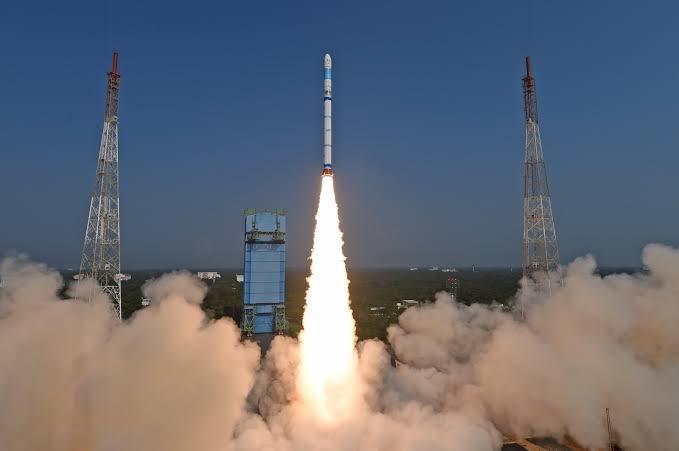
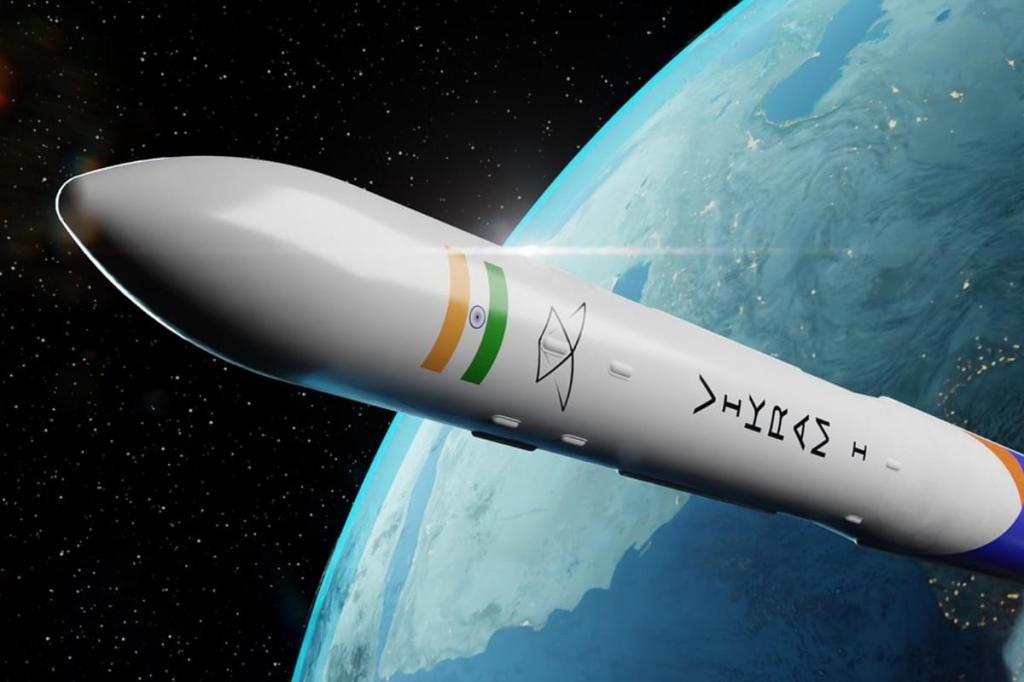
India’s space programme is at an interesting inflection point. The country is no longer merely seeking to demonstrate that it can put satellites into orbit or undertake increasingly complex missions. It is now talking about scale.
ISRO Chairman V Narayanan has said India will need to build and launch 200 to 300 satellites over the next six to seven years and raise its launch frequency to around 50 a year. He has also made it clear that such a task cannot be undertaken by ISRO alone. Indian industry, startups and academia will all have to participate.
The numbers deserve to be taken seriously. Fifty launches a year means, on average, almost one launch every week. Two hundred to 300 satellites over six or seven years means a sustained production programme rather than a series of individually executed missions.
That is not simply an increase in the workload of the Indian Space Research Organisation. It is a fundamentally different industrial proposition.
Narayanan himself has provided a measure of how far India has travelled. When he joined ISRO in 1984, he recalled, the country was launching roughly once in three years. Today the frequency is about once a month. The next stated requirement is 50 launches a year.
The obvious question, therefore, is not whether India should have a larger space programme. It should. The question is whether the country is building the industrial architecture required to sustain one.
A launch every week cannot depend upon treating every rocket as an almost stand-alone engineering exercise. It requires several launch vehicles to be at different stages of manufacture and integration at the same time. It requires engines and critical components to be available in volume. It requires satellites to be manufactured, tested and made flight-ready in parallel. It requires adequate testing facilities, launch infrastructure, trained manpower, suppliers and inventory.
Most importantly, it requires reliability to scale along with production.
There is also a less visible technological challenge in scaling up. India’s launch vehicles do not yet represent a single, standardised rocket architecture that can simply be turned into an automotive-style production line. Its launch fleet uses a mix of solid, liquid and cryogenic propulsion systems, with different vehicles requiring different combinations of stages, engines and production processes. That makes the prospect of moving to a launch every week considerably more demanding than merely increasing the number of rockets coming off an assembly line. The lesson from high-cadence commercial launch systems such as SpaceX is not simply “produce more rockets”; it is the importance of standardisation, commonality, repeatability and production at scale.
The question, therefore, is not whether India can manufacture more launch vehicles. It is whether it can manufacture them with enough commonality, predictability and repeatability to make 50 launches a year an industrial routine.
This is where the current debate about private participation needs to be viewed more carefully.
There is no serious argument against greater participation by Indian industry. In fact, the private sector is already deeply embedded in the country’s space programme. Narayanan has said that roughly 80 per cent of the budget of a rocket launch is invested in Indian industry and that about 450 industries are working with ISRO.
The policy challenge, therefore, is not to introduce private industry into a completely government-run space programme. It is to transform an existing network of industrial participation into an ecosystem capable of manufacturing at scale, repeatedly and reliably.
That distinction matters.
India should not confuse the transfer of mature technologies or manufacturing responsibilities with the creation of genuine industrial capacity. The latter requires investment in production lines, testing infrastructure, skilled manpower, supplier development, standardisation and, importantly, redundancy. A system designed for a handful of launches cannot simply be multiplied several times by administrative fiat.
The recent debate inside ISRO also shows why this transition needs to be handled with care. Employee associations have sought clarity over the future role of the organisation as manufacturing and operational responsibilities are increasingly opened to industry. ISRO, for its part, has reiterated that it will remain India’s principal institution for advanced space research, strategic missions, space science and exploration and critical and frontier capabilities.
There is no inherent contradiction here.
Indeed, a stronger private space industry and a stronger ISRO can—and should—be complementary objectives.
ISRO does not have to manufacture every operational rocket or satellite itself in order to remain indispensable. Its greatest value may increasingly lie in pushing technological frontiers, developing next-generation systems, undertaking missions that industry cannot yet justify commercially, setting standards and ensuring the technological and strategic depth of the national programme.
But equally, India should be wary of reducing ISRO to a research laboratory while assuming that the rest will automatically be supplied by the market.
Space is not an ordinary manufacturing industry. The cost of a weak link can be measured not merely in money but in the loss of an entire mission. As the number of suppliers, manufacturers and components increases, quality assurance, testing, traceability and independent verification become even more important.
The objective, therefore, should not be simply more private participation. It should be more national capability.
That also means resisting an unnecessarily binary debate between ISRO and industry. The relevant ecosystem includes ISRO, public-sector enterprises, established private companies, startups, MSMEs, universities and research institutions. Each has a different role to play.
Nor should public-sector capability be discarded merely because private participation is being expanded. If India needs 50 launches a year, every competent source of manufacturing capacity will matter.
The experience of the past few years demonstrates both the possibilities and the limits of the transition. India has produced remarkable successes, including the NISAR mission and the recent successful EOS-05 launch, while the official ISRO mission record also contains unsuccessful launches such as PSLV-C61 and PSLV-C62.
That is not an argument against expansion. It is an argument for building expansion on a sufficiently deep foundation.
There is also a larger economic opportunity here. India’s space sector remains a relatively small part of the global space economy, even as the country seeks to expand it substantially over the coming decade. The Bengaluru Space Expo itself highlights the ambition to grow the Indian space industry from its present scale into a much larger global player.
But the transition from a successful space programme to a successful space industry will not happen merely because policy permits it.
Factories have to be built. Production processes have to be standardised. Supply chains have to deepen. Testing capacity has to expand. Skills have to be created. Capital has to flow into long-gestation manufacturing. And mission assurance has to remain uncompromised.
That is the real significance of the 50-launch target.
It should not be dismissed as an unrealistic number. Nor should it be accepted as an inevitable outcome of opening the sector to private players.
It should be treated as a national industrial challenge.
Fifty launches a year is an exciting ambition. But ambition becomes a programme only when the infrastructure, manufacturing capacity and institutional systems required to deliver it exist.
India’s next space race, therefore, may not be fought only above the atmosphere. It will be fought on factory floors, in testing laboratories, at launch sites and across the thousands of organisations that will have to make one launch a week routine rather than exceptional.
The task before India is not to choose between ISRO and industry.
It is to make ISRO and Indian industry capable of achieving together what neither can accomplish alone.
