

Lalit Shastri
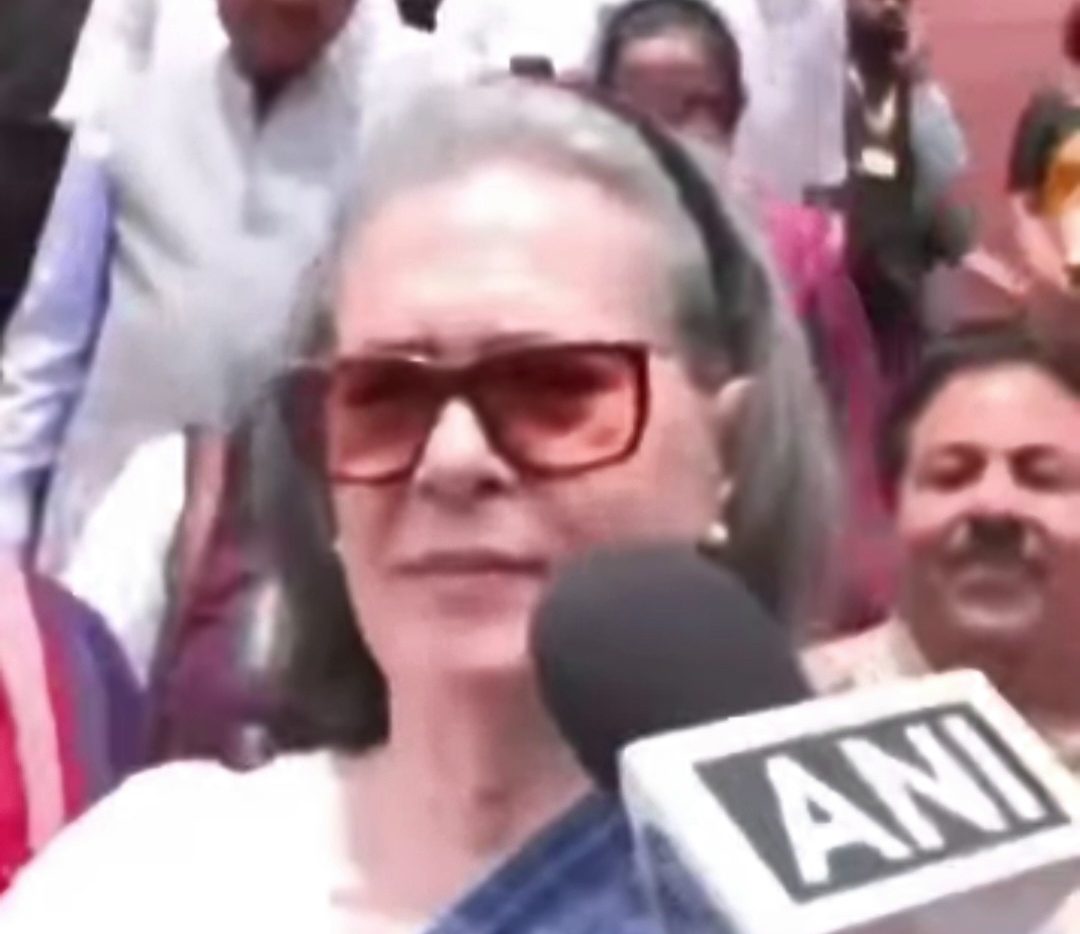
There is something revealing about the way politicians deal with questions. Some seek the microphone. Some seek the podium. And some seek somebody else to answer.
A video doing the rounds shows Sonia Gandhi emerging from Parliament, surrounded by journalists. The question put to her is straightforward: Parliament has repeatedly been disrupted and has not been allowed to function. What does she have to say about it?
One would expect a senior Congress leader to answer. Instead, she looks around and asks, “Where is that man with white hair?”
She was apparently referring to Congress spokesman Pawan Khera, whose name she had momentarily forgotten, and suggested that he would provide the answer.
It is an amusing moment. But it also brought back two memories from my own years as a journalist.
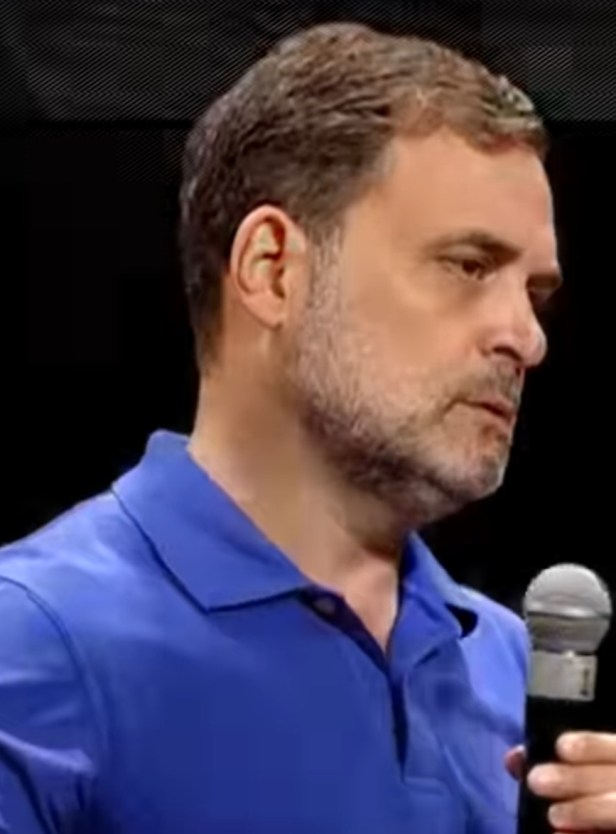
Rahul Gandhi
Many years ago, when I was Special Correspondent of The Asian Age in Madhya Pradesh, Rahul Gandhi came to Bhopal during an election campaign. He addressed a press conference, and when he came down from the dais, I approached him and said that I wanted to ask him a question.
His response was that he did not speak to individual journalists.
And he moved on.
I have never forgotten that moment – not because of the particular question I wanted to ask, but because of what the response represented.
There is a considerable difference between speaking to an audience and speaking to an individual journalist.
An audience hears what you choose to say. A journalist may ask what you don’t want to answer. An audience provides a platform. A journalist provides a question. And the real test of a politician is often what happens when the second one appears.
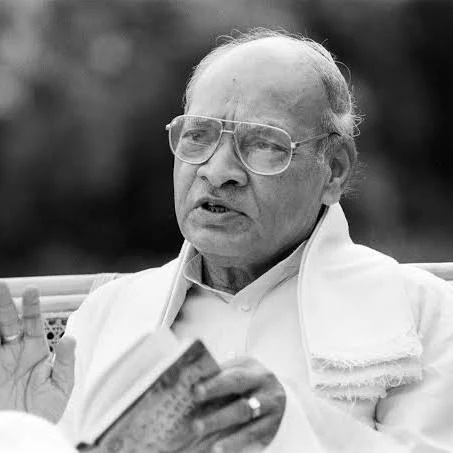
P. V. Narasimha Rao
That brings me to another encounter, from an entirely different generation of Congress leadership.
Prime Minister P. V. Narasimha Rao once made a flying visit to Bhopal. He landed by helicopter, addressed a public meeting at Nehru Stadium and was preparing to leave almost as quickly as he had arrived.
The local press corps was present to cover the visit. As the Prime Minister was about to depart, we sent word through the security apparatus that the Bhopal press would like to speak to him.
Initially, the SPG refused. We insisted that the message should at least reach the Prime Minister and that he should decide whether he wished to speak to us.
The message went. The answer came back. The Prime Minister would take one question. That was all.
The journalists turned to me.
“Shastri, you ask.”
So when Narasimha Rao came towards us, I put the question. There was a charge against him, I said, that he avoided taking decisions. Why was that so?
His answer came instantly:
“There is always a decision involved in not taking a decision.”
And that was it. One question. One answer. No spokesperson. No aide. No escape. And, incidentally, a rather profound answer.
Whether one agreed with Narasimha Rao’s politics or not, there was no hesitation about facing the question. He did not need somebody standing beside him to interpret his position. He did not need a carefully choreographed interaction.
He accepted the question and answered it himself.
That is the difference between occupying leadership and demonstrating leadership.
The childhood story
And now I must go back much further – to a memory from my own childhood.
When I was a child, an elderly storyteller once told me a story about the old feudal order. The children of wealthy families, he said, would sometimes go to school accompanied by a poorer boy. If the privileged child failed to do his homework and the teacher wanted to punish him, the poorer companion was there to take the beating.
The child who had failed escaped the consequences; someone else took the lashes.
I have no way of knowing whether the story was historically accurate or merely folklore handed down through generations. But its moral stayed with me: in a feudal society, privilege could mean having somebody else bear the consequences of your failure.
And that is precisely what came to my mind when I saw Sonia Gandhi in that video.
Privilege means having somebody else absorb the consequences.
And sometimes, watching our political class, one wonders how much of that feudal instinct survived the transition from the jagirdari system to electoral democracy.
The spokesperson answers for the leader. The party worker defends the leader. The loyalist explains the leader.
The leader speaks when the circumstances are favourable – and may sometimes retreat behind the machinery of the organisation when the question becomes inconvenient.
But democracy was supposed to abolish precisely that arrangement. The elected representative is not a feudal lord. The citizen is not a supplicant. The journalist is not a courtier. And a political spokesperson is not a shield behind which a leader should habitually retreat.
There is nothing wrong with having spokespersons. That is their job. There is nothing wrong with leaders declining to answer questions they genuinely cannot answer.
But there is something profoundly unhealthy when accountability itself becomes outsourced.
Narasimha Rao demonstrated the opposite. He was offered an opportunity to avoid the press. He could have simply left. Instead, he agreed to take one question.
And when the question came, he answered it himself.
That one sentence – “There is always a decision involved in not taking a decision” – was enough. Perhaps that is the lesson.
A leader does not become smaller by answering a difficult question. A leader becomes smaller by looking around for somebody else to answer it. And perhaps the most revealing question arising from that viral video is therefore not:
“Where is that man with white hair?”
It is:
