
Lalit Shastri
On May 31, 2005, the Delhi High Court quashed the proceedings against Srichand, Gopichand and Prakash Hinduja and also discharged AB Bofors from the case. The court found that the material placed before it was insufficient to sustain the prosecution and severely criticised the manner in which the investigation had been conducted, raising questions over the reliability and evidentiary value of the material relied upon by the CBI.
New Delhi: The Supreme Court has finally sealed the Bofors case, bringing the curtain down on a legal saga that began nearly four decades ago and once threatened to redefine the political fortunes of the country.
The Court on Friday declined to interfere with the Delhi High Court’s 2005 judgment that had brought the prosecution against the Hinduja brothers and AB Bofors to an end, effectively closing the last surviving legal avenue in the case.
For a controversy that once dominated Parliament, elections and the national political discourse, its final chapter has turned out to be less about a judicial determination of who received what and more about a prosecution that could not ultimately be sustained on firm, admissible evidence.
A scandal that changed Indian politics
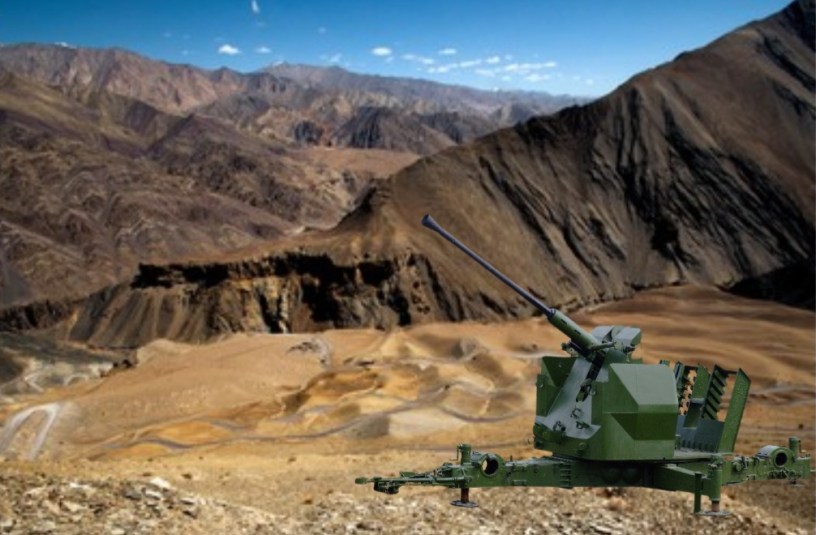
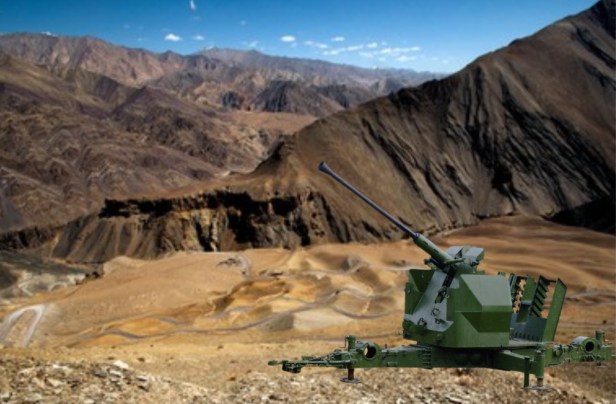
The Bofors controversy erupted after allegations surfaced that illegal commissions had been paid in connection with India’s 1986 purchase of 155-mm howitzers from Swedish arms manufacturer AB Bofors.
What followed was much larger than an investigation into a defence contract.
Bofors became a political shorthand for corruption in high places. It contributed substantially to the political upheaval of the late 1980s and remained a recurring weapon in electoral politics for years thereafter.
The allegations acquired a life of their own in public discourse, long after the legal process had begun to lose momentum.
The criminal investigation, meanwhile, travelled through a maze of international evidence, documents, investigations and court proceedings.
The prosecution runs into the evidence problem
The Delhi High Court’s 2005 intervention exposed the central weakness of the prosecution: the material available to the investigating agency was not sufficient to sustain criminal proceedings against the Hindujas and AB Bofors.
The court’s criticism of the investigation was particularly significant. The issue was not simply whether allegations had been made, but whether those allegations could be translated into legally admissible and reliable evidence capable of sustaining a criminal prosecution.
That distinction—between an allegation powerful enough to dominate political discourse and evidence strong enough to survive judicial scrutiny—would ultimately define the fate of the case.
The CBI did attempt to challenge the High Court’s decision.
But even that effort ran into a procedural roadblock.
The 4,522-day delay
When the CBI eventually approached the Supreme Court in 2018 against the Delhi High Court judgment, its appeal was accompanied by an extraordinary delay of 4,522 days.
The Supreme Court was not persuaded by the explanation offered for the delay and declined to entertain the agency’s challenge.
The Court also noted that advocate Ajay K. Agrawal had independently challenged the High Court judgment and that the CBI could make its submissions in that proceeding.
That left Agrawal’s petition as the last surviving legal challenge to the 2005 judgment.
Friday’s dismissal has now removed that final avenue.
From Bofors to Hawala: when political scandals meet the courts
There is an intriguing parallel here with another landmark political corruption controversy—the Jain Hawala case.
The Hawala investigation too generated enormous political reverberations, involving allegations and references to a large number of senior politicians. Yet the criminal proceedings ultimately struggled to translate the political significance of the allegations into evidence capable of sustaining convictions.
The two cases were legally and factually different. But they shared a striking feature: the distance between an allegation that can shake the political establishment and evidence that can withstand the standards of a criminal trial.
That distance is where many high-profile corruption cases have ultimately faltered.
It also explains why some scandals remain politically alive long after their courtroom lives have ended.
The curious afterlife of political scandals
Bofors is perhaps the clearest example.
The controversy survived governments, political parties, elections and generations of politicians. It acquired an almost independent existence in India’s political vocabulary.
The legal system, however, operates differently.
Courts do not convict on the strength of political narratives, public suspicion or the historical weight of an allegation. Criminal liability requires evidence that meets the prescribed legal standards.
And that is precisely where the Bofors prosecution ultimately failed to cross the finish line.
Friday’s Supreme Court order does not erase the political history of Bofors. Nor does it settle every historical question surrounding the controversy.
What it does is bring the legal proceedings to an end.
Forty years later, the irony remains
There is a final irony in the Bofors saga.
The controversy became one of the most potent symbols of corruption in Indian public life. Yet the criminal prosecution against the principal accused named in the proceedings could not ultimately be sustained on the evidence available to the courts.
The story therefore leaves behind two very different legacies—one political, the other judicial.
The political legacy is enduring.
The judicial record is much more sobering.
And perhaps that is where Bofors meets Hawala—and several other political scandals that have periodically shaken India.
In the court of public opinion, allegations can acquire a remarkably long shelf life.
In a court of law, they must survive evidence.
There is, of course, a more irreverent way of putting it.
In India, politicians have sometimes proved rather like Duckback: allegations may rain heavily, but the taint doesn’t always stick.
Bofors has now been through nearly four decades of that rain.
The Supreme Court has finally closed the legal chapter.
