

Lalit Shastri


India’s decision to open the space sector to private participation is among the most significant policy initiatives undertaken in recent decades. It has encouraged innovation, attracted investment and given Indian enterprise an opportunity to emerge as a serious player in the global space economy.
The remarkable progress made by India’s private space companies and startups deserves recognition, and the government’s policy of encouraging private enterprise is both timely and necessary. Every Indian should welcome this new chapter in the nation’s space journey.
Yet every major reform must also be judged by a larger national objective. The question is not whether India should have a vibrant private space industry. It unquestionably should. The question is whether, in pursuing that objective, the country is ensuring that the scientific institution which built India’s space capabilities continues to emerge stronger from the process. That is the real test of a successful space policy.

Vikram-1 launch by Skyroot on Saturday 18 July 2026, comes in the background of considerable delay in ISRO’s launches. The orbital rocket Vikram-1 meant for carrying about 400 kg into low earth orbit (LEO) uses three solid-fuel Kalam stages and a restartable liquid Raman engine, while ISRO’s operational SSLV carries up to 500 kg to LEO, utilizing three solid stages plus a liquid Velocity Trimming Module (VTM). Skyroot has had the benefit of ex-ISRO scientists and the body of research done till now. It is creditable that it has beaten ISRO’s SSLV in the same game and had a successful launch, especially marked by 3d printing of an engine. Today’s successful launch notwithstanding, it remains to be seen whether or not it will provide a cost-effective, low-cost launch option for small satellites for both private and government agencies.
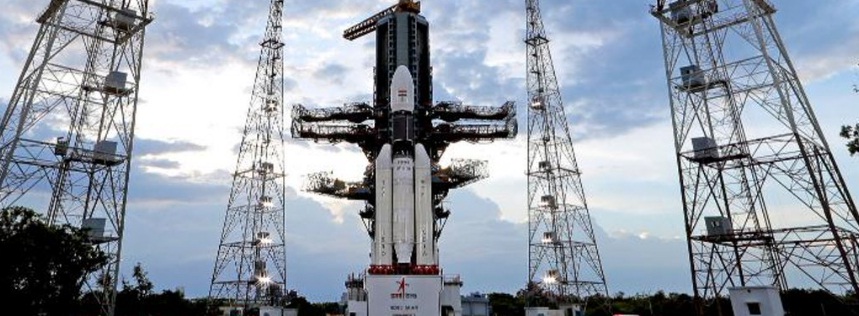
Transfer of technology of ISRO’s LVM3
The ongoing transfer of the technology of ISRO’s LVM3, India’s most powerful operational launch vehicle, to the private sector represents a defining moment in this transition. Public documents relating to the Expression of Interest issued through IN-SPACe reflect the government’s determination to accelerate private participation. At the same time, they also raise legitimate policy questions. Among them is whether the present bidding framework, under which public sector undertakings can participate only through a consortium led by a private company while private entities may bid independently, fully reflects the principles of competitive neutrality and serves the country’s long-term strategic interests.
There should be no misunderstanding about the issue. Encouraging private enterprise is sound public policy. Weakening ISRO or an organisation like Hindustan Aeronautics Limited (HAL) in the process would not be. The success of India’s space reforms will ultimately be judged not by the growth of private enterprise alone, but by whether those reforms leave ISRO or its assoctaes like HAL stronger than before. A great space power does not choose between a strong national space agency and a strong private sector. It ensures that both reinforce each other.
Information received from well-placed sources in India’s space establishment, together with publicly available developments, suggests growing concern over the progress of several strategically important programmes. ISRO insiders point to delays affecting the expansion of the NavIC navigation constellation, certain defence-related space missions and the overall pace of launch activity. While individual missions may have perfectly valid technical reasons for rescheduling, knowledgeable sources believe that the cumulative impact has raised broader questions about institutional momentum, programme prioritisation and governance. These concerns assume added significance because they relate not merely to commercial launches but to capabilities with direct strategic and national security implications.
Institutional Governance
Knowledgeable sources have also drawn attention to issues relating to institutional governance and long-term strategic direction. Questions have been raised about the functioning of the Space Commission, the pace of decision-making and the manner in which major priorities are being determined. Whether these concerns ultimately prove well-founded is for policymakers to examine. They cannot, however, be dismissed without careful consideration, particularly when they come from individuals who have spent decades helping to build India’s space programme.
Scientific Talent
Equally important is the question of scientific talent. No great scientific institution derives its strength merely from launch pads, laboratories or budgets. Its real strength lies in the calibre, experience and commitment of its scientists. ThisisNews.org has reported on the growing number of scientists opting for early retirement or leaving ISRO, a trend that has raised concerns about the organisation’s human resource environment. Merely tightening exit rules cannot, by itself, address the underlying issue. If experienced scientists increasingly choose to leave or disengage, the more fundamental question is what factors are prompting such decisions.
Ex-Chairman ISRO Madhavan Nair has correctly pointed out that in defence and space, the private sector has not been engaged in any major innovation or R and D but mainly screwdriver technology where some assembly is done. Research and innovation is ISRO’s forte done with blood sweat and public money and all that just cannot be handed over on a platter to the private industry. It should be kept in mind that in the early years, ISRO invested heavily in the private sector and created the work centers. In fact HAL Aerospace Division was funded completely by ISRO – right down to the salaries. But then in the enthusiasm to encourage the private sector, the Indian National Space Promotion and Authorisation Centre (IN-SPACe )and NewSpace India Limited (NSIL) have taken the stand that the public sector cannot go for competitive bidding unless accompanied by a private entity.
Former Director of the Space Applications Centre, Distinguished Scientist and founder of SISIR Radar, Dr. Tapan Misra, has articulated a concern that goes well beyond the recent wave of resignations. In a recent television interview, he argued that ISRO is facing not merely an attrition problem but a deeper organisational malaise marked by an “inspiration crisis”, a communication breakdown between leadership and scientists, and a gradual loss of emotional connect with the institution. According to him, tightening resignation and voluntary retirement rules merely addresses the symptom, not the underlying disease. ISRO, he observed, has historically been driven by inspiration, collective leadership and a shared sense of purpose rather than rules and regulations. He cautioned that the present resignations are only the tip of the iceberg, warning that a deeper sense of disengagement could eventually undermine reliability, delay critical missions and affect mission success. Significantly, Dr. Misra does not view the rise of private space enterprises as a threat, asserting instead that India needs “ten ISROs” and that a vibrant private space ecosystem should complement, not compete with, the national space agency. His concluding message to the leadership was both simple and profound: they should “go back to the people”—restore confidence, rebuild pride and reconnect with the scientists who constitute ISRO’s greatest strategic asset.
Information received from knowledgeable sources within the space establishment suggests that these concerns deserve serious institutional introspection. Retaining scientific excellence is as important as creating scientific excellence. An organisation that has built India’s space programme over six decades cannot afford a gradual erosion of the experience, institutional memory and leadership that have been central to its remarkable achievements.
A bold leader, a rocket designer like Dr. S. Somanath, the former ISRO chief, was not given an extension but instead others were given extension. Second thing is a person driving the privatisation drive can’t be made the regulator. There is a conflict of interest. There is no appellate body in the space sector like the Telecom Disputes Settlement and Appellate Tribunal (TDSAT) nor a body like the Telecom Regulatory Authority of India (TRAI) which has members of the judiciary, technical and finance members. Instead what one finds is that there is total concentration of power. The Space Activities Bill, which the Department of Space first drafted in 2014 and was also approved by the Government has undergone many unnecessary iterations and a total confusion amongst the policy makers and the Bill is still in the limbo.
Ensuring that ISRO continues to inspire, nurture and retain the country’s finest scientific minds is therefore not merely a personnel issue; it is a strategic national imperative.
The irony is impossible to overlook. India’s private space industry is flourishing because ISRO spent more than six decades creating world-class launch vehicles, satellite technologies, testing facilities and scientific expertise through sustained public investment. The technologies now being commercialised are themselves the product of decades of patient scientific endeavour by generations of ISRO scientists. That is why commercialisation and institution building must proceed together. One should reinforce the other, not weaken it.
None of this should be interpreted as opposition to reform. On the contrary, India needs a globally competitive private space industry. Private companies should manufacture more satellites, build more launch vehicles, develop new technologies and compete successfully in international markets. They will expand India’s industrial capacity and contribute significantly to economic growth. But ISRO must remain the country’s principal centre for advanced research, frontier technologies, planetary exploration, strategic missions and national capability. That responsibility cannot be diluted.
The debate, therefore, is not about choosing between ISRO and private enterprise. It is about ensuring that government policy achieves its larger purpose. Encouraging private participation should expand India’s overall capabilities, not redistribute them at the expense of the institution that created them. A policy that strengthens private industry while simultaneously strengthening ISRO will stand the test of history. A policy that achieves one at the expense of the other will inevitably invite difficult questions.
India’s space programme has earned worldwide respect because it consistently placed science, national purpose and institutional excellence above every other consideration. As the country enters a new era of commercial opportunity, those principles must remain its guiding star. Private enterprise can propel India towards becoming a global space power. But only a strong, independent and scientifically vibrant ISRO can ensure that this rise endures.
The ultimate measure of India’s space reforms will therefore be simple: they must leave the private sector stronger than it was yesterday, and ISRO stronger than it is today.
