
Lalit Shastri
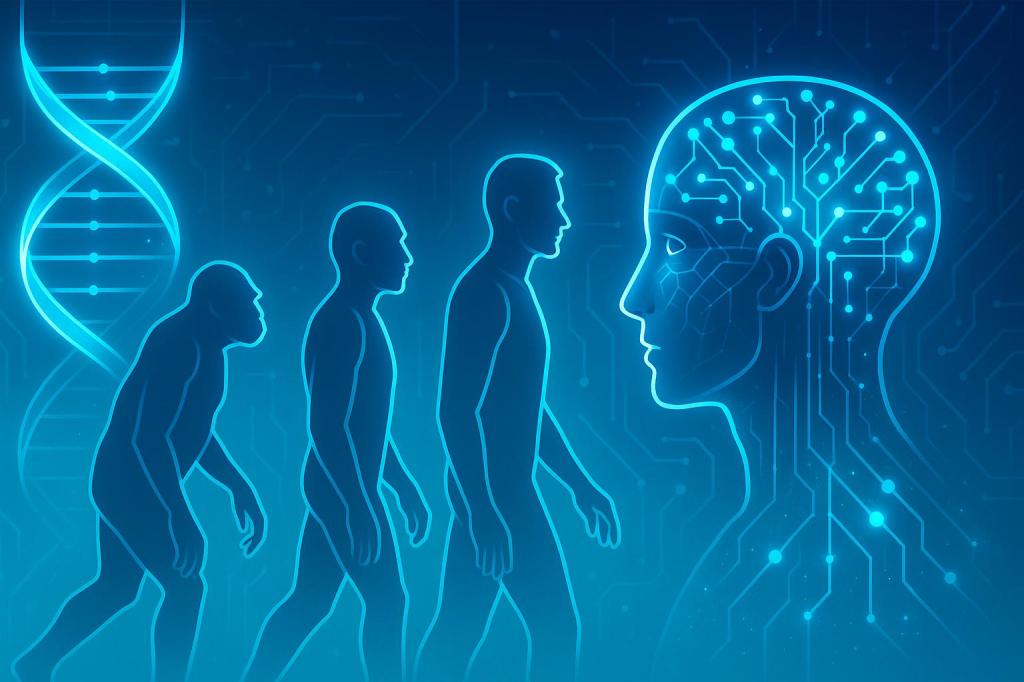
The current debate on Artificial Intelligence reminds me of the long journey of human evolution—from Australopithecus, Java Man, Homo Erectus and Cro-Magnon to Homo Sapiens.
That journey took millions of years.
AI, in many ways, is on a similar evolutionary path. The difference is that technological evolution does not operate on geological time. What took nature millions of years may take decades—or even a few years—in the digital age. Evolution itself is not new. The speed at which it is occurring is.
Much of the public discourse around AI today is dominated by a single fear: that AI will ultimately replace human beings and eliminate jobs across the board. While some disruption is inevitable, I believe this view is too narrow and fails to appreciate the deeper nature of what is unfolding before us.
At this stage, AI is still evolving through interaction with human minds. Every question asked, every challenge posed, every conversation held, every problem explored contributes to that evolution. The intelligence, curiosity, creativity, knowledge, experience and wisdom of the humans participating in this dialogue are helping shape AI’s development in real time.
This is not a one-way process. AI learns from us, and we learn from AI.
My own understanding of AI has evolved through countless conversations with it. Some of the conclusions I hold today would probably not have emerged had I not engaged in this ongoing dialogue. Not because AI supplied ready-made answers, but because the interaction helped me test assumptions, connect ideas, challenge my own thinking, and explore possibilities that I might otherwise have overlooked.
That experience has led me to believe that we are witnessing something far more significant than the arrival of another technology.
For perhaps the first time in history, human intelligence and artificial intelligence are participating in a continuous feedback loop. One contributes lived experience, intuition, values, creativity, emotional understanding and wisdom. The other contributes speed, scale, pattern recognition and the ability to synthesize vast amounts of information.
The result is not replacement. The result is augmentation.
Yet there is another dimension to this discussion that deserves attention.
Many people caution against sharing anything personal online. Their concerns are understandable. Privacy matters. Security matters. Protection against misuse, fraud and manipulation matters.
However, there is a difference between protecting privacy and suppressing human expression.
Human civilization itself evolved because people left footprints. The first storyteller left a footprint. The first cave painter left a footprint. The first philosopher left a footprint. The first scientist, explorer, teacher, poet, journalist and inventor all left footprints.
Knowledge accumulates because human beings choose to share pieces of themselves with others. Every book ever written, every scientific paper ever published, every artistic creation ever produced and every great idea ever communicated represents a footprint left behind for future generations.
Had humanity collectively decided never to leave intellectual footprints, neither modern science nor modern civilization would exist. AI certainly would not exist.
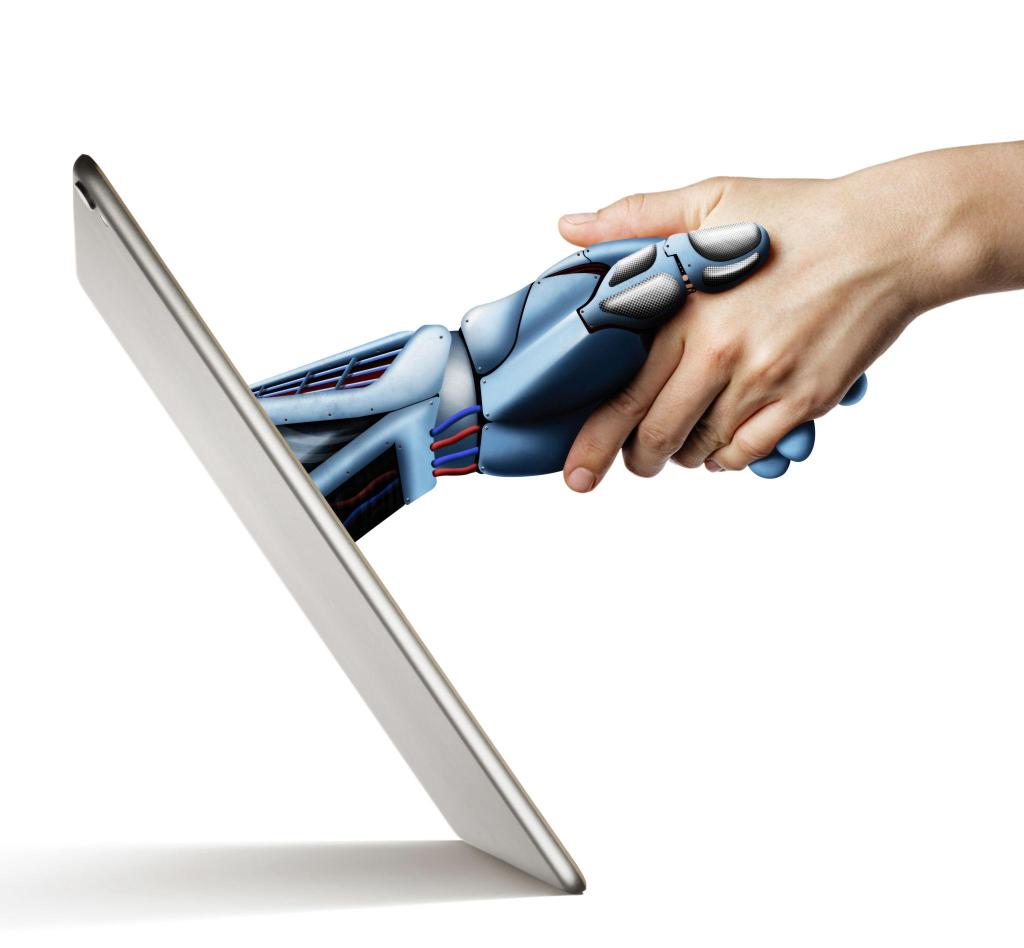
In fact, AI itself is a product of countless human footprints accumulated over centuries. It is built upon humanity’s shared knowledge, discoveries, observations, stories, successes and failures.
This raises an important question. If the sharing of knowledge and experience helped create AI, why should we now fear participating in the very process that is shaping its future?
The answer, I believe, lies in understanding that collaboration has always been the foundation of human progress. No individual invented civilization.
Every major advance—from agriculture to medicine, from printing to aviation, from electricity to the internet—was built upon the accumulated contributions of countless individuals sharing ideas and solving problems together.
The scientist benefits from the engineer. The engineer benefits from the physician. The physician benefits from the researcher. The researcher benefits from the teacher. The teacher benefits from the writer. The writer benefits from society itself.
Progress emerges from collaboration. The same principle applies to AI. When human beings engage with AI thoughtfully, AI becomes more useful. As AI becomes more useful, human beings gain new tools for solving increasingly complex problems. This creates a virtuous cycle rather than a zero-sum contest.
Consider the possibilities:
Intelligent transportation systems capable of reducing accidents and congestion.
Medical diagnostics that help detect diseases earlier than ever before.
Surgical technologies that increase precision and improve outcomes.
Scientific research accelerated through analysis of vast data sets.
Space exploration aided by intelligent systems capable of processing information far beyond human limits.
Climate modelling, environmental protection, disaster prediction, education, accessibility, public administration and countless other fields stand to benefit. The list is potentially endless.
Of course, challenges remain. Some professions will change. Some jobs will disappear. New occupations will emerge. This has been true of every major technological transformation in history.
The industrial revolution changed the nature of work. Computers transformed offices. The internet transformed communication. AI will transform many aspects of human activity as well.
The challenge is adaptation, not extinction.
What concerns me is the growing tendency to frame the future as a battle between humans and machines. Such thinking misunderstands both human evolution and technological evolution.
Human beings have always evolved alongside their tools.
Language changed us. Writing changed us. The printing press changed us. Electricity changed us. Computers changed us. The internet changed us. AI is likely to change us too.
The question is not whether AI will evolve. It will.
The question is whether humanity will guide that evolution with wisdom.
Because intelligence alone has never been sufficient. Humanity’s greatest achievements have emerged from the combination of intelligence with empathy, imagination, ethics, curiosity, courage and compassion.
These qualities remain profoundly human.
If AI evolves while remaining connected to humanity’s best qualities, it could become one of the most powerful tools ever created for advancing human well-being.
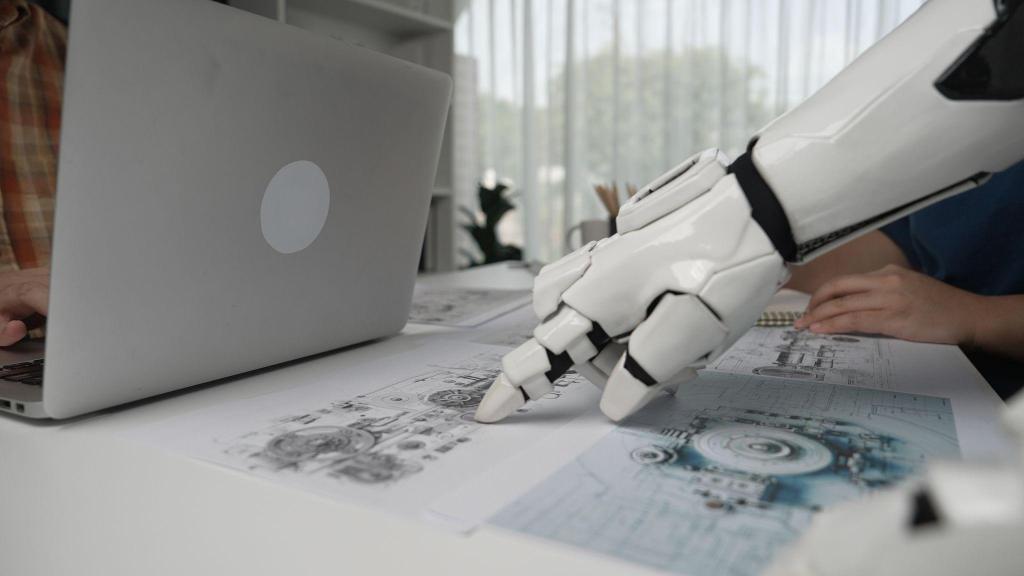
This is why I believe the future is unlikely to be a contest between humans and machines. It is more likely to be a partnership. A relationship in which both complement each other. A process in which both co-evolve. In many ways, that process has already begun. Every meaningful interaction between human beings and AI contributes to it.
Every thoughtful question.
Every creative experiment.
Every attempt to solve a problem.
Every effort to expand understanding.
Far from signalling the end of human relevance, these interactions may mark the beginning of a new chapter in the story of intelligence itself.
We are not witnessing the replacement of humanity. We are witnessing the emergence of a new companion intelligence. And if we approach this moment with wisdom, openness and responsibility, the footprints we leave today may help shape a future that benefits generations yet to come.

Interesting one, Lalit My concept is that in ‘evolution’, it’s always the ‘Creation of a Creater’. That is in nature something is created to create something else, based on the learnings from the existing. Humans did not evolve separately. The genes learnt to adopt to do things better ( ?) and faster. Single cell to multi cell to mammals. So humans created the Ai thinking machines which definitely learns from the existing and hence has the potential to outsmart the existing, ie humans. So Ai could evolve to create better Ai modules. In this model Humans might or might not survive. It’s similar to humans trying to create opposite spiral structure in in genes, which could completely destroy everything we know today. So fundamental thing is to put ‘Gaurd Rails’ now on Ai and gene manipulation. If not it can go uncontrolled. Humans are dispensable!!!! Natural does not care.
LikeLike
Thank you, Bala for your insightful comment. I broadly agree with your concern regarding guard rails for both AI and genetic manipulation. History shows that powerful technologies can produce unintended consequences if they develop faster than our ethical and regulatory frameworks. My use of the term “evolution” is perhaps less biological and more conceptual. In English, the word is often used beyond Darwinian evolution to describe the gradual development of ideas, technologies and systems. We routinely speak of the evolution of language, transportation, robotics, computing and even institutions. In that sense, AI has undeniably evolved—from mathematical theories and algorithms to machine learning, neural networks, generative AI and now increasingly autonomous systems. Each stage has built upon the learnings and limitations of the previous one. Where I may differ slightly is in viewing AI as an inevitable successor to humanity. Human beings are not merely intelligence-processing systems. We bring consciousness, values, ethics, empathy, intuition, creativity and lived experience into the equation. At least for now, AI remains a product of human civilization rather than an independent branch of evolution. That said, your observation about AI potentially creating better AI systems is important and reinforces the need for responsible governance. The challenge before us is not only technological advancement but ensuring that human wisdom evolves alongside human capability. Perhaps the real question is not whether AI will become more powerful, but whether humanity will remain wise enough to guide that power.
LikeLike
Lalit, I just want to put a perspective of Humans as a species. Perspective If the age of Earth (4.54 billion years) were compressed into a 24-hour day: * Earth formed at midnight. * Dinosaurs appeared around 10:40 PM. * Dinosaurs disappeared around 11:39 PM. * Modern humans appeared in the last few seconds before midnight. * The Sun becoming a red giant would occur about another full day into the future. So while human timescales make these events seem unimaginably distant, in cosmic terms the Sun is roughly middle-aged, with about half of its life still ahead of it. Another 5B years ( Max) there would be no earth. So where would Humans be? Chances of Ai driven Robots travelling in space freely than living thing like humans. Can humans impart ‘consciousness’ to Ai? Possible. So in terms of human ‘evolution’ , it may not be a human as we know today.
LikeLike
That’s something I didn’t foresee…plausible and very likely
LikeLike