
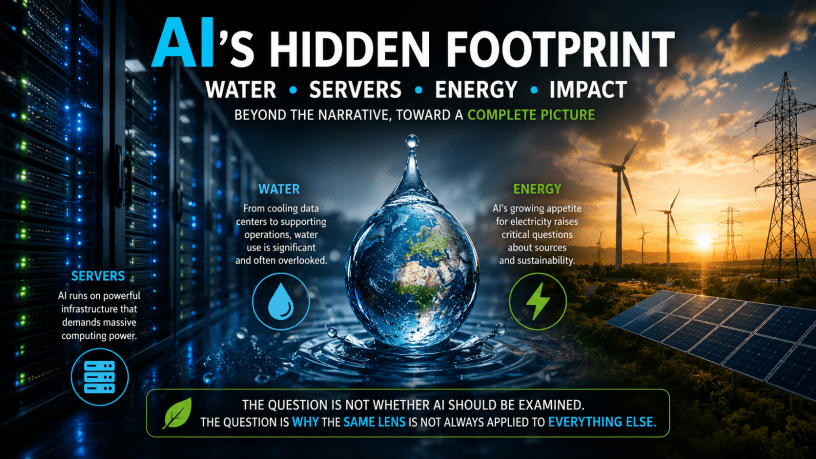
In Focus on World Environment Day
Lalit Shastri
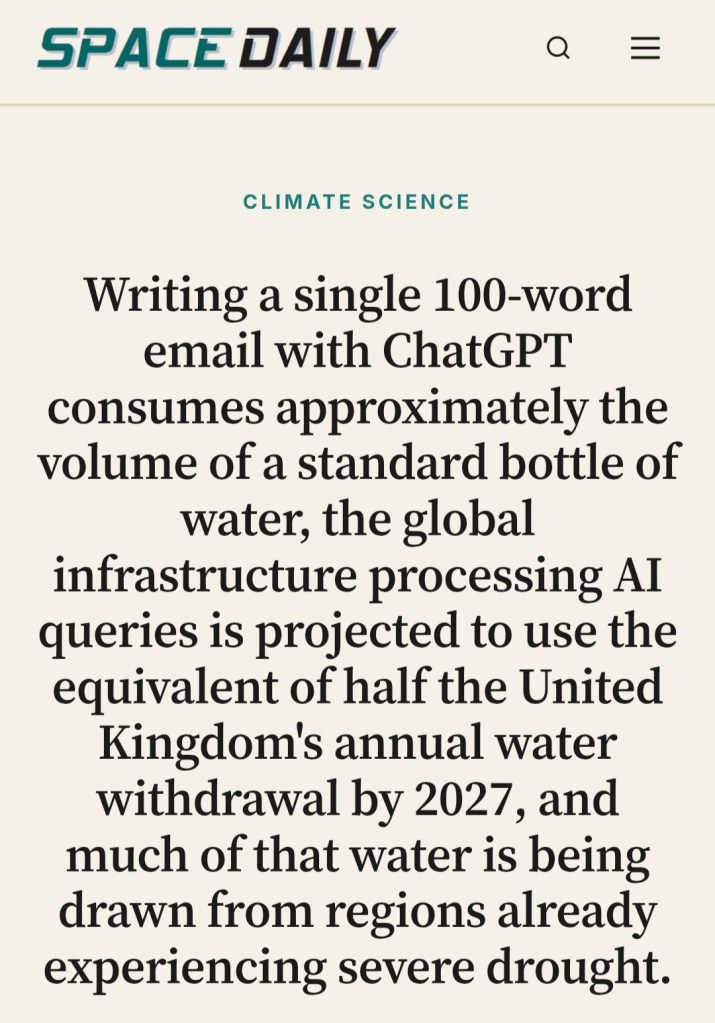
A recent report (check screenshot above) has highlighted the environmental footprint of artificial intelligence, claiming that writing a simple email through ChatGPT consumes the equivalent of a bottle of water and that AI infrastructure could account for enormous water withdrawals in the coming years. Environmental sustainability is a legitimate concern and deserves serious attention. However, the discussion becomes problematic when it singles out one platform while ignoring the broader technological ecosystem.
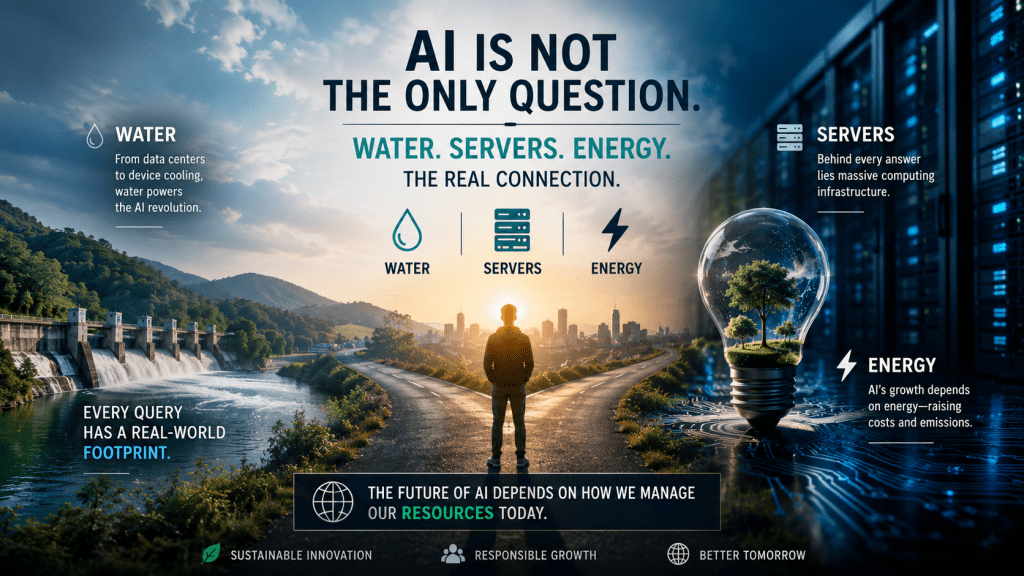
Why is ChatGPT being placed in the dock when the digital world is powered by vast networks of data centres supporting search engines, social media platforms, streaming services, cloud computing, online gaming, e-commerce, and cryptocurrency networks? All of these consume energy and natural resources. If the objective is environmental accountability, then the scrutiny must extend across the entire digital landscape.
The issue is not whether AI consumes resources—it undoubtedly does. The real question is whether the debate is being framed fairly and proportionately. Figures presented without context can create alarm without understanding. Resource consumption should be weighed alongside the value generated by a technology, whether in education, research, productivity, healthcare, journalism, or accessibility.
Equally important is consistency. If environmental costs are being cited against AI platforms, then similar standards should be applied to all major digital infrastructures, including those built around cryptocurrency and blockchain technologies.
A mature public debate should move beyond targeting the most visible name in a sector. ChatGPT may be the most recognisable face of AI today, but the environmental challenge, if one exists, belongs to the entire digital economy. The goal should be transparency, efficiency, and responsible innovation—not the construction of narratives around a single platform.
The question, therefore, is not whether ChatGPT should be examined. It should. The question is why the same lens is not always applied to everything else.
