
Uday Kumar Varma
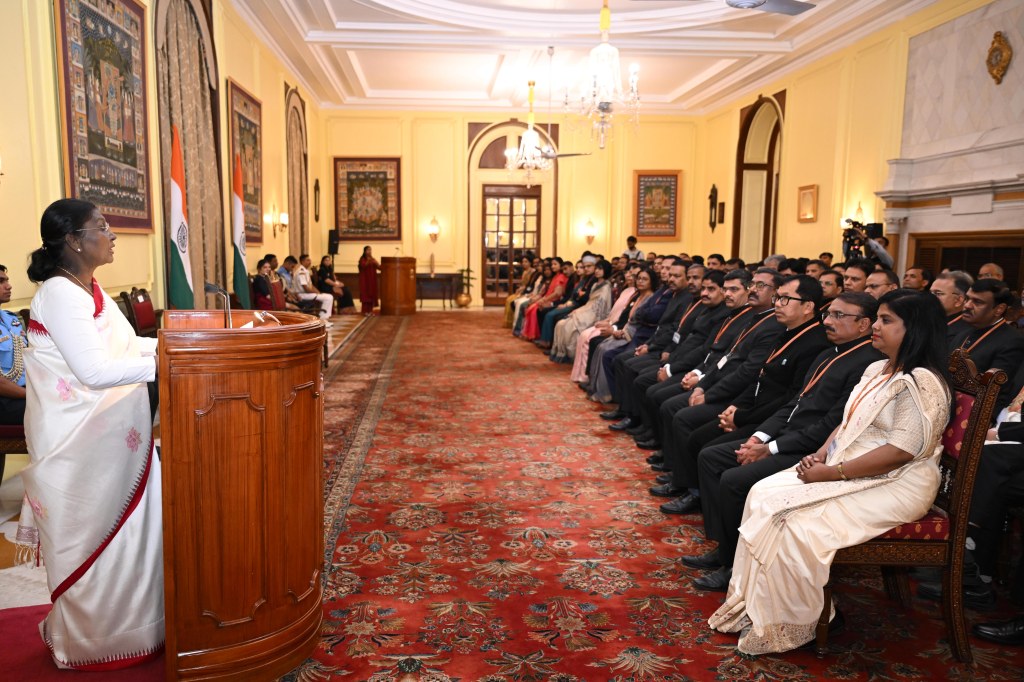
Every year on April 21, India’s civil services assemble to celebrate themselves—formally, ceremonially, and with an air of reassurance. Citations are read, innovations applauded, and a narrative of quiet competence reaffirmed. It is an important ritual. But rituals, when repeated without introspection, risk becoming consolations. The more relevant question, therefore, is not what is celebrated on this day, but what is left unsaid.
The “Steel Frame” — Then and Now
At the heart of India’s administrative edifice stands the Indian Administrative Service, heir to a legacy once described as the “steel frame.” That phrase carried meaning when it signified not just authority, but moral sturdiness—an ability to hold firm against pressure, to speak truth to power, and to act as a stabilising force in a turbulent democracy. Today, that steel appears, in places, corroded and worryingly alloyed.
“The real question is not what Civil Services Day celebrates, but what it chooses to ignore.”
Integrity Under Strain
The most disquieting concern is not inefficiency or even obsolescence—it is the erosion of integrity. Corruption in public life is not new, but what has changed is its scale, brazenness, and, at times, seeming acceptability. When officials—senior and junior—are linked to decisions that distort policy or siphon vast public resources, it is not merely an individual failure; it signals a deeper institutional compromise. The danger lies less in wrongdoing itself than in the perception that the system has learnt to accommodate it.
Between Responsiveness and Subservience
Closely intertwined with this is the increasingly fraught relationship between the bureaucracy and the political executive. In a healthy democracy, the civil servant is expected to be responsive, not subservient; aligned, but not absorbed. Yet, the line between cooperation and complicity has, in too many instances, thinned to near invisibility. The willingness of some officers to bend—often to the point of distortion—undermines the very idea of a neutral and professional civil service. Equally, the marginalisation of those who stand their ground sends a chilling message through the ranks.
“A system that rewards pliancy and sidelines principle cannot sustain credibility for long.”
This is not an argument for confrontation, but for character.
Governance or Performance?
There are other, subtler distortions. A growing culture of self-projection—fuelled by digital platforms—has introduced performance into governance. Administration risks becoming theatre; visibility begins to masquerade as value. The finest traditions of public service—restraint, anonymity, collective ownership—are gradually yielding to a more individualised display.
The Distance from the Citizen
Equally troubling is the persistence of bureaucratic hauteur. For all the talk of citizen-centric governance, the lived experience of many Indians remains one of distance and discretion. The state still appears, too often, as a dispenser of favours rather than a guarantor of rights. This reflects not merely attitude, but an incomplete internalisation of democratic ethos.
The Capability Gap
On the professional front, the demands of governance have outpaced administrative capability. The defence of the generalist model is increasingly strained in a world that requires domain expertise, technological fluency, and policy depth. While exceptional individuals rise to the challenge, systems cannot depend on exceptions; they must be designed for competence.
The Failure to Institutionalise Success
A recurring weakness, long acknowledged but rarely corrected, is the failure to institutionalise success. Innovative initiatives flourish briefly, only to fade with transfers and shifting priorities. Continuity—so essential to governance—is sacrificed at the altar of individual tenure. The result is a state that is perpetually beginning, rarely consolidating.
“India does not lack ideas—it lacks continuity.”
The Imperative of Viksit Bharat
And yet, to dwell only on these deficiencies would be to miss the larger point. India stands at a moment of historic ambition. The vision of Viksit Bharat by 2047 is not rhetorical; it is a demanding national project. It calls for a civil service that is not merely functional, but exemplary—combining integrity with imagination, authority with empathy, and efficiency with ethical clarity.
The scale of transformation envisaged—economic, social, technological—will test existing administrative frameworks. It will require civil servants who can navigate complexity without losing conviction; who can engage political leadership without surrendering professional judgment; and who can harness technology not as an accessory, but as an instrument of transparency and empowerment.
Restoring Trust, Reclaiming Purpose
Above all, it will require a restoration of trust. Institutions derive strength not from rules alone, but from the belief that those who operate them are guided by a larger sense of purpose. That belief, once weakened, is not easily regained.
Civil Services Day, therefore, must evolve. It must move beyond affirmation to introspection, beyond recognition to renewal. Celebration has its place—but so does candour. For a service that shapes the everyday experience of governance for over a billion people, the cost of complacency is simply too high.
“The true strength of a civil service lies not in the power it wields, but in the principles it refuses to yield.”
If April 21 can become a moment not just of looking back, but of looking within, it may yet recover its deeper meaning. For, in the end, the true strength of a civil service lies not in the power it wields, but in the principles it refuses to yield.
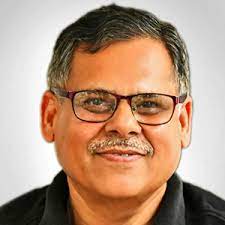
The author, Uday Kumar Varma, a 1976 batch IAS officer of Madhya Pradesh cadre, was Secretary Information & Broadcasting, member of the Central Administrative Tribunal (CAT) and member of the Broadcasting Content Complaints Council, a self-regulatory body for general entertainment channels. As Secretary I&B, he spearheaded the nationwide digitisation programme.
