
By Lalit Shastri
Congress’s selective indignation exposes the hollowness of its political posturing on sovereignty, democracy and accountability
“Who cares what the ‘White Man’ has to say about our protests?”
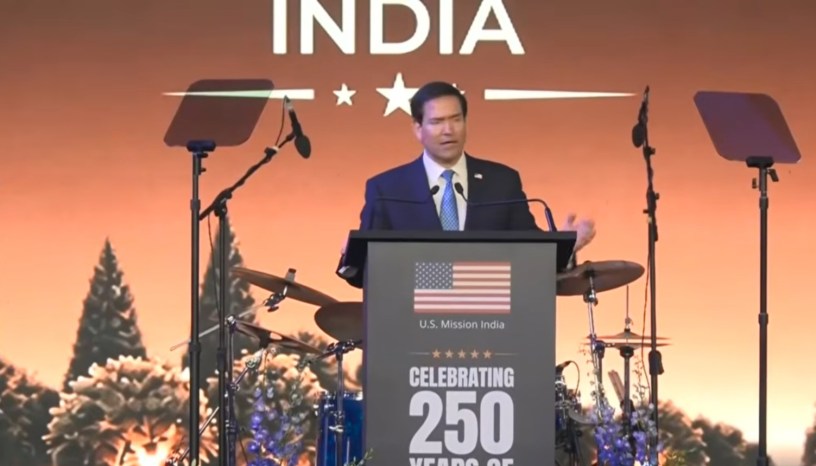
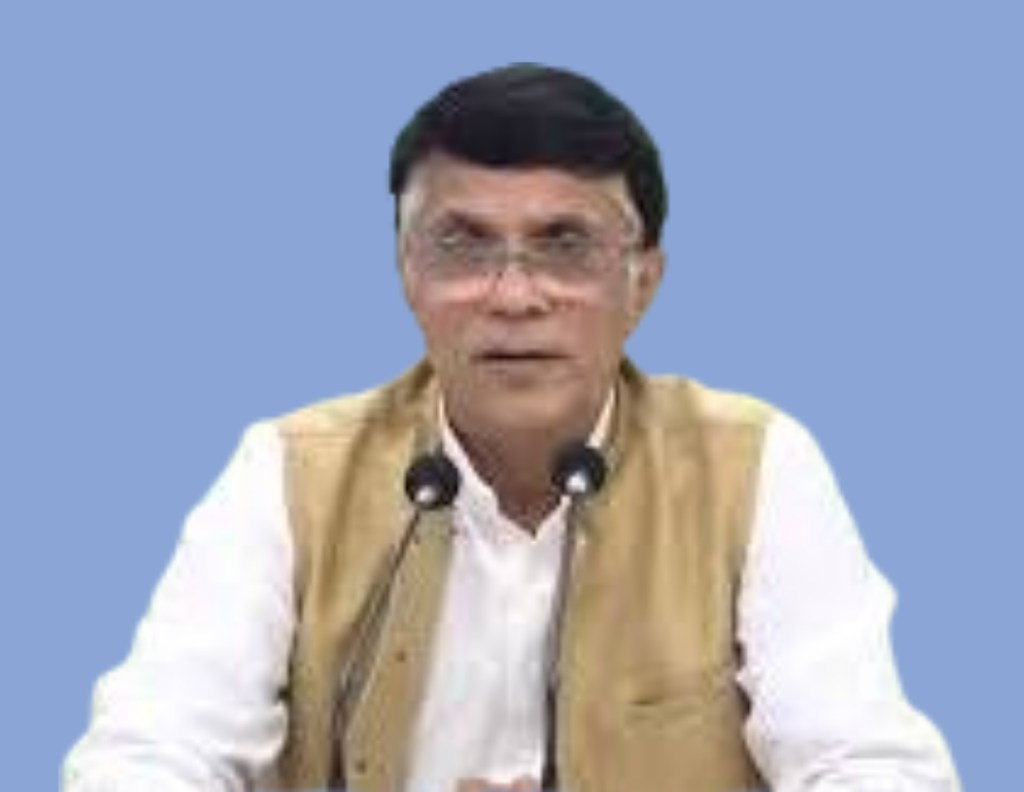
That was Congress spokesperson Pawan Khera’s response on October 21, 2026, to US Secretary of State Marco Rubio’s remarks on the controversy surrounding the anti-Election Commission protests in India.
Taken on its own, Khera’s declaration makes a perfectly defensible point. India is a sovereign nation. Its democratic choices cannot be dictated by Washington, and its political legitimacy does not depend on the approval of foreign governments, billionaires or commentators.
But there is a question the Congress party must answer before claiming the high ground on national sovereignty: does it apply this principle consistently, or does foreign opinion become irrelevant only when it does not serve the party’s political purposes?
Consider what Rahul Gandhi said on July 31, 2025, after US President Donald Trump described the Indian economy as “dead”.
“Yes, he is right,” Gandhi declared. “Everybody knows this except the Prime Minister and the Finance Minister. Everybody knows that the Indian economy is a dead economy. I am glad that President Trump has stated a fact.”
The contrast is unmistakable. When Trump delivered a sweeping and disparaging verdict on India’s economy amid a trade confrontation, the Leader of the Opposition did not dismiss the American president’s opinion as irrelevant. He welcomed it as confirmation of his own political indictment of the Modi government.
When Rubio declined to pronounce judgment on India’s domestic political dispute, however, Congress’s response was to question the relevance of the foreigner’s opinion.
Which principle, then, governs Congress? That foreign opinion is irrelevant to India’s democracy, or that it becomes authoritative when it supplies a convenient weapon against the government?
The issue is not whether Rahul Gandhi has the right to criticise India’s economic performance. He does. Nor is it whether Khera is right to insist that Indians must resolve their own political disputes. He is. The issue is the striking inconsistency between the two positions when viewed through the lens of national interest.
If the white man’s opinion is irrelevant, why was Trump so welcome when he called India’s economy dead? If foreign opinion deserves consideration, why should that consideration depend on whether the speaker’s words damage the government or help the opposition?
Rubio, the UN experts and the sovereignty test
The controversy surrounding the anti-Election Commission protests brings the issue into sharper focus.
On October 21, 2026, US Secretary of State Marco Rubio described the protests as a domestic political matter for Indians to resolve. He also questioned the credibility implied by the label “UN experts”, calling it an oxymoron. Asked about allegations by UN experts concerning the handling of demonstrations, Rubio said he would not opine on India’s domestic political matters.
India had also rejected the allegations, arguing that unverified claims and incomplete statistics should not be used to malign the country.
Congress is entitled to question the Election Commission, demand electoral reform and challenge the government. But if it believes that India’s democratic institutions have failed, it must establish its case through evidence, constitutional mechanisms and due process. Foreign opinion may draw attention to an allegation; it cannot establish that allegation by itself.
Rubio’s position is significant not because an American official has endorsed the Indian government, but because he has declined to act as an arbiter of India’s internal political contest.
Congress should be able to welcome that principle without qualification. The test of consistency is whether it would extend the same respect to India’s sovereignty when a foreign leader’s remarks favour its political opponents.
The Delhi High Court’s warning: Accountability and transparency cannot exist in a vacuum
The Delhi High Court offered another telling moment on October 21, when Justice Subramonium Prasad, during a hearing involving Saurav Das, 27, and Ashutosh Ranka, 32, of the Cockroach Janata Party (CJP), remarked: “Then you are not Gen Z.” The exchange over their ages soon gave way to more consequential questions of law. The Bench questioned why they had invoked Article 226 when an alternative revisional remedy was available, and raised concerns about public peace and order in the context of an alleged breach of a peace bond. They eventually withdrew their plea.
There is another lesson in the Delhi High Court’s recent handling of a public interest litigation seeking clarity over allegations that police had used lathis against Cockroach Janta Party (CJP) protesters during their march towards Parliament.
On September 16, 2026, a Division Bench comprising Chief Justice D.K. Upadhyaya and Justice Tejas Karia dismissed the petition. The petitioner, Nitin Naresh, had approached the Court after noticing contradictions between media reports and the Delhi Police’s account of the alleged lathicharge. He sought directions for the preservation of video footage and police deployment records, and for the matter to be examined.
The Court was unconvinced that the contradiction between two accounts, by itself, established a sufficient basis for the intervention sought through a PIL.
When the petitioner invoked accountability and transparency, the Chief Justice delivered a pointed admonition: “These high-sounding words like accountability and transparency are not to be used in a vacuum like this.”
The Bench questioned whether every discrepancy between a newspaper report and an official police statement could become a matter for judicial intervention. It also questioned what enforceable right had been violated or what legal obligation the police had failed to discharge merely because competing versions of events existed in the public domain. The Court ultimately found no public interest warranting its intervention in that particular petition.
The observations carry a lesson that extends well beyond the litigation. Accountability is not a magic word that automatically validates a demand for judicial intervention.
That distinction is fundamental to constitutional democracy.
The High Court’s observations matter in the wider debate. Constitutional accountability is not a contest in which the side that uses the most emphatic language automatically prevails. It requires facts, an identifiable legal issue and a reasoned examination of the claim.
The same standard must apply when Congress questions the Election Commission, alleges police excesses or invokes foreign criticism. If there is evidence of wrongdoing, it must be examined. If a legal remedy is warranted, it must be pursued through the proper channels. But neither political conviction nor international endorsement can substitute for proof.
India’s democracy needs no foreign certificate
The deeper problem is the inability of sections of the political establishment to distinguish between international engagement and international validation.
India must listen to credible criticism, correct genuine failures and defend itself against inaccurate or unsupported allegations. None of this requires deference to foreign power. India’s Constitution, courts, electoral institutions, political parties and electorate provide the framework through which its democratic life must be conducted.
The test of political maturity is not whether a party can find an American president, a technology billionaire or an international official to echo its accusations. It is whether the party can establish those accusations on their merits before the Indian people and the institutions charged with examining them.
Congress is entitled to oppose the government. It is entitled to demand electoral reform, question the Election Commission and seek a change of government through democratic means. These are legitimate functions of an opposition. But opposition is not a licence to abandon consistency, and criticism of the government must not become an invitation to outsiders to pronounce judgment on India.
The July 2025 episode remains a particularly revealing test. Rahul Gandhi did not merely cite Trump’s statement about India’s economy; he welcomed it as fact. That is a matter of public record. Congress cannot now invoke the irrelevance of foreign opinion as though the principle has always been applied consistently.
If the white man’s opinion is irrelevant, it must remain irrelevant when politically convenient. If it deserves consideration, it must be tested against evidence, not selectively elevated into gospel.
India does not need foreign applause to validate its democracy, nor does it need foreign denunciations to discover its failings. It needs facts, constitutional accountability and political leaders willing to submit their claims to the same standards they demand of their opponents. The white man’s opinion is neither India’s final verdict nor its original sin. The real question is why those who dismiss it today are so eager to borrow its authority tomorrow.
