
ThisisNews Network
“Journalism is not about reporting events alone. It is about bearing witness to truth when the world would rather look away.” — Lalit Shastri
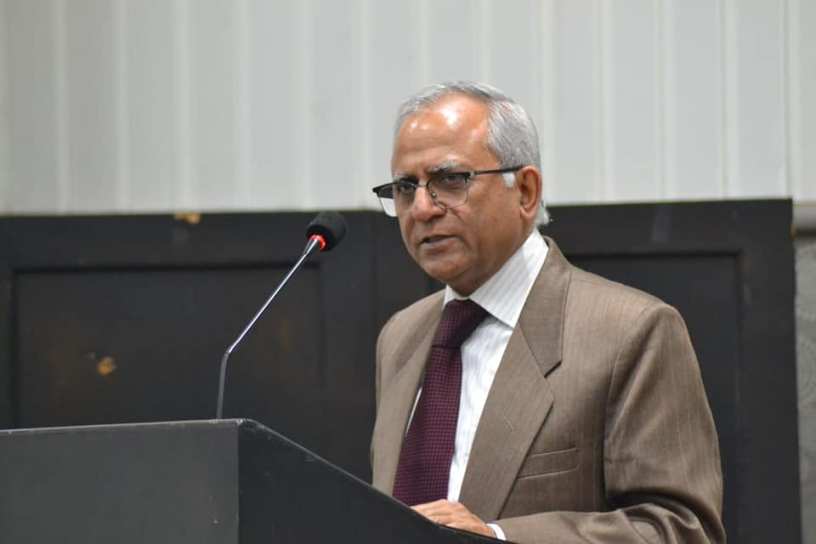
Lalit Shastri is a distinguished Indian journalist, author, environmental advocate and documentary filmmaker whose work over four decades has significantly contributed to investigative journalism, wildlife conservation and public discourse in India.
History often remembers disasters through statistics. But sometimes it takes the work of a determined witness to transform numbers into memory and memory into conscience.
For Lalit Shastri, journalism was never merely a profession. It was a moral calling born in the shadow of one of the greatest industrial catastrophes in human history — the Bhopal gas disaster of December 1984.
At the time, Shastri was working in the corporate sector. The tragedy unfolding in his own city compelled him to make a life-altering decision: he left the security of corporate employment and entered journalism with a singular mission — to investigate the truth behind the catastrophe and ensure that its lessons were not forgotten.
That decision would shape the course of his life for the next four decades.
Moved by the scale of human suffering and the urgent need to document the truth behind the catastrophe, Shastri left a corporate career to pursue investigative journalism. His work culminated in the book Bhopal Disaster – An Eyewitness Account, one of the earliest narrative accounts written by someone who had observed the tragedy from close quarters.
The significance of the work was recognised nationally when it was formally released by the President of India, Giani Zail Singh, at Rashtrapati Bhavan in New Delhi in 1986.
The book became an important documentation of the tragedy, reflecting not only the scale of human suffering but also the profound questions it raised about corporate responsibility, environmental safety and governance.
Decades later, Shastri revisited the subject through his book Bhopal Gas Disaster – 38 Years, reminding readers that the legacy of Bhopal continues to shape debates on industrial accountability and environmental justice around the world.
Over the following decades, Lalit Shastri built a distinguished career in national journalism. He served as Bureau Chief in Madhya Pradesh for leading national newspapers, including The Hindu and The Asian Age, reporting extensively on politics, governance, environmental issues, and Maoist violence in central India. His reporting has consistently reflected a commitment to public accountability and the pursuit of truth.
In addition to journalism, Shastri has made notable contributions to environmental conservation. He founded the organisation CREW – Crusade for Revival of Environment and Wildlife, through which he conducted pioneering research on the decline of India’s tiger population in the Central Indian Highlands. His investigative reports Vanishing Stripes (1999) and Vanishing Stripes II (2000) highlighted the urgent need for stronger wildlife protection and helped raise public awareness about conservation challenges.
Shastri has also contributed to environmental governance, serving as a member of the Board of Governors of the Madhya Pradesh Tiger Foundation and the State Environment Council. His work in public service further includes serving on the jury for the Madhya Pradesh State Bravery Awards.
Recognising the importance of visual storytelling in conservation awareness, Shastri produced documentary films including Backyard Birds of Bhopal and Water Birds of Bhopal. The latter documentary was inaugurated by the Chief Minister of Madhya Pradesh, Shivraj Singh Chouhan, and premiered during the Golden Jubilee celebrations marking 50 years of the formation of Madhya Pradesh at the India International Centre in New Delhi in 2006.
As an author, Lalit Shastri has written on subjects ranging from environmental disasters to political analysis. His book Political Mirage, which is a collection of his articles published in The Hindu in the decade of the 90s of the last Century, was released by the Prime Minister of India, Atal Bihari Vajpayee, in 2000. His later works include Bhopal Gas Disaster – 38 Years, reflecting on the enduring legacy of the tragedy.
In addition to political commentary, Shastri has explored literary storytelling through his fiction novel Silence Between Us, a reflective narrative examining relationships, memory and emotional distance.
Shastri has also worked to build public awareness platforms for conservation through the Central Indian Highlands Wildlife Film Festival (CIHFestival), which brings together filmmakers, researchers and conservationists to promote dialogue on wildlife protection and ecological sustainability.
His engagement with global issues was reflected in 2022 when he was invited by members of the Italian Parliament to address lawmakers in Rome, where he spoke about the lessons of the Bhopal disaster, and urged the international community to strengthen global standards for industrial safety and environmental responsibility, emphasizing that economic development must never come at the cost of human life.
Currently, he is also serving as Impact Communication Advisor and Mentor with Looms of Ladakh, bringing his experience in public-interest journalism and communication to support the organisation’s mission of strengthening sustainable livelihoods and preserving Ladakh’s traditional weaving heritage.
Another important dimension of Shastri’s life has been his engagement with India’s civilizational traditions.
In addition to his work in journalism and conservation, Shastri founded Sanatan Mission, a non-profit initiative dedicated to promoting ethical living, cultural awareness and spiritual values inspired by the philosophy of Sanatan Dharma.
The organisation seeks to advance spiritual, educational and social service goals while encouraging ethical living inspired by ancient Indian philosophical traditions.
Through lectures, writings and cultural initiatives, Shastri has sought to link environmental consciousness with spiritual values, arguing that respect for nature is deeply embedded in the philosophy of Sanatan Dharma.
His Mission seeks to encourage a deeper understanding of the interconnectedness between human life, nature and spiritual consciousness.
Shastri, also founded the organisation SAPAKS (Samanya Pichda Alpsankhyak Kalyan Samaj Sanstha), a public movement advocating policy reforms relating to India’s reservation system.
Like many public activists addressing contentious issues, his work has also brought legal and political challenges — reflecting the complex realities of civic engagement in a vibrant democracy.
Through journalism, authorship, environmental advocacy, documentary filmmaking and civic engagement, Lalit Shastri’s life reflects an unwavering commitment to truth, public responsibility and the protection of nature.
His work stands as a testament to the enduring power of journalism when guided by conscience, courage and a deep sense of social responsibility.
For Lalit Shastri, journalism has never been confined to newsrooms or headlines. It has been a lifelong quest — to document truth, protect nature, and remind society that conscience must remain stronger than power.
Key Milestones
- 1984–86 — Investigates the Bhopal gas disaster
- 1986 — Book Bhopal Disaster – An Eyewitness Account released by Giani Zail Singh
- 1999–2000 — CREW publishes Vanishing Stripes tiger conservation reports
- 2000 — Political Mirage released by Atal Bihari Vajpayee
- 2006 — Documentary Water Birds of Bhopal premiered at India International Centre
- 2007 — The Last of the Gharial (for Assignment Earth)
- 2022 — Invited to address lawmakers in Rome on lessons from Bhopal
