

Lalit Shastri
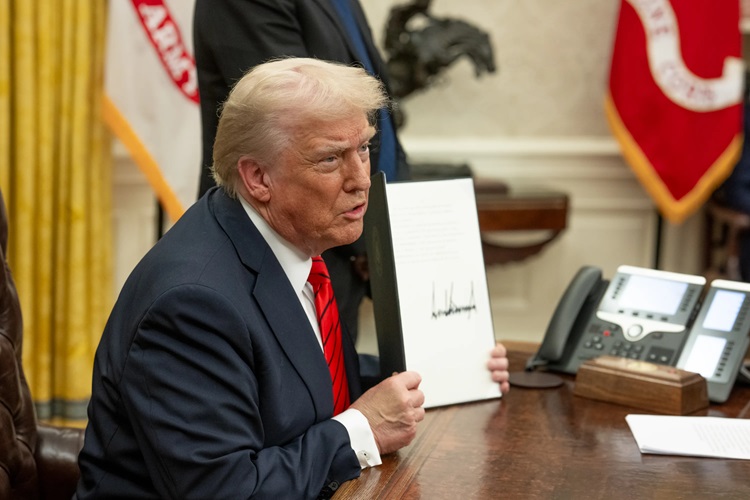
From Trump’s perspective, driven by the ambition to eliminate the U.S. trade deficit and national debt within four years, the tariff strategy is a tool for enforcing reciprocal trade agreements. His belief is anchored in the leverage the U.S. holds as the world’s largest consumer, accounting for nearly 80% of global consumption. In this context, Trump is confident that global economic blocs will eventually concede and negotiate bilateral tariff adjustments that favour U.S. interests. According to this logic, the ripple effect of such agreements could trickle down to benefit American consumers through better deals and possibly reinvigorated domestic industries. One just has to wait and watch how this economic chess game unfolds.
However, this aggressive tariff policy evokes memories of a darker historical precedent—British colonial economic practices in India. During British rule, India’s flourishing textile industry, once the pride of the subcontinent, was systematically dismantled through a series of protectionist measures designed to promote British interests. The British government imposed steep tariffs and duties on Indian textiles entering Britain, rendering them uncompetitive. In contrast, British-made textiles—primarily from Manchester—were granted near-unrestricted access to the Indian market.
This deliberate policy not only undercut India’s traditional handloom industry but also reversed centuries-old trade patterns. India transitioned from being a major textile exporter to a supplier of raw cotton for British mills and a consumer of finished British goods. The inundation of Indian markets with British textiles crippled local artisans and weavers, causing widespread economic dislocation.
Trump’s trade war, though vastly different in context and intent, echoes this past in how protectionist policies can have broad and often unintended consequences. History warns us that imposing tariffs without a nuanced understanding of global interdependence can harm domestic industries just as much as they hurt foreign competitors. In the globalized economy of the 21st century, the fallout of such actions can be swift and widespread—making it imperative to weigh short-term gains against long-term sustainability.
The unfolding tariff regime also raises the question of whether this is part of a larger strategic vision by the U.S. to recalibrate the global economic order in its favor. If successful, such a strategy could potentially reverse the progress made by many developing and emerging economies, who have climbed up the value chain to become exporters of finished goods. These nations risk being pushed back into the role of mere suppliers of raw materials, reminiscent of colonial-era trade dynamics. The Western bloc, along with key Asian economies, would likely respond to this emerging crisis with a mix of cautious bilateral negotiations and internal economic reforms aimed at boosting domestic consumption and reducing dependence on U.S. markets. Multilateral institutions, too, may face renewed pressure to mediate trade disputes and balance protectionist impulses with the principles of free trade. Ultimately, the world may witness a phase of economic realignment, as countries either resist or reluctantly adapt to a U.S.-centric trade model that seeks to dominate both supply and demand.
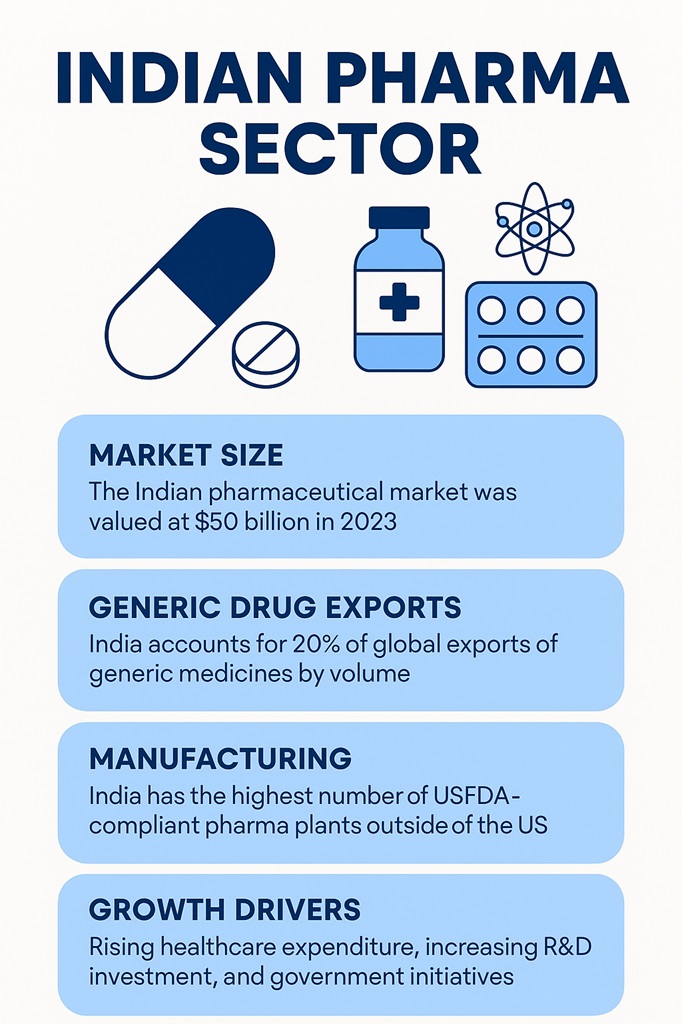
Amidst this evolving trade landscape, the Indian pharmaceutical sector stands out as a critical exception—both in strategic relevance and negotiating weight. The United States is India’s largest pharmaceutical export market, accounting for over 31% of the total pharma exports. In 2023 alone, India exported $8 billion worth of pharmaceutical products to the U.S. Acknowledging this mutual dependence, the Trump administration adopted a pragmatic rather than an arm-twisting approach. As a result, certain goods—including pharmaceuticals, copper, semiconductors, lumber, and specific minerals not available in the U.S.—were excluded from the scope of the Reciprocal Tariff policy. This highlights that in some strategic sectors, the U.S. needs India as much as India needs access to U.S. markets, signaling a more nuanced balance of power in bilateral trade negotiations.
Looking ahead, Trump’s rigid tariff policies risk triggering a full-scale global tariff war, with China at the epicenter. As the world’s second-largest economy and a key node in global supply chains, China’s likely retaliatory measures could destabilize trade flows across continents. The erosion of trust in multilateral institutions like the World Trade Organization—already strained under the weight of unilateral trade actions—may accelerate, weakening the very framework that has underpinned global commerce for decades. Smaller, trade-dependent economies like Singapore, which thrive on rules-based international trade and open markets, could face disproportionate fallout. With global supply chains disrupted, and tariff escalations spreading unpredictably, such nations may struggle to navigate the turbulence without being forced into asymmetric trade compromises. In this climate, economic nationalism could triumph over cooperation, altering the world trade order in profound and potentially irreversible ways.
