Acclaimed journalist Lalit Shastri, who has headed The Hindu bureau in Madhya Pradesh between 1991 and 2009 and The Asian Age between 2010 and 2014, has had the longest continuous stint by any journalist covering Madhya Pradesh for a national daily since the formation of Madhya Pradesh in 1956.
The Investigative Journalist and Conservationist Who Shaped Public Discourse
Lalit Shastri, founder-editor of ThisisNews.com, is a name synonymous with fearless journalism, environmental advocacy, and impactful storytelling. He has carved a niche for himself as a widely respected investigative journalist whose work transcends borders. But beyond his journalistic endeavors, Shastri has worn many hats—as a wildlife filmmaker, author, and conservationist, he has dedicated his life to exposing corruption, advocating for transparency, and protecting India’s natural heritage.
A Passion for Truth and Accountability
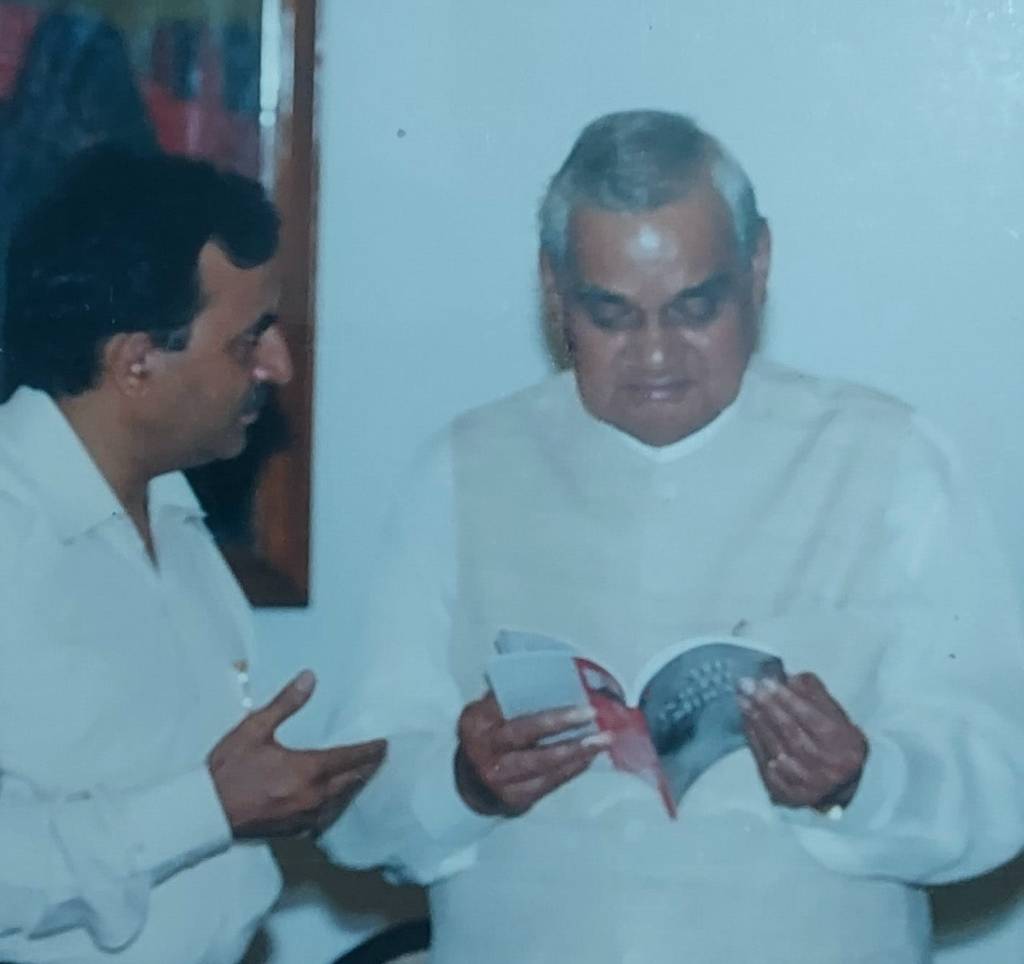
Shastri’s journey as a journalist began during a time when investigative reporting was fraught with challenges. His tenure at The Hindu saw him covering some of the most critical socio-political issues in Madhya Pradesh during the 1990s. At a time when the state was the largest in India, stretching from Gwalior in the North to Bastar in the South, and Rewa in the East to Jhabua in the West, he relentlessly exposed corruption and governance failures. His work was so impactful that his articles were compiled into a book, “Political Mirage“, a sharp critique of governance and accountability. The book was later released in June 2000 by then-Prime Minister Atal Bihari Vajpayee in New Delhi.
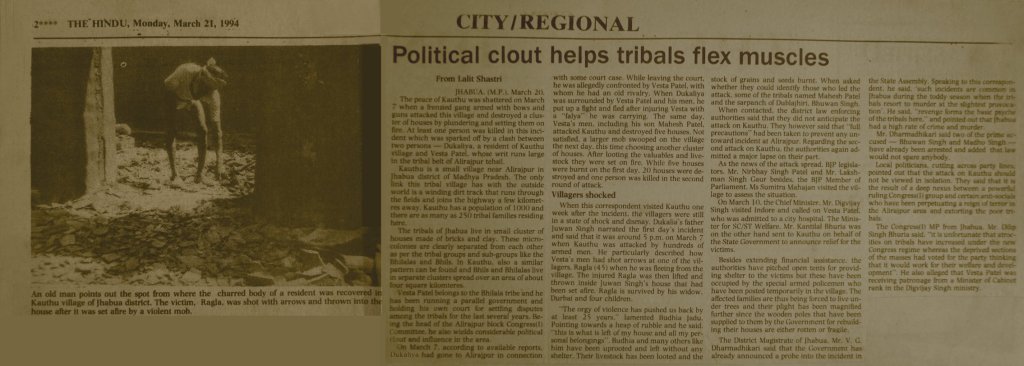
Jhabua, predominantly a tribal district, on the edge of the expanding modern-day settlements, lies in the West of the central Indian State of Madhya Pradesh bordering Gujarat. One could call it the Madhya Pradesh frontier. The ethnic tribals, who have lived in a blind alley or a cul-de-sac far from the madding crowd for centuries, deserved a better deal when India attained Freedom. Tragically enough, instead of widening the horizon of transition, and social change and paving the way for the smooth development and progress of the tribals, our leaders who have been shouting from rooftops about their deep concern about the welfare of the tribals, have thrived and remained riveted to the seats of power through the use of muscle power and deceit. This news coverage of a violent and barbaric incident of 1996, when Digvijay Singh was the Chief Minister of Madhya Pradesh, presents a gloomy picture….When I went to cover the story, it left me wondering whether I was in Independent India or the Wild West (American Frontier) which was much characterised by anarchy and violence in the second half of the 19th Century. – Lalit Shastri
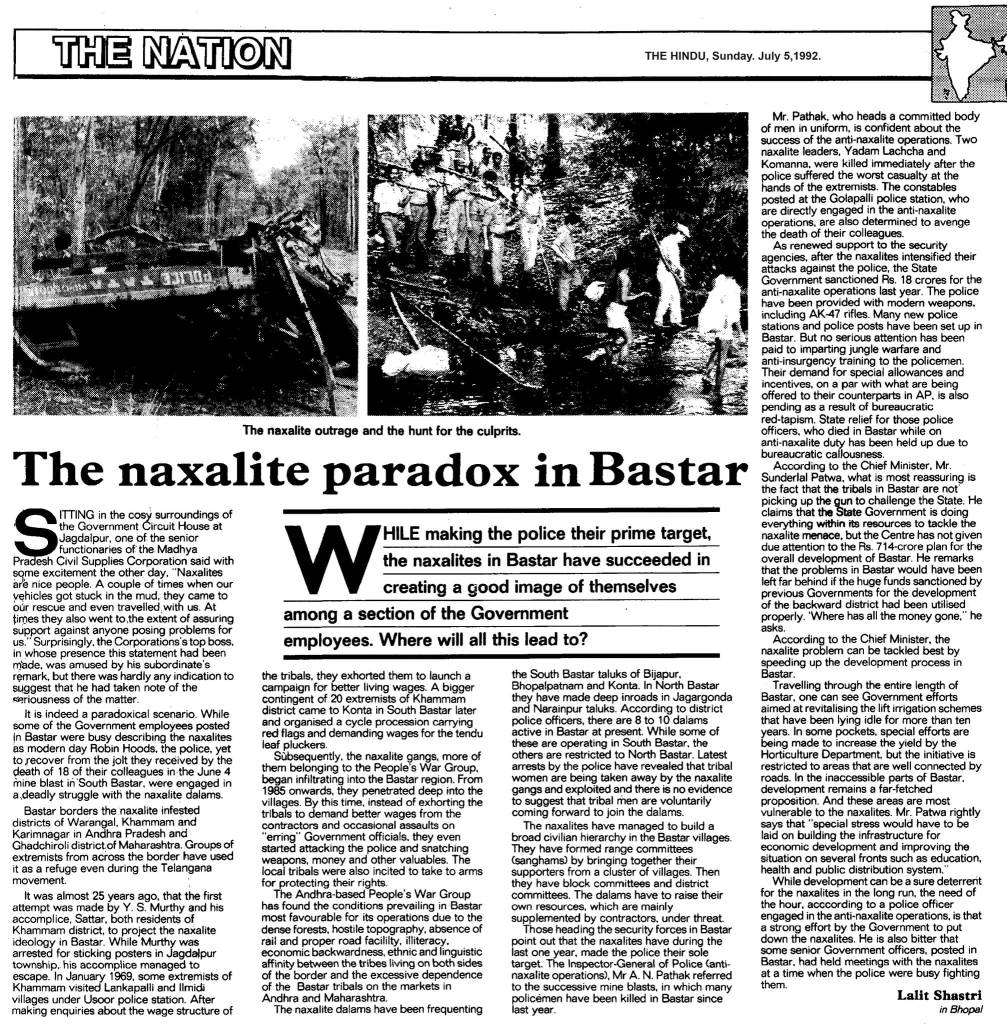
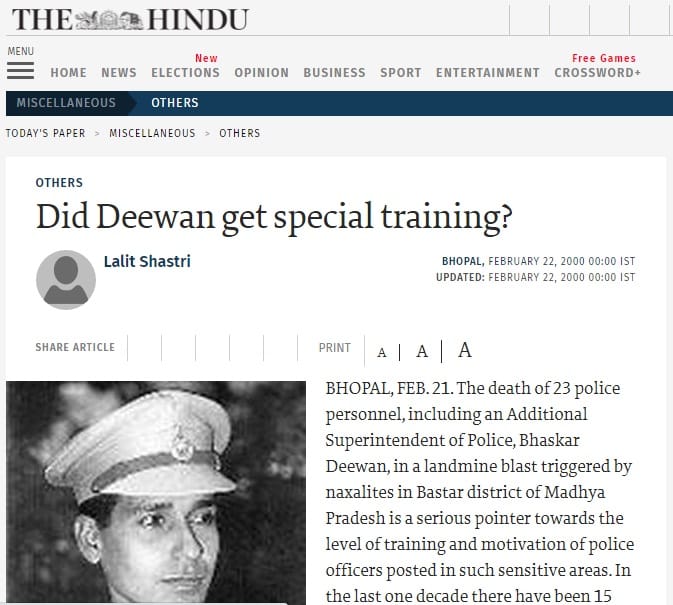
I wrote this Sunday piece in 1992. At that time, it was Sunderlal Patwa, the BJP Chief Minister, who was trying to eliminate the naxalites and now we have the present BJP Government in Chhattisgarh and at the Centre that have given the worst blow to the Maoists in Bastar. In between vast tracts in Chhattisgarh were allowed to become a hunting ground for the Maoists who targetted the Police at will. Yes, no one can forget the 2010 attack in which 75 CRPF personnel were killed and the 2013 Maoist attack on a convoy of Congress leaders in the Sukma district of Chattisgarh in which there were at least 27 deaths.
Raman Singh was Chief Minister then (he was CM between 2003 and 2018) and he failed to tackle the Maoist menace as most of the time he was dealing with the Congress government at the Centre. He also had to cut a sorry figure as he was led on the wrong path by former MP chief Secretary Nirmala Buch, who had mediated with Maoists on behalf of the State Government for the release of Sukma collector Alex Paul Menon. She also headed a high powered standing committee constituted by the Chhattisgarh government under an agreement with the Maoists to review all cases of undertrials, including those facing charges under the Chhattisgarh Public Security Act. As part of the exercise conducted by Nirmala Buch, many sympathisers of the naxalites who were aiding and helping them carry out their violent activities in the naxalite affected areas were set free and the result was for all to see. – Lalit Shastri
BHOPAL, FEB. 21, 2000. The death of 23 police personnel, including an Additional Superintendent of Police, Bhaskar Deewan, in a landmine blast triggered by naxalites in Bastar district of Madhya Pradesh is a serious pointer towards the level of training and motivation of police officers posted in such sensitive areas. In the last one decade there have been 15 such incidents where naxalites used mines to blow up security vehicles and the police have suffered heavy casualty. The death of Deewan, along with his entire team, including a sub-inspector, an assistant sub-inspector, and two head constables, raises several questions. What special training had been given to Deewan by the Police department when he was rushed from Indore to Bastar to ensure that he was fit to work in a counter-insurgency scenario. It has been reported that his transfer was done on political considerations after the 1998 Assembly election to punish him for his upright behavior during elections. When Deewan was sent to Bastar, the Government was well aware that Bastar was not a normal posting and hence the police officers in the naxalite-affected areas are now asking what special training was given to him to realise the implications of his new assignment. Commenting on his decision to go on the trail of Naxalites on the basis of information received through an “informer” along with a police force in a pick-up truck, a senior police officer remarked: “he appears to have behaved in the same manner in which he would have moved in Indore to raid some gambling den and the result was that his vehicle was blown up and he was killed along with all those who went with him”. The reaction of any properly oriented and trained police officer for such a sensitive posting would have been different, he pointed out. The State Government would also have to explain what it has done to ensure that postings to the naxalite-affected areas are linked with due compensation and proper preparedness. Also why a proper training institute was not set up for imparting counter- insurgency and jungle warfare training in Madhya Pradesh to retrain security personnel posted to sensitive areas before they are given the final push. Moreover the erstwhile BJP government, headed by Mr. Sunderlal Patwa, had cleared a Rs. 18 crore anti-naxalite plan in 1992 and sanctioned its first instalment but it was abandoned midway by the present Government only to be revived later with some minor alterations. It has been noticed that every time an incident of this kind occurs, there is a flurry of activity but soon all initiative gets pushed over the backburner and there is a talk of resolving the socio-economic problems and bringing the naxalites back into the mainstream but when it comes to upgrading the anti- naxalite operations, there is generally a dearth of resources.
Shaping Policy Through Journalism
One of Shastri’s most significant contributions to public policy came through his investigation into the fertilizer subsidy scam. His reports triggered a debate in Parliament, leading to a structural reform in India’s subsidy system.
The investigative report on this issue of vital national importance by Shastri led to total overhaul of the national fertiliser subsidy policy to prevent seepage and serve the larger interest of farmers and the farm sector. The policy, in the changed form, has continued all these years. Concession/fertiliser subsidy was disbursed to the manufacturers/importers by the State Governments during 1992-93 and 1993-94 based on the grants provided by Department of Agriculture & Cooperation. After the publication of this exclusive news report, by The Hindu on 7 March, 1994, Parliament discussed and debated the matter threadbare and the nation’s Fertiliser Subsidy Policy was completely overhauled. Instead of releasing the subsidy to the manufacturer on the face value of the sales figure provided by them, the Department of Agriculture started releasing payment of concession to the fertilizer companies based on the certificate of sales issued by the State Governments on 100% basis. The Central Government introduced the system of releasing 80% ‘On Account’ payment of concession in 1997-98 to the fertilizer companies month-wise, which was finally settled based on the certificate of sales issued by the State Government.
Exclusive Report published in The Hindu on 7 March 1994
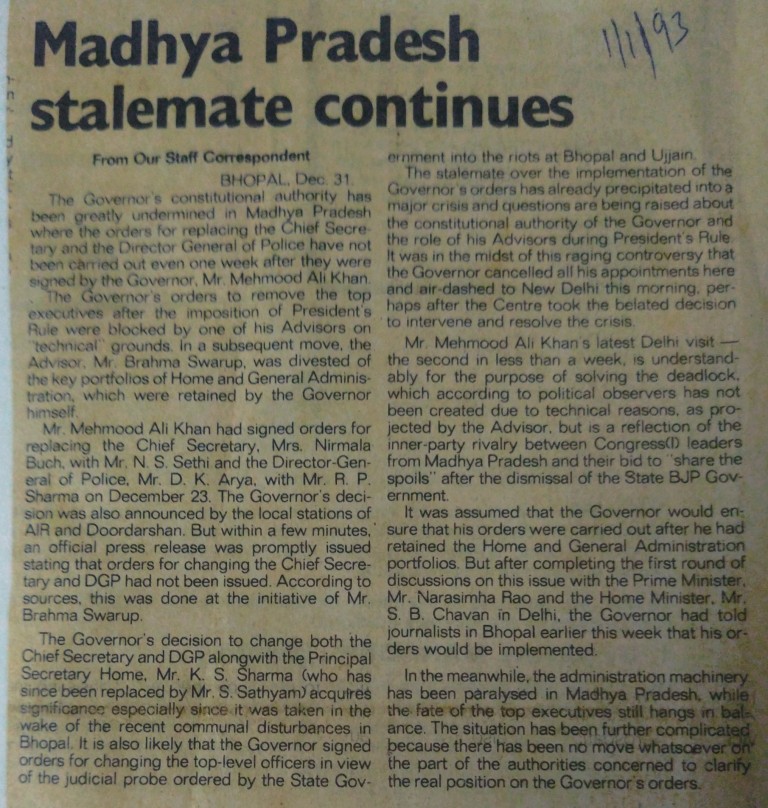
Shastri’s fearless reporting also had direct consequences on the law and order situation in Madhya Pradesh. Following his hard-hitting investigative pieces in The Hindu, the Chief Secretary and Director General of Police were removed in the aftermath of the post-Ayodhya riots. His revelations about the misuse of power during the extended President’s Rule in 1993 led to the dismissal of the Governor of Madhya Pradesh.
News by Lalit Shastri, published in The Hindu on 1 January 1993
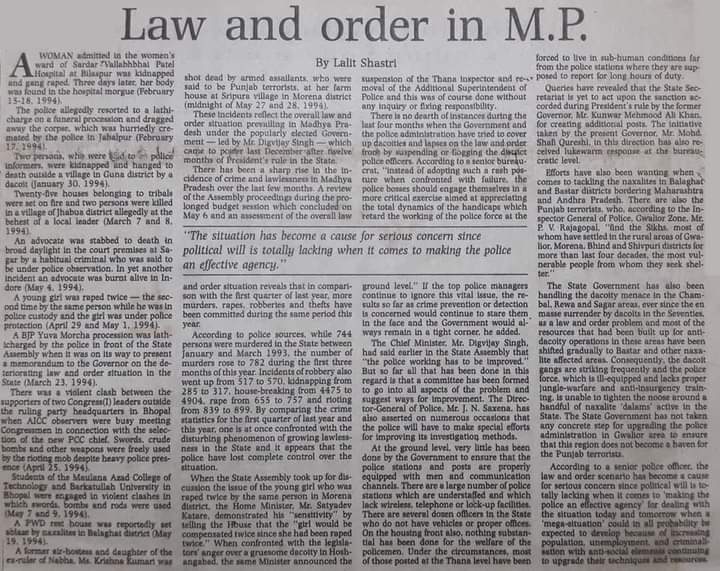
A leader page article by Lalit Shastri published in The Hindu in mid-1994. Especially, check the 3rd and 4th columns where the drawbacks have been underscored to give direction both at the State and Union level to prioritise policing and mobilise resources to upgrade police infrastructure and facilities for the uniformed force at the ground and cutting-edge level to address and improve the law and order situation. This article paved the way for hiking the national budget for policing and ensuring substantial improvement across the nation by increasing the police force, and improving the overall situation vis-a-vis training, police housing, infrastructure of police stations, transport, and vehicles.
Documentary Filmmaking: A New Avenue of Storytelling
Beyond the newsroom, Shastri ventured into wildlife and environmental filmmaking, producing documentaries that have left a lasting impact on conservation policies. His notable works include:
“The Tiger – Indicator of Healthy Forest Ecosystem”
“Bhopal Disaster-Toxic Waste”
“Water Birds of Bhopal”
“Pench Tiger Reserve—The Mowgli Land”
“Last of the Gharial” – This documentary, filmed in Chambal Sanctuary, played a key role in securing a total ban on sand mining in the Chambal River. It was produced by Gary Strieker, a legendary journalist who was instrumental in establishing CNN’s presence in Africa. Strieker’s career was marked by groundbreaking coverage, including the Somali civil war and the Rwandan genocide.
The Written Word: A Chronicle of Environmental and Social Justice
Shastri’s passion for conservation and governance extends to his literary contributions. Over the years, he has authored multiple books, each addressing critical issues of transparency, governance, and environmental conservation:
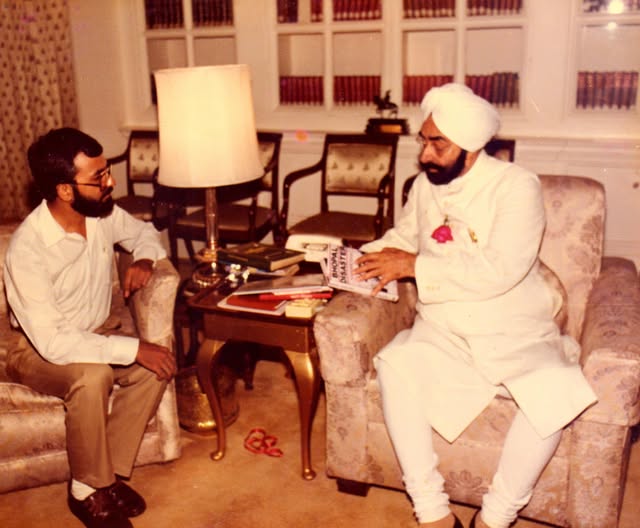
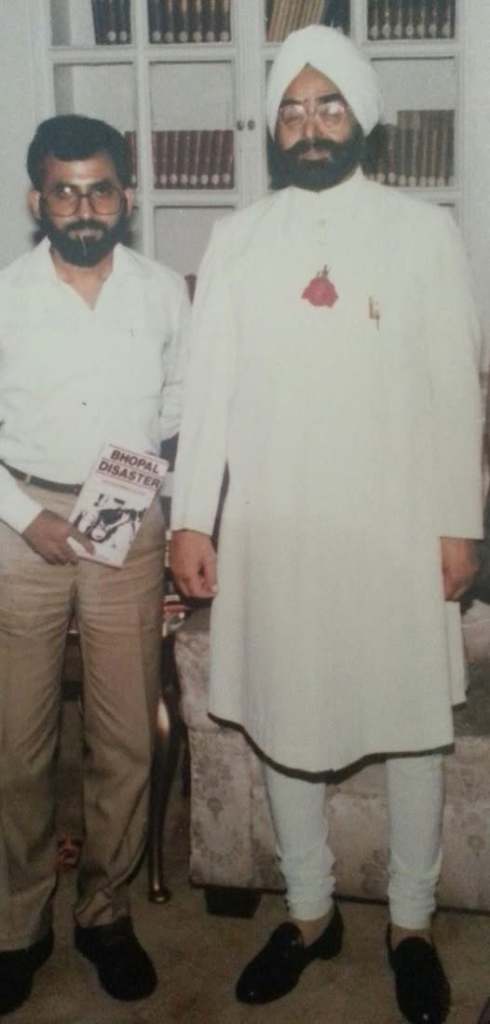
“Bhopal Disaster—An Eyewitness Account” (1986) – Released by President Giani Zail Singh at Rashtrapati Bhawan, it provides a detailed firsthand account of the 1984 Union Carbide gas disaster.
“Bhopal Disaster 38 Years“ – A follow-up exploration of the gas tragedy and its enduring consequences.
“Don of Medical Council of India” (2009) – A searing exposé on corruption in the Medical Council of India (MCI), which played a role in its eventual disbanding.
Prime Minister Atal Bihari Vajpayee had launched my book “Political Mirage – 50 years after India became Republic” at his official residence on 16 June 2000. There’s a story behind the book launch ceremony. When my book was ready and I had received a rush copy, I sent it to the PMO with a covering note requesting the Prime Minister to release it. After a few days, I received a response from Kanchan Gupta, a journalist who was at that time the Press Advisor to the PM. He returned the book with the message that the PM is very busy and has no time to release my book. This did not deter me and immediately I picked up the phone and dialled the national BJP President late Kushabhau Thakre’s Delhi office number. His PA informed me that he had just left office and was about to get into his car. I asked the PA to rush and tell the BJP President that Lalit Shastri is online and wants to talk to him urgently about something important. After a short while Thakreji was at the other end. He began with a soft tone of voice and said: “Bolo Lalit” (tell me Lalit). I was overwhelmed as I told him about my book, which was a collection of my articles published in The Hindu (during the decade of 90s) on transparency, corruption and poor governance during Digvijay rule in MP and the shabby response I had got from Kanchan Gupta, he said I had called him at the right time since he was leaving for a meeting with the PM at his residence. He told me that he would surely take up the matter with him. After a few days, I received a call from the Intelligence Bureau chief in Bhopal telling me that Vajpayee ji would be releasing my book at a function in Bhopal during his official visit to the State capital two days later. On the D-day, when all were already at the Bhopal airport to receive him, news came that the PM was indisposed and all his programmes for that day stood cancelled. After a couple of days, I got another message, this time from the PMO, telling me that Vajpayee ji would be releasing my book at a special function at his residence on 16 June 2000. – Lalit Shastri
The then President Giani Zail Singh released the book “Bhopal Disaster-an eye witness account” at Rashtrapati Bhawan, August 1986In 1986, when my book “Bhopal Disaster – An Eyewitness Account” was ready for release, I took an appointment and went to meet Mr Shankarnarayan, the Press Secretary to the President of India at Rashtrapati Bhawan. The purpose was to give him a letter requesting President Zail Singh to release my book. At the appointed hour I was ushered into the Press Secretary’s room. We greeted each other, as I sat down. Just then there was a buzzer and he picked up the phone. The conversation was short. I would like to narrate what I had heard. The Press Secretary was telling the person at the other end: “question does not arise. The President will not release the book on Rajiv Gandhi……(gap) so what if the Prime Minister so desires. The President has made it very clear, he is not releasing any book on or by Rajiv Gandhi”. This assertion at once filled me with all kinds of thoughts, including when the President is refusing to release a book on Rajiv Gandhi, I should forget the whole idea of Zail Singh releasing my book. At the end of this extremely revealing telephonic conversation, Mr Shankarnarayan turned his attention towards me and I gave him the letter. He read it with full attention and asked when would I like to have the book release function organised. When I left the decision to him, he checked the President’s engagement for the next week and fixed the release function after three days. He also said that I shall be receiving an official communication in this regard within 24 hours. – Lalit Shastri
A Commitment to Conservation and Public Service
Shastri’s contributions to environmental conservation go beyond his journalism and books. He is the Founder and President of Crusade for Revival of Environment and Wildlife (CREW), a non-profit organization dedicated to conservation awareness. The Central Indian Highlands Wildlife Festival, a significant initiative by CREW, has helped launch the careers of some of the world’s most impactful wildlife filmmakers. He is also associated with Looms of Ladakh, a global fashion brand as a Mentor. It is a farm−to−fashion sustainable, luxury, herder-artisan-owned brand, at the intersection of design and heritage that aims to provide a blueprint for the ecological and ethical challenges faced by the global fashion industry.
Recognitions and Jury Memberships
Shastri’s expertise has been sought on global platforms. He has served as:
Judge for Jackson Hole Wildlife Film Festival (2017) & Jackson Hole Science Media Awards (2016)
Jury member for the Madhya Pradesh Government’s Maharana Pratap Bravery Award
Founder Member of Child Rights Observatory Madhya Pradesh, a UNICEF-supported initiative for child rights protection
UNICEF Fellow, where he contributed to policy recommendations on child welfare
Representing India on the Global Stage
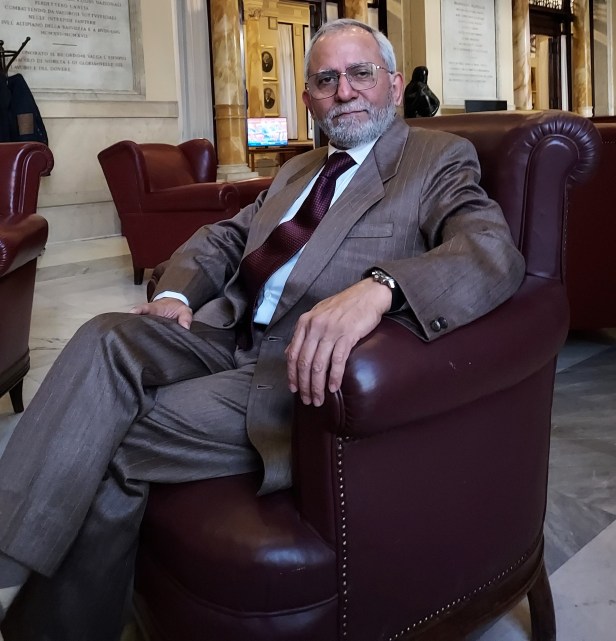
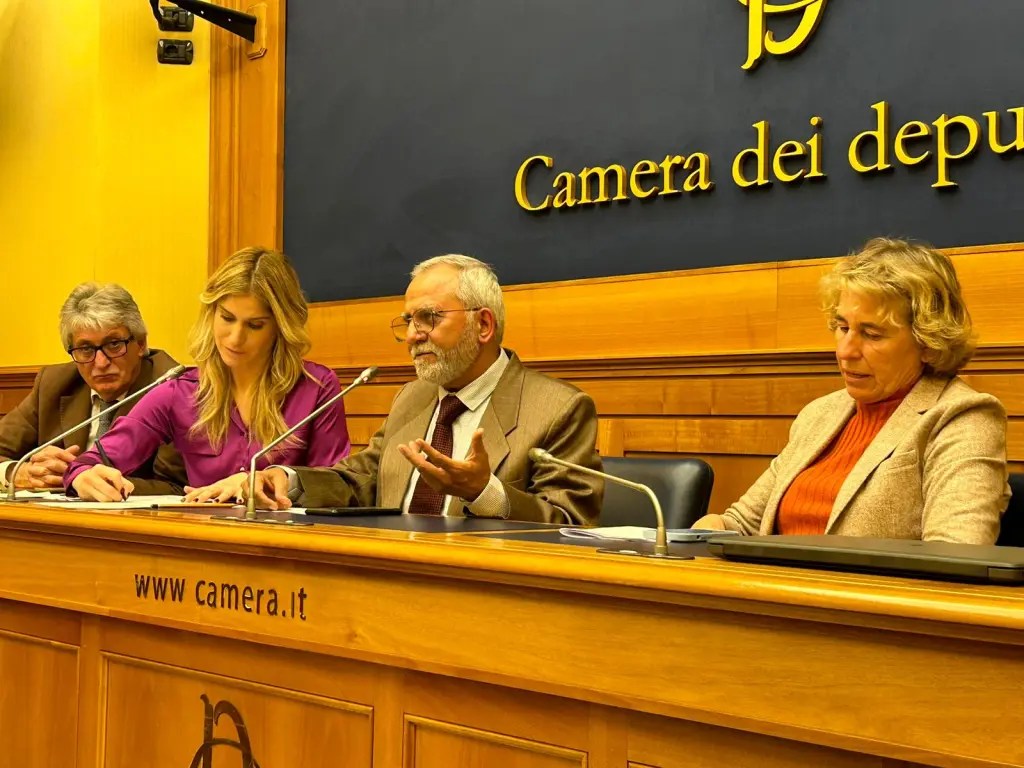
Shastri’s influence is not confined to India alone. He was member of a Confederation of Indian Industry (CII) delegation to London in 1998. In 2013, he was nominated by the Union Ministry of External Affairs to be part of the Indian media delegation to Malaysia and Brunei Darussalam for the ASEAN-India Post-Ministerial Conference (June 24 – July 2, 2013). In November 2022, Shastri addressed Italian MPs in the Chamber of Deputies in Rome, where he was invited to speak on Bhopal gas disaster.
Lalit Shastri, addressing Italian law makers in Chamber of Deputies in Rome
Additionally, he has served multiple terms on the Board of Governors of the MP State Tiger Foundation and was a key member of the now-defunct State Environment Council, an initiative of the Madhya Pradesh government in the 1990s.
Honored for Excellence in Journalism
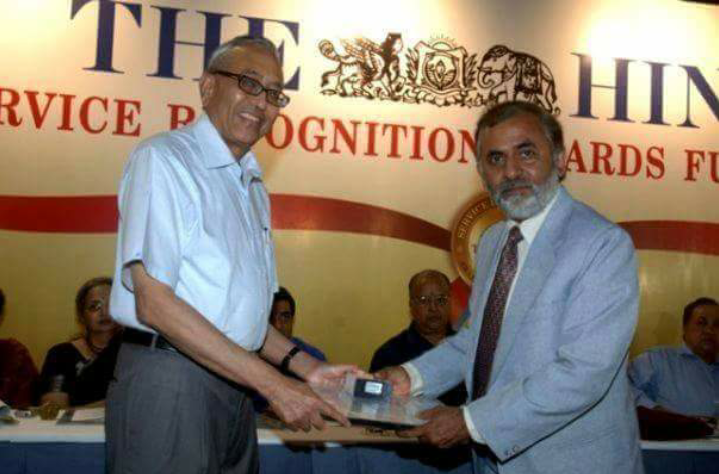
Shastri’s fearless commitment to investigative journalism and environmental advocacy has earned him multiple accolades, including the K.P. Narayanan Award for Excellence in Journalism.
A Legacy of Impact and Integrity
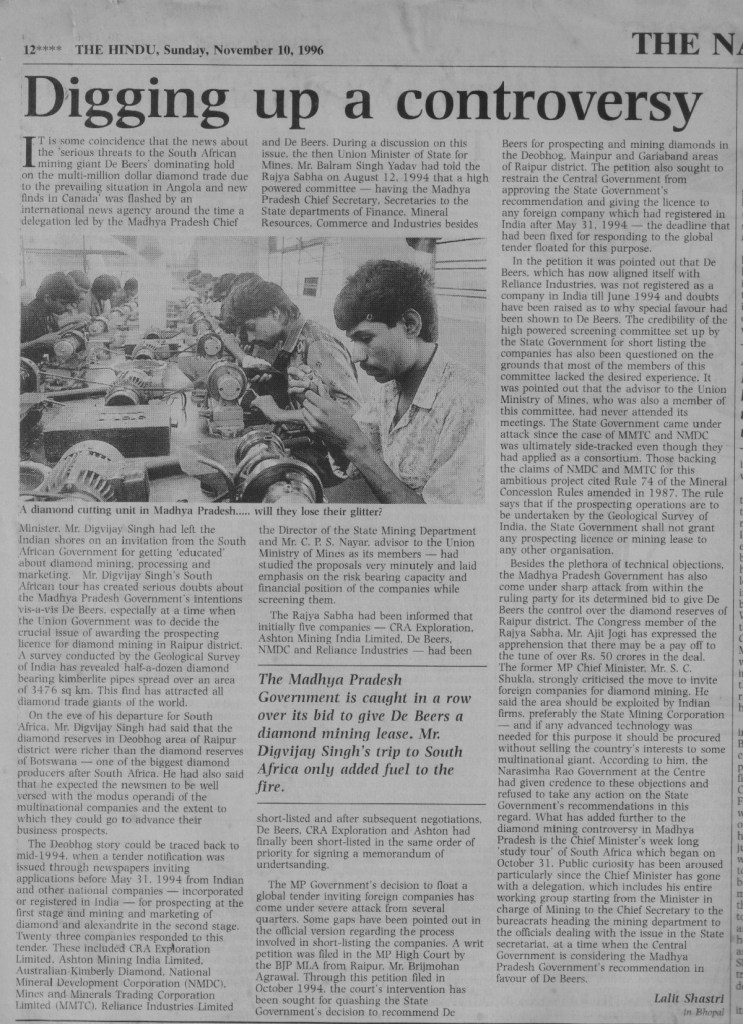
A Sunday piece by Lalit Shastri was published in The Hindu on 10 November 1996. This article, alongwith a series of investigative reports by Shastri on the same issue, played a huge role in stopping the diamond giant De Bears from plundering undivided Madhya Pradesh.
Through decades of fearless reporting, literary contributions, and conservation efforts, Lalit Shastri has cemented his legacy as a voice for truth, accountability, and environmental protection. His career stands as a testament to the power of journalism in shaping policy, governance, and public awareness, leaving an indelible mark on society and inspiring future generations of journalists and conservationists.
Lalit was a little school boy in Jammu during 1970s and that is where i noticed the spark that would ignite the sea of journalism in Bharat and the world. Besides his multiferous investigative journalism, the one most striking in my opinion is on the spot reporting Bhopal Gas tragedy and following it up with two books on the subject besides multiferous published articles. Lalit is a die hard fearless journalist on a mission and continues toiling to this day exposing the corrupt and wrong doers with no holds barred. Besides journalism he has created many vertices while nature preservation, supporting Handloom of Ladakh are few to mention and now he has entered the music world learning guitar and composing soulful songs 🎵. I wish him a limitless sky of achievements in all his verticles. God Bless my brother-friend.





Lalit was a little school boy in Jammu during 1970s and that is where i noticed the spark that would ignite the sea of journalism in Bharat and the world. Besides his multiferous investigative journalism, the one most striking in my opinion is on the spot reporting Bhopal Gas tragedy and following it up with two books on the subject besides multiferous published articles. Lalit is a die hard fearless journalist on a mission and continues toiling to this day exposing the corrupt and wrong doers with no holds barred. Besides journalism he has created many vertices while nature preservation, supporting Handloom of Ladakh are few to mention and now he has entered the music world learning guitar and composing soulful songs 🎵. I wish him a limitless sky of achievements in all his verticles. God Bless my brother-friend.
LikeLike