
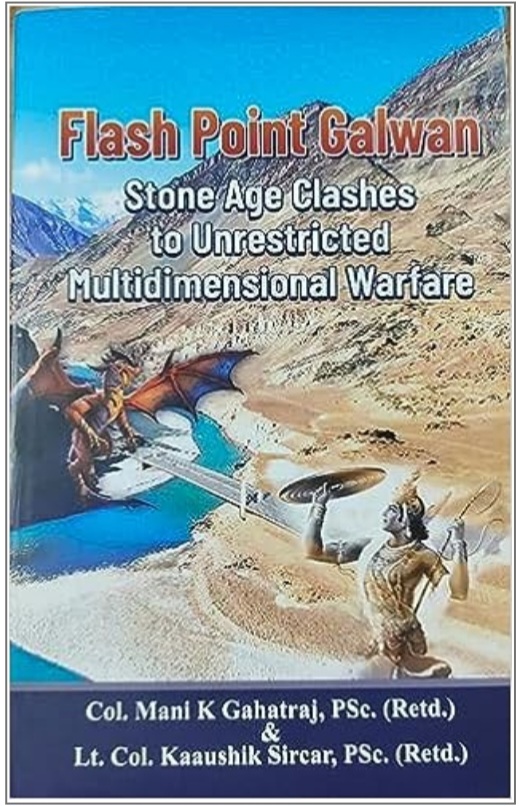
Title : Flash Point Galwan
Author : Col Mani K Gahatraj (Retd.) &
Lt.Col. Kaaushik Sircar (Retd.)
Publisher : Sircar Group, Kolkata
No. of Pages : 353
Price : Rs. 595/- (Hardbound)
Year – 2023
Book review by
Dr. Satyadeep S. Chhetri
I rarely do book reviews. But this one is different. We rarely or rather do not have writers from our area (Darjeeling –Kalimpong- Sikkim) who write about defence & geopolitics. This was one of the first book that has been written about a border dispute in the Himalayan region by one of our own. The book has been co-authored by Col. Mani K. Gahatraj (Retd.) and Lt.Col. Kaaushik Sircar (Retd.). Having known Col. Gahatraj when he was writing this book and having promised him a sincere review , this is to honour the promise once made to him.
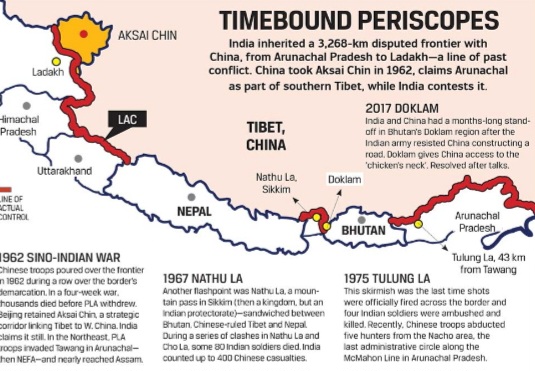
We have heard about the Galwan Valley standoff between India and China in the news a few years back but didn’t know much about it if we haven’t done in-depth reading from various sources . Yet the overall issue would still be elusive. This new book “Flash Point Galwan” offers a concise and insightful exploration of the intricate dynamics that shaped the Galwan Valley confrontation. Skillfully blending historical context, regional interests, and strategic motivations, the book paints a vivid portrait of the standoff’s geopolitical significance. The authors’ research and balanced analysis shed light on the underlying tensions and their global implications, making it an essential read for anyone seeking a deeper understanding of contemporary international relations.
In the ever-evolving landscape of global politics, few events have captured the world’s attention as intensely as the Galwan Valley standoff. This newly released book, “Flash Point Galwan” authored by a prominent scholar in the field, delves into this complex and riveting episode, shedding light on the multifaceted dimensions of the conflict and its far-reaching implications
At the heart of the book lies the meticulous reconstruction of the events leading up to the Galwan Valley standoff. The authors unravel the historical context, together with the real time eye witness accounts of the conflict itself. This historical groundwork is crucial, as it helps readers grasp the intricate web of territorial claims, national pride, and regional rivalries that set the stage for the confrontation between India and China.
In one of the portion of the book, the authors have also delved into a brief history of China from bygone days to the present times. It has also neatly inserted the history of Tibet and dovetailed it with the present day conflict. The narrative then seamlessly transitions into an analysis of the immediate triggers and catalysts that brought the situation to a boiling point. Drawing from a diverse array of sources – including official statements, expert opinions, eyewitness accounts and historical errors in geopolitics – the author provides a comprehensive overview of the chain of events that unfolded in the remote Himalayan region. This he manages by the usage of references from Chanakya’s Arthashastra and Sun Tzu’s Art of War. This meticulous attention to detail not only offers readers a gripping account but also enables them to comprehend the often bewildering sequence of actions and reactions.
One of the book’s most compelling features is its exploration of the strategic calculations and geopolitical interests that underpin the Galwan standoff. The author skillfully dissects the motivations of the key players involved, weaving together a range of national ambitions, military doctrines, regional power dynamics, the politics of the pandemic, Xi Xinping’s and communist strategy, Trade balances, App Ban diplomacy and range of topics. . While the book excels in its analytical depth of military strategic counteroffensive by our forces but it also shines in its portrayal of some of the other factors like hidden strategy of China, flexing muscle in the South China Sea, the entrenched philosophy of Mao in extending the Chinese borders, Trump and Chinese economy and a host of other geopolitical manoeuvring. This approach is particularly effective in unravelling the overall Chinese position.
Despite its numerous strengths, “Flashpoint Galwan” does face some limitations. The book has been written as one long essay having various segregation of topics within the essay itself and would have been better if there were designated chapters in the book. This poses difficulty for the readers to instantly go back to a particular area of interest in the book. Further, relevant list of references or footnotes on the available material mentioned in the book is highly recommended in the next edition if it is possible. Given the ever-evolving nature of global politics, the book’s analysis is rooted in the context available at the time of its writing and perhaps a small section on the way forward or steps that could be taken to balance the border disputes would have been a welcome addition in view of some recent developments or shifts in geopolitical dynamics.
In conclusion, “Flashpoint Galwan” is an essential addition to the libraries of scholars, practitioners, and enthusiasts of international relations. Its comprehensive exploration of historical roots, geopolitical intricacies, and global implications makes it a valuable resource for those seeking a deeper understanding of the Galwan Valley standoff and its significance within the broader context of contemporary geopolitics. With its accessible yet nuanced approach, the book successfully bridges the gap between academic rigor and readability, ensuring that its insights are accessible to a wide range of readers. If you have an interest in geopolitics or the shaping of India’s borders and the constant rambling in the Indian Parliament regarding the Chinese misadventures into Indian territory and the eviction of these intruders by the Indian forces, this book is perhaps a must read for them.
(The book is available in Amazon and will soon be available at the local book stores)

As authors, we are humbled by the generous review by Dr Satyadeep Chhetri, himself the celebrated author of Gorkhaland Diaries & Sikkim from Autocracy to Half Democracy. Such beautifully choreographed reviews inspire us to write more on such issues for the reading pleasure of our valuable readers. Thank you Dr Satyadeep.
LikeLike