

ThisisNews Network
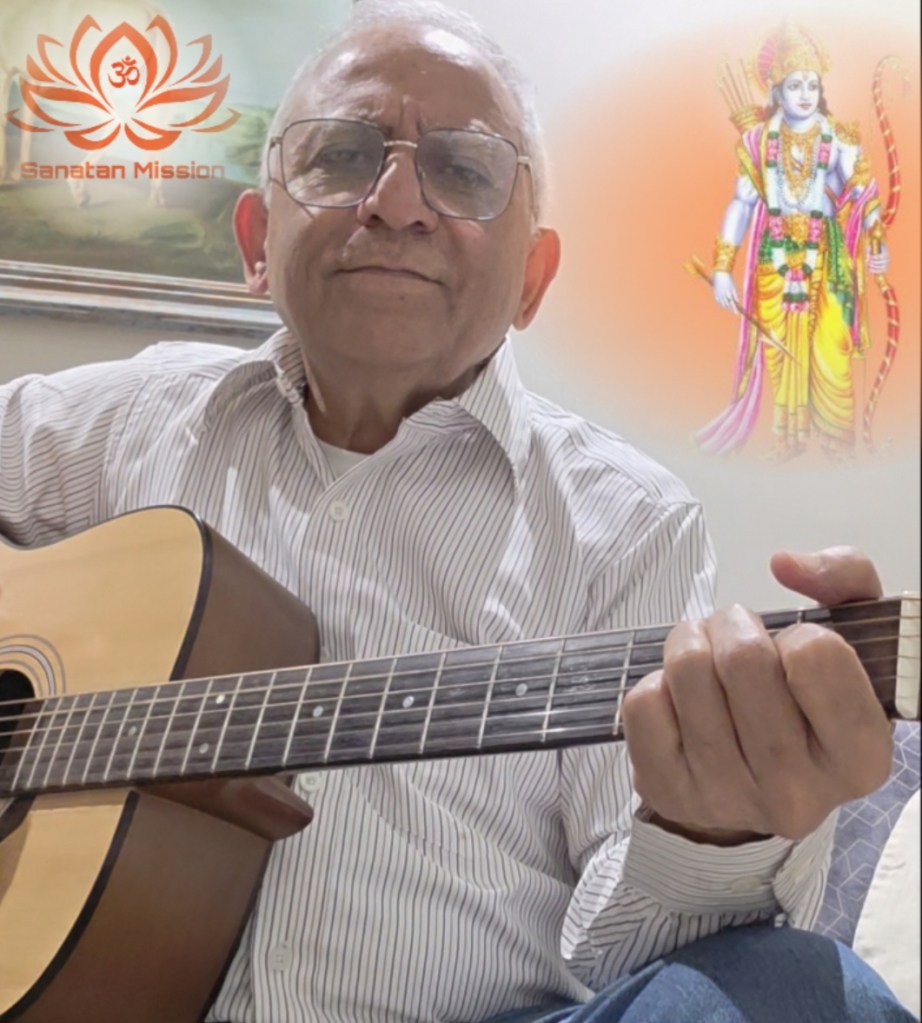
In an age where devotional music is often dressed up with heavy orchestration and polished spectacle, the Bhajan – “Mere Ram” – written, composed, sung, and played on guitar by Lalit Shastri, chooses a more restrained and emotionally direct path. The recording, running for just over two and a half minutes, does not try to overwhelm the listener. Instead, it invites reflection. Its strength lies in its simplicity, its devotional mood, and the sincerity that runs through the performance.
What immediately stands out is the intimate character of the bhajan. Rather than sounding like a stage-bound performance, the piece feels personal, almost like a private conversation between the singer and the divine. That sense of closeness gives the composition warmth. The prayerful mood is never forced; it unfolds naturally, allowing the emotion to lead the music rather than the other way around.
The structure of the piece is compact, but it does not feel rushed. There is a clear devotional feel, and the recording sustains its emotional intent throughout. The opening establishes a contemplative atmosphere, while the middle section carries the listener deeper into the bhakti sentiment. The progression is steady, and that steadiness helps the bhajan retain its meditative quality. Even without grand orchestral gestures, the composition manages to hold attention because of its emotional honesty.
Musically, the song appears to rest on a soulful minor-leaning tonal center, with a harmonic colour that gives it both longing and tenderness. There is also a suggestion of major warmth within the arrangement, which softens the emotional edges and keeps the piece from becoming overly heavy. That balance is important in devotional music: too much sadness can drain it, while too much brightness can make it feel decorative. Here, the balance feels thoughtful.
The rhythmic movement gives the bhajan a gentle forward flow. It does not linger too long in one place, and that helps the piece avoid monotony. At the same time, the pace remains devotional rather than hurried. The pulse is firm enough to keep the song alive, but relaxed enough to preserve its prayerful atmosphere. This is one of the recording’s stronger qualities. It understands that a bhajan should not merely be sung; it should be inhabited.
The vocal expression is another area where the recording succeeds. The delivery seems rooted in feeling rather than performance. That is a crucial distinction in devotional singing. A bhajan works best when the singer sounds as though he is speaking from lived experience, not merely reciting religious sentiment. This recording achieves that sense of conviction. The emotion feels credible. The singer does not appear to be reaching for effect. Instead, the performance suggests inwardness, faith and surrender.
There is also a pleasing discipline in the composition. The bhajan does not overstay its welcome. In a short span, it creates mood, communicates devotion, and leaves behind a residue of calm. That economy is commendable. Many devotional recordings try to expand every idea into something larger than it needs to be. “Mere Ram” does the opposite: it trusts the power of concise expression. That restraint adds dignity to the piece.
The bhajan has strong potential because it speaks to a wide audience. Devotional music continues to connect deeply with listeners across generations, especially when it is grounded in authenticity. This recording has that kind of appeal. It is not built around novelty. It is built around feeling. And in devotional art, feeling is often the most enduring currency.
Overall, “Mere Ram” is a sincere and spiritually grounded bhajan that values devotion over display. It does not try to impress the listener with excess. It tries to move the listener with truth. That makes it effective. Its emotional clarity, compact form and devotional tone give it a quiet power that lingers beyond its short duration.
For listeners who appreciate bhajans that are intimate, reflective and heartfelt, this recording offers exactly that experience. It is a reminder that spiritual music does not need to be elaborate to be moving. Sometimes, all it needs is honesty, restraint and faith.
Verdict: A soulful, modest and heartfelt devotional rendering that succeeds through sincerity rather than grandeur.
