

By Lalit Shastri
A Landmark Constitutional Check on the US Executive Trade Authority
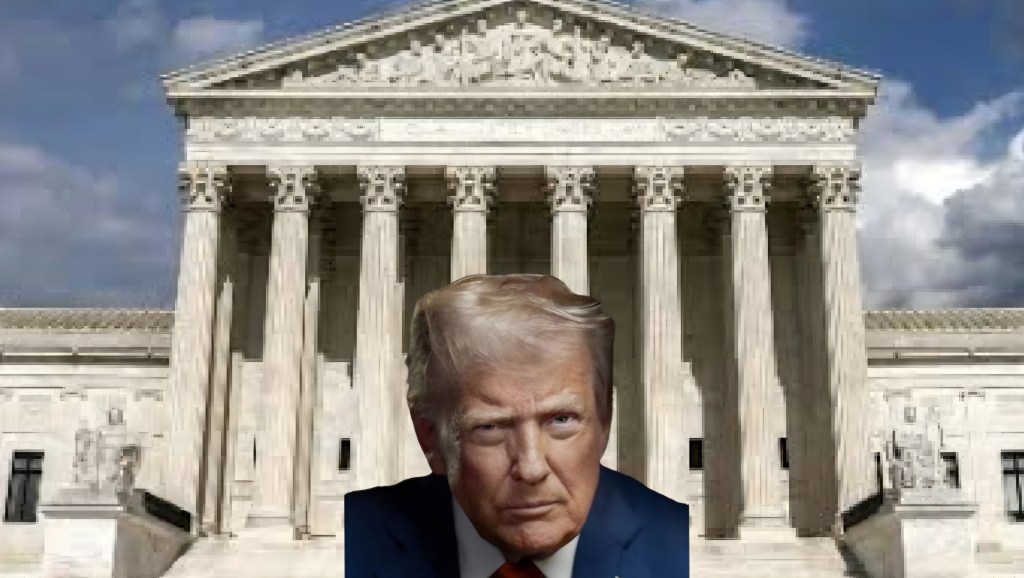
In a significant and far-reaching judgment delivered on February 20, 2026, the United States Supreme Court has held that the President cannot impose tariffs under the International Emergency Economic Powers Act (IEEPA), delivering a decisive constitutional rebuke to the use of emergency powers for sweeping trade interventions. The ruling in Learning Resources, Inc. v. Trump and the consolidated V.O.S. Selections case firmly reasserts that tariff powers lie at the core of Congressional authority and cannot be inferred from broadly worded statutory provisions dealing with economic emergencies.
The Tariff Regime That Triggered Judicial Scrutiny
The case arose after the US President Donald Trump, citing national emergencies linked to illegal drug influx and persistent trade deficits, invoked IEEPA to impose extensive tariffs on imports from multiple countries, including 25% duties on most Canadian and Mexican imports and baseline tariffs of at least 10% on goods from all trading partners, with significantly higher rates on Chinese imports. These tariffs were subsequently escalated, modified, and expanded in scope, affecting global trade flows and supply chains and drawing legal challenges from businesses and states that argued the statute did not authorize such sweeping fiscal measures.
Court’s Core Holding: IEEPA Does Not Authorize Tariffs
In a clear and categorical ruling, the Court held that IEEPA’s authorization to “regulate importation” does not extend to the power to impose tariffs, emphasizing that the statute contains no explicit reference to duties or taxation. The judgment underscored that tariffs are fundamentally a form of taxation and therefore fall within the constitutional domain of Congress, which alone is vested with the power to lay and collect taxes, duties, imposts, and excises. The Court rejected the Government’s expansive interpretation that regulatory language could implicitly include revenue-raising powers of unlimited scope and duration.
Separation of Powers and the Taxing Power of Congress
Anchoring its reasoning in constitutional structure, the Court stressed that the Framers deliberately vested the taxing power, including tariffs, exclusively in the Legislative Branch, recognizing it as one of the most consequential sovereign authorities. The Government itself conceded that the President has no inherent peacetime authority to impose tariffs and relied solely on IEEPA, a position the Court found unsustainable in the absence of clear congressional authorization. The judgment noted that reading such sweeping fiscal authority into ambiguous statutory language would represent a transformative and constitutionally problematic expansion of executive power.
Application of the Major Questions DoctrineThe Court also invoked the major questions doctrine, observing that Congress does not delegate powers of vast economic and political significance through vague or incidental wording. Given the extraordinary economic implications of nationwide tariffs affecting all trading partners and generating massive fiscal consequences, the Court held that any such delegation would have required explicit statutory language, which IEEPA conspicuously lacks. The absence of historical precedent further strengthened this reasoning, as no President in the statute’s half-century existence had ever used it to impose tariffs of such magnitude or scope.
Rejection of Historical and Statutory Justifications
The Government’s reliance on historical practice, wartime precedents, and interpretations of IEEPA’s predecessor statutes was found unpersuasive. The Court clarified that while IEEPA provides a range of economic tools such as blocking transactions, regulating commerce, and prohibiting dealings with foreign actors, none of its enumerated powers includes the distinct and extraordinary authority to raise revenue through tariffs. It further noted that when Congress intends to delegate tariff powers, it does so explicitly and with defined limits, procedural safeguards, and statutory caps—features entirely absent from IEEPA.
Jurisdictional Clarification and Procedural Outcome
Alongside its substantive ruling, the Court affirmed that tariff-related challenges fall within the exclusive jurisdiction of the United States Court of International Trade, vacating the District Court’s judgment in one of the consolidated matters for lack of jurisdiction while affirming the Federal Circuit’s ruling on merits that the tariffs were unauthorized under IEEPA. This procedural clarification reinforces the specialized judicial framework governing trade and tariff disputes in the United States.
Global Economic and Strategic Implications
The judgment is poised to reshape the legal architecture of U.S. trade policy by sharply limiting the Executive’s ability to deploy emergency economic statutes as instruments of unilateral tariff policy. By reaffirming that tariffs are a branch of the taxing power reserved for Congress and that emergency statutes cannot be stretched to justify sweeping fiscal interventions, the Court has effectively restored the traditional executive-legislative balance in trade governance. The ruling is expected to reverberate across international markets, trade negotiations, and future policy debates, particularly in contexts where economic emergencies are invoked to justify large-scale regulatory or fiscal measures.
 This is News