
Lalit Shastri
A cluster of anomalies in a domain defined by precision cannot be assessed through routine explanations alone. When high-reliability systems begin to falter in close succession — especially in missions tied to strategic capability — the issue ceases to be merely technical and becomes institutional. What we are witnessing is not just a series of mission setbacks, but a moment that compels deeper scrutiny of design integrity, investigative transparency, and the broader governance narrative that now surrounds India’s space programme.
The record itself is deeply disquieting
On 29 January 2025, NVS-02, a second-generation NavIC satellite with clear strategic utility, was launched successfully, yet failed to raise itself to geostationary orbit due to an oxidiser valve malfunction in the apogee boost motor. What made the episode extraordinary was not merely the malfunction but the reported simultaneous failure of both primary and redundant control pathways. Redundancy exists precisely to prevent single-point failure. If both main and redundant power lines were indeed routed through a common digital connector — as has been widely and quietly discussed in informed technical circles — the very architecture of redundancy stands compromised by design. Aerospace-grade connectors of this class are engineered to minimise failure probabilities to extremely low thresholds. Such an outcome cannot be casually dismissed as routine malfunction.
The unease deepened during the emergency military launch of RISAT-1B (later redesignated EOS-09) aboard PSLV-C61 on 18 May 2025, which reportedly failed following a sudden drop in chamber pressure in the third-stage solid motor. In the operational history of the PSLV, the third-stage solid motor had never been the point of failure. Solid motors, by their very design, have no valves, no moving parts, and minimal sequencing complexity. They are regarded as among the most reliable subsystems in launch vehicles globally. When such a stage fails, the anomaly is not merely technical — it is statistically alarming.
A Failure Analysis Committee was constituted. Its report has still not been placed in the public domain.
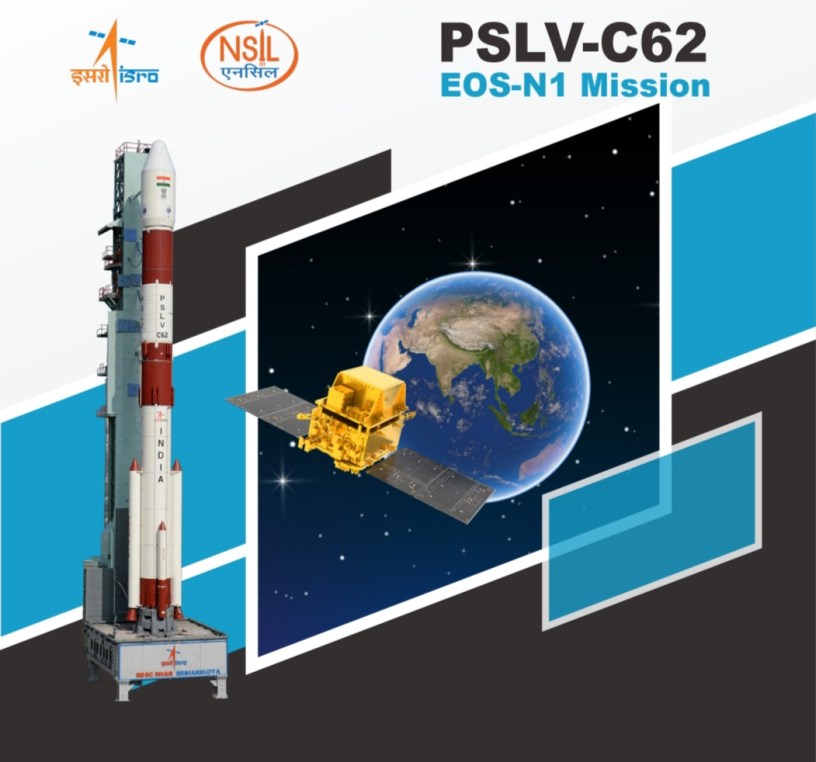
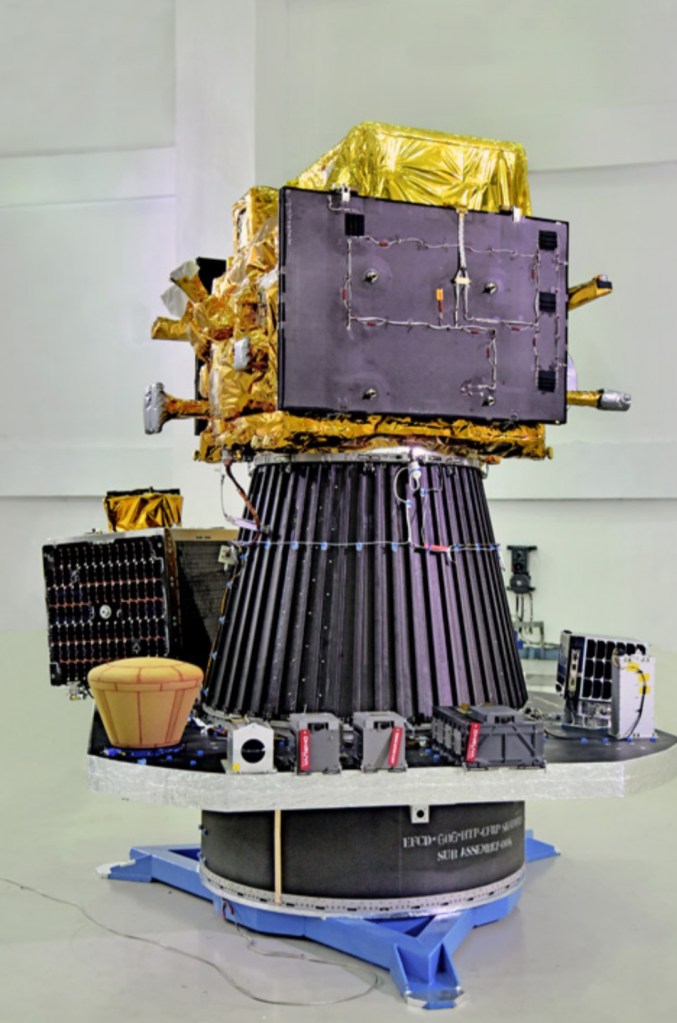
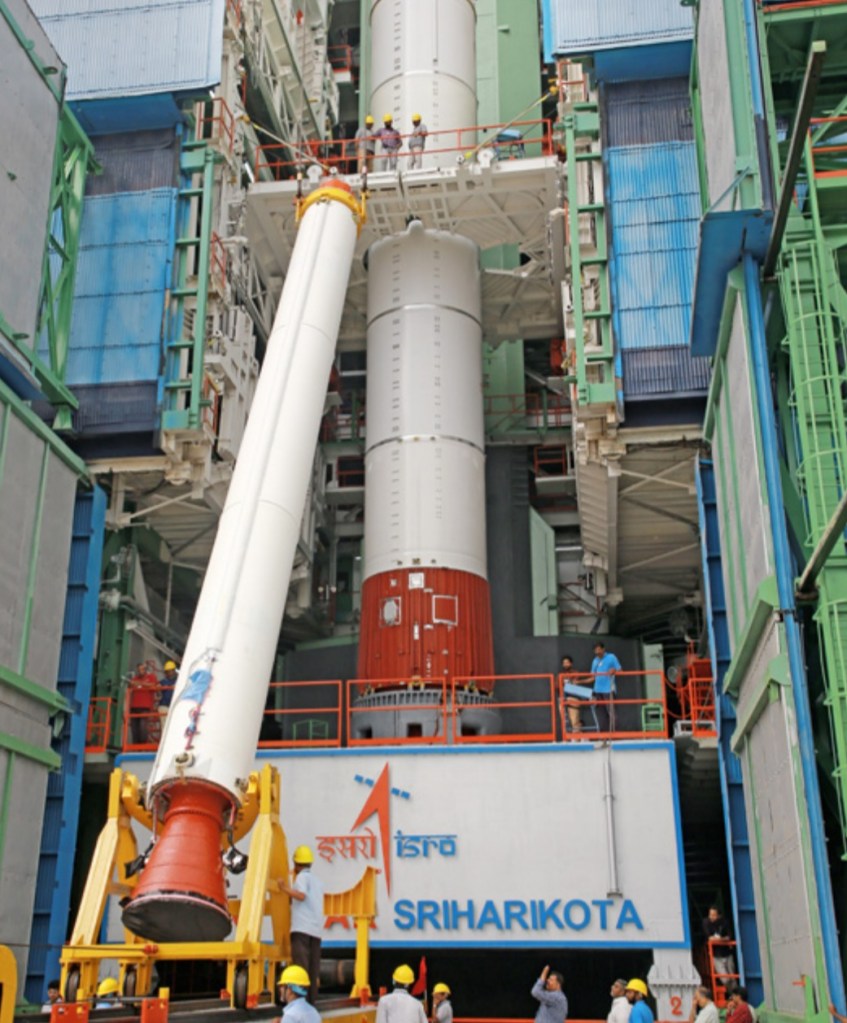
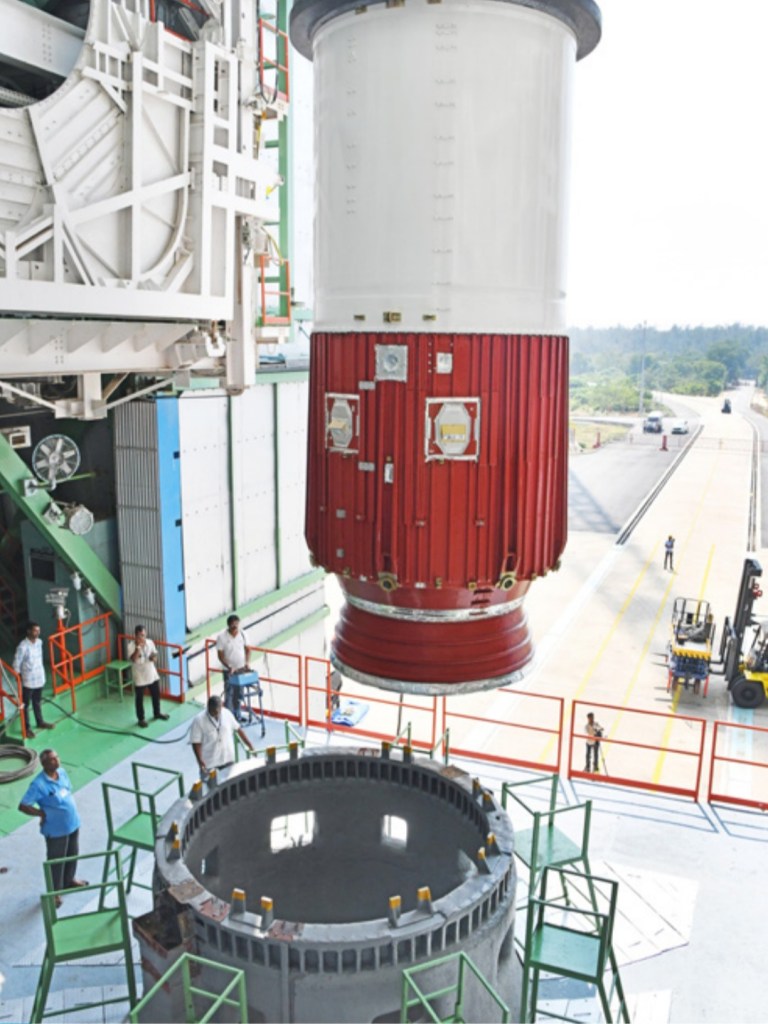
Then, on 12 January 2026, PSLV-C62, carrying a DRDO-linked strategic payload, again encountered a third-stage anomaly of strikingly similar nature and timing. Two failures in the same stage, within months, in a vehicle long known as the world’s most reliable workhorse, cannot be brushed aside as coincidence. If corrective diagnostics had been conclusively established after PSLV-C61, the recurrence in PSLV-C62 raises a fundamental procedural question: on what technical basis was launch clearance granted without publicly communicated closure of the earlier failure analysis?
The contrast with other missions in the same period is equally stark. Complex and high-value missions involving international or foreign payloads proceeded successfully, without incident. This asymmetry — strategic Indian payloads encountering anomalies while other missions succeed — is not, in itself, an allegation. But it is a pattern that demands dispassionate forensic examination rather than narrative diversion.
Yet, instead of sustained technical transparency, an alternative discourse has begun to dominate sections of commentary: that the Sriharikota setbacks have triggered a decisive political “clean-up” within ISRO, framed as the end of institutional complacency and the assertion of top-level governance resolve. Dramatic constructs invoking sabotage, hybrid warfare, and high-level intervention may create public intrigue, but they risk shifting the focus from engineering causality to political theatre.
Rocket failures are resolved through telemetry, materials analysis, propulsion forensics, and systems engineering audits — not rhetorical escalation.
The emerging emphasis on external oversight, high-profile visits, and extraordinary committee structures also invites scrutiny of its own. ISRO has historically relied on rigorous internal Failure Analysis mechanisms led by deeply specialised domain experts. Any deviation from that tradition must be judged not by optics but by technical relevance.
Herein lies a critical institutional question: are highly specialised launch vehicle anomalies being evaluated through committees whose stature is administrative and cross-disciplinary rather than deeply rooted in active space systems engineering?
The reported inclusion of figures such as Prof. K. VijayRaghavan, a distinguished scientist but not a launch vehicle specialist, raises legitimate concerns about domain alignment. Rocket propulsion anomalies, stage integrity failures, and redundancy architecture flaws are intensely technical problems requiring granular expertise in propulsion chemistry, structural dynamics, avionics systems, and manufacturing quality chains. Oversight without deep domain immersion risks diagnosing governance symptoms rather than engineering root causes.
Equally perplexing are the signals being sent through institutional appointments and extensions. The apparent sidelining of straightforward domain professionals who were not granted extensions, while elevating alternative scientific figures with limited direct space systems background into oversight frameworks, creates a perception — fair or otherwise — that administrative positioning may be outweighing specialised continuity. In high-reliability sectors such as rocketry, continuity of domain expertise is not ornamental; it is foundational to mission assurance.
The contrast sharpens further when viewed alongside the extension granted to Pawan Goenka in his role overseeing the regulatory architecture of the private space ecosystem through IN-SPACe. Institutional coordination is essential in a liberalising space sector, but a growing perception in scientific circles is that regulatory visibility and technological ownership are increasingly being conflated in public narratives. ISRO’s engineering achievements and NSIL’s executional roles are products of decades of specialised scientific labour; they cannot be subsumed under broader governance branding without risking institutional distortion.
This is not a question of personalities. It is a question of institutional architecture and scientific integrity.
Another dimension that demands sober reflection is the emerging sabotage narrative. In an era of hybrid warfare, no serious possibility can be dismissed without examination. However, the casual public normalisation of sabotage speculation in the absence of released forensic evidence is deeply problematic. Premature insinuations can erode morale within scientific institutions, create suspicion-driven ecosystems, and damage global confidence in India’s launch reliability. The burden of proof in such claims must be extraordinarily high, evidence-based, and transparently communicated.
Until then, speculation is not investigation; it is conjecture.
More broadly, the governance response itself reveals a paradox. ISRO has, for decades, been among India’s most efficient and globally respected technological institutions — delivering planetary missions, navigation systems, and cost-effective launches under constrained budgets and intense timelines. Its credibility was built through quiet competence, engineering discipline, and institutional autonomy insulated from excessive political signalling.
To respond to clustered anomalies with heightened publicity, narrative-heavy commentary, and structural overreach risks disrupting the very equilibrium that enabled its success. Excessive pre-launch hype around strategic missions, followed by post-failure narrative repositioning, raises uncomfortable questions about whether perception management is beginning to overshadow technical communication.
Reform after failure is necessary.
But reform must be proportionate, evidence-driven, and domain-led.
A further policy asymmetry also becomes evident. If rigorous accountability and structural audit are now the guiding principles for India’s strategic R&D ecosystem, consistency demands that the same scrutiny be applied across institutions with far larger budgets, longer development cycles, and less consistent delivery records. The disproportionate narrative focus on ISRO — historically a high-performing organisation — while other large defence research structures with mixed outcomes attract relatively muted systemic reform, suggests a misalignment of governance priorities.
In policy terms, this raises a blunt but unavoidable question:
Should the system risk over-tinkering with one of its most successful scientific institutions while far more resource-intensive “white elephant” structures remain comparatively under-examined?
Institutional assertiveness must be even-handed to be credible.
None of this negates the need for accountability. On the contrary, three consecutive anomalies involving strategic missions demand the highest degree of technical transparency. The unanswered questions remain central and unresolved: Why did redundancy fail redundantly in NVS-02? Why did the PSLV third stage, historically the most reliable component, fail twice in similar fashion? Why has the Failure Analysis Committee’s report not been publicly released? And why were subsequent launch clearances granted without transparent technical closure of prior anomalies?
Governments have both the right and responsibility to demand answers from strategic institutions. But there exists a fine line between oversight and overreach, between reform and disruption, between scientific audit and narrative choreography.
India’s space programme is not merely a technological enterprise; it is a strategic national asset built over decades through institutional memory, engineering rigour, and scientific autonomy. It does not require theatrical correction. It requires precise, technically grounded course correction supported by transparent forensic findings and continuity of specialised expertise.
Rockets do not respond to political narratives.
They respond to systems integrity, materials reliability, and engineering discipline.
Until comprehensive technical reports are placed in the public domain and root causes are established with scientific clarity rather than rhetorical framing, the pattern of anomalies will continue to speak louder than reassurances — and louder than praise narratives that seek to convert engineering failures into governance spectacle.
In matters of strategic space capability, credibility is not built through commentary.
It is built through evidence-backed accountability, institutional stability, and the unwavering primacy of science over spectacle.
 This is News