
ThisisNews Network
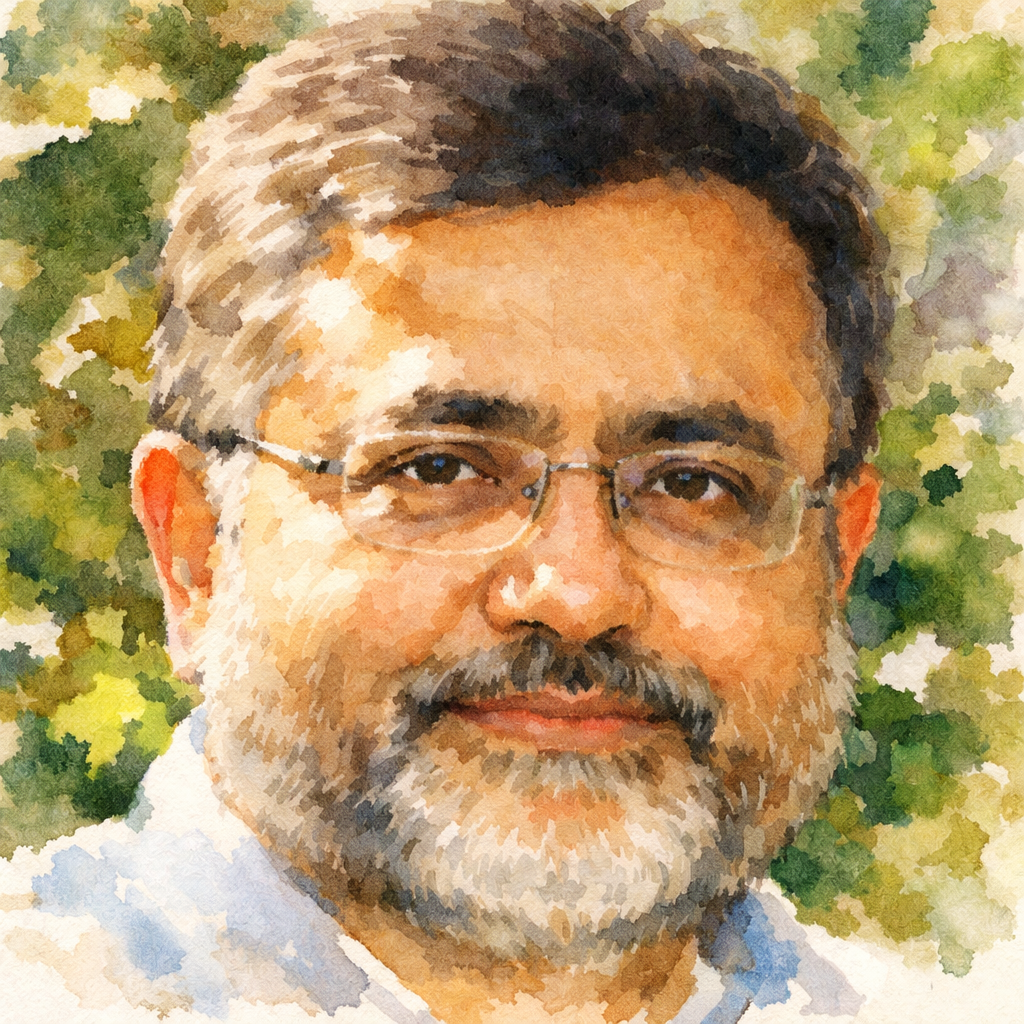
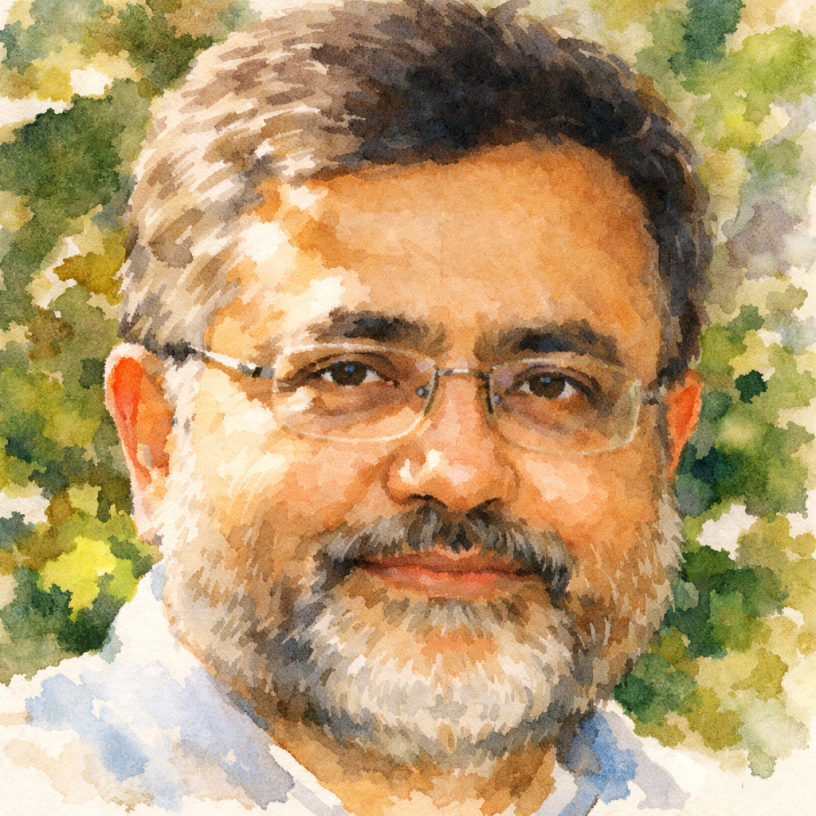
From the early theoretical battles over how machines might reason like humans, to the modern challenge of building assistants that understand, remember and anticipate user needs, Dr Lokendra Shastri has quietly shaped one of the most important research trajectories in artificial intelligence — cognitive AI.
Based in Berkeley, California, Shastri is internationally recognised for creating one of the earliest and most influential neurally grounded reasoning architectures — the SHRUTI model — and for later carrying those ideas into large-scale industrial innovation during his tenure as Consulting Distinguished Scientist at Samsung Electronics.
At a time when much of today’s AI is dominated by data-driven pattern recognition, Shastri’s lifelong work has addressed a deeper and more enduring question:
How can an artificial system represent structured knowledge and perform rapid, human-like reasoning?
A pioneer of cognitive AI
Long before the term cognitive AI became fashionable, Shastri’s research focused on modelling the internal mechanisms of human cognition — how facts, relations, categories, rules and episodes are represented, and how inferences are produced at the speed of thought.
His work sits at the intersection of artificial intelligence, cognitive science and computational neuroscience. What distinguishes his contribution is that he did not treat reasoning as a slow, symbolic process running on abstract rules. Instead, he sought a biologically plausible account of reasoning — one that could emerge from networks of neuron-like elements.
This ambition led to his most influential scientific contribution: the SHRUTI architecture.
SHRUTI — a breakthrough in structured neural reasoning
SHRUTI was developed in the late 1980s and 1990s as a structured connectionist model designed to solve one of the hardest problems in AI and cognitive science: how a neural system can represent relational knowledge and variables while still supporting fast and reliable inference.
SHRUTI showed that reasoning and neural plausibility need not be mutually exclusive.
Unlike classical neural networks, SHRUTI explicitly represents relations, roles, entities and rules, while preserving the parallel and time-based nature of neural computation.
The central innovation of SHRUTI lies in its use of temporal synchrony for dynamic binding — allowing variable bindings to be created on the fly without destroying the underlying structure of knowledge.
The challenge of human inference
Human beings effortlessly produce inferences — recognising relationships, predicting outcomes, drawing conclusions and filling in missing information in milliseconds.
This efficiency raises a fundamental cognitive question:
How can a system that stores massive amounts of structured knowledge still reason so quickly?
SHRUTI addresses this challenge by demonstrating how a network of neuron-like units can encode facts, episodic memories, taxonomic knowledge and systematic rules, and perform reflexive, predictive inference through the propagation of activity in tightly organised neural circuits.
Importantly, inference time in SHRUTI does not grow with the size of the knowledge base — a property that mirrors human cognition far more closely than classical search-based reasoning systems.
Core components of the SHRUTI architecture
Representation of relational structures
Relational structures such as frames, schemas and predicates are represented through clusters of neuron-like units. Roles such as agent, object and relation are encoded explicitly within these clusters, allowing inference to be carried out through structured activity propagation.
Dynamic bindings through synchrony
Bindings between variables and entities are realised through synchronous firing patterns. This enables multiple bindings to coexist without interference — a central requirement for relational reasoning.
Long-term memory through coincidence detection
Long-term memories and learned associations are stored using coincidence and coincidence-error detection circuits, providing a neurally motivated mechanism for learning and recall.
Understanding as coherent neural activity
In the SHRUTI framework, “understanding” is defined as the emergence of coherent activity along closed loops of neural circuitry corresponding to consistent interpretations and explanations.
How SHRUTI evolved
Over the years, SHRUTI was extended well beyond its original design. Major enhancements enabled it to:
- handle negation and inconsistent beliefs,
- represent rules and factual knowledge more flexibly,
- perform inferences that require the creation of new entities, and
- seek explanations for observations.
These developments strengthened its relevance to both artificial intelligence and cognitive neuroscience, particularly in understanding how reasoning remains robust in the presence of incomplete or conflicting information.
Academic influence and research stature
Shastri’s scholarly influence is substantial and enduring. His publications — spanning journals, conferences and edited volumes — are cited many thousands of times across artificial intelligence, cognitive science, computational linguistics and neuroscience.
The sustained impact of this body of work reflects how deeply SHRUTI and its underlying principles have shaped later research on relational reasoning in neural systems, the neural binding problem, structured representations in connectionist models, and hybrid approaches that combine learning with reasoning.
From theory to practice: shaping intelligent assistants at Samsung
In his landmark book Semantic Networks: An Evidential Formalization and Its Connectionist Realization (Pitman, 1988), Lokendra Shastri laid one of the earliest and most rigorous foundations for unifying symbolic knowledge representation with neural computation, at a time when the two traditions were widely viewed as incompatible. The book introduced an evidential formalization of semantic networks, enabling reasoning over hierarchical and uncertain knowledge, including exceptions and partial evidence—capabilities that were largely absent from conventional rule-based systems of the period. Its most influential contribution, however, was the demonstration that structured semantic representations—nodes, links, concepts and relations—could be directly realised within a connectionist architecture, allowing fast, massively parallel inference using simple processing elements. By showing how high-level, structured, knowledge-based reasoning could emerge from distributed neural mechanisms, the book became a seminal bridge between symbolic AI and neural networks, and anticipated many of the ideas that would later mature in Shastri’s SHRUTI architecture. Widely regarded as a pioneering contribution at the intersection of knowledge representation and neural computation, the work continues to be cited as a foundational reference for researchers seeking cognitively grounded, structure-sensitive AI systems.
Building on the foundations laid in Semantic Networks: An Evidential Formalization and Its Connectionist Realization, Lokendra Shastri went on to articulate a far more ambitious and biologically grounded vision of artificial reasoning through his long-term research on a neural architecture for reasoning, decision-making and episodic memory. Drawing direct inspiration from the remarkable efficiency of the human brain, his work demonstrates how large bodies of common-sense knowledge can support the rapid “bridging inferences” that humans routinely make while understanding language—for example, inferring hidden causal links, resolving references and establishing coherence within a narrative, all within a few hundred milliseconds. Central to this research is the insight that real intelligence depends not merely on storing facts, but on the ability to represent and process relational, first-order knowledge—including entities, types, causal rules, utilities and episodic memories—at scale and in real time. Through the SHRUTI architecture, Shastri showed how a suitably structured network of simple nodes and links can encode several hundred thousand semantic and episodic facts and yet perform fast explanatory and predictive inferences, closely mirroring the speed and flexibility of human common-sense reasoning. Equally significant is his demonstration that such neurally plausible mechanisms are not only of theoretical interest but can be leveraged to design scalable inference systems on conventional computers, offering a practical pathway for building large-scale reasoning engines for language understanding, decision-making, planning and problem solving. This work decisively extends the intellectual trajectory of his 1988 book—from formalising structured and uncertain knowledge to revealing how real-world cognitive intelligence can emerge from brain-inspired computational architectures.
Shastri’s influence is not confined to academic theory.
As Consulting Distinguished Scientist at Samsung, he provided senior scientific leadership and direction to teams working on intelligent, human-centric AI systems.
Modern personal assistants depend on capabilities such as natural language understanding, contextual reasoning, memory of prior interactions, user-specific personalisation and prediction of user intent. These are precisely the cognitive functions that lie at the heart of Shastri’s research.
Drawing upon decades of work on reasoning, episodic memory, semantic representation and inference, his contributions helped guide the development of more cognitively grounded assistant technologies — moving beyond rigid command-response systems toward assistants capable of maintaining context, interpreting user goals and supporting complex interaction scenarios.
While specific internal implementations remain proprietary, his role represents a rare and valuable bridge between deep cognitive theory and large-scale commercial AI deployment.
A rare integration of neuroscience and artificial intelligence
What is truly remarkable is that Dr Shastri’s pioneering advances in artificial intelligence were accompanied by an equally deep and rigorous engagement with the human brain and its cognitive functions. His ability to develop a profound neuroscientific understanding of how the mind represents, binds and reasons with knowledge — while simultaneously advancing computational models of intelligence — is, by any measure, extraordinary.
This rare synthesis of cognitive neuroscience and computational architecture is what gives his work its distinctive authority in the field of cognitive AI.
A lasting legacy in cognitive AI
Dr Lokendra Shastri’s contribution to artificial intelligence is widely regarded as monumental in the evolution of cognitive AI. By demonstrating — long before it became fashionable — that structured knowledge, reasoning and biological plausibility can coexist within neural architectures, he helped redefine how intelligence itself can be computationally understood.
At a moment in history when AI systems increasingly shape how people work, learn, communicate and make decisions, the intellectual foundations laid by Shastri continue to guide both scientific inquiry and technological design. His work stands not merely as an academic achievement, but as an enduring contribution to human progress — one that will remain integral to the pursuit of truly intelligent machines in the years, and indeed the generations, to come.
