

Lalit Shastri
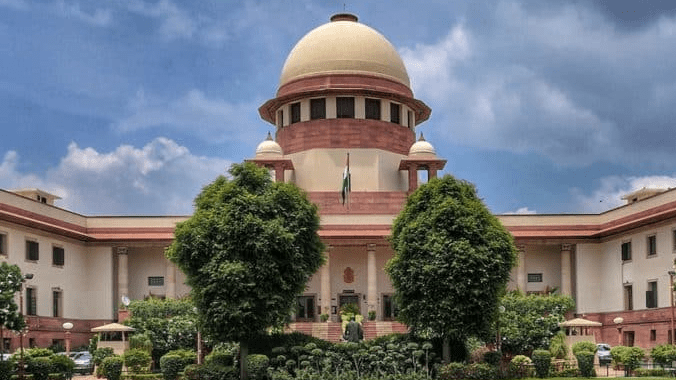
The Government of India maintains that the appointment of judges to the Supreme Court and High Courts is carried out under Articles 124, 217, and 224 of the Constitution, following the Memorandum of Procedure (MoP) formulated in 1998 pursuant to the landmark judgments of 1993 and 1998—popularly known as the Second and Third Judges Cases. According to the official position, this system represents a “continuous, integrated and collaborative process” between the executive and the judiciary, with appointments made only on the recommendations of the Supreme Court Collegium (SCC).
While this explanation is legally accurate in a narrow procedural sense, it raises a far deeper constitutional question: Is this method of judicial appointment truly in conformity with the letter and spirit of the Constitution of India? A closer examination suggests that it is not—and that the continued absence of a National Judicial Service (NJS) represents a constitutional anomaly rather than an inevitability.
What the Constitution Actually Envisages
Articles 124 and 217 of the Constitution clearly mandate that judges of the Supreme Court and High Courts shall be appointed by the President “after consultation” with such judges of the Supreme Court and High Courts as he may deem necessary. The operative word here is consultation, not concurrence. The Constitution deliberately placed the ultimate appointing authority in the executive, acting through the President, while requiring meaningful judicial input to safeguard independence.
At no point did the framers of the Constitution envisage a system in which the judiciary would acquire primacy so overwhelming that the executive’s role would be reduced to that of a mere post office. Dr. B.R. Ambedkar was explicit during Constituent Assembly debates that judicial appointments must balance independence with accountability, and that unchecked judicial self-selection would be undesirable in a democracy.
Yet, this is precisely what the collegium system has evolved into.
The Judicial Innovation That Became a Parallel Constitution
The transformation began with the 1993 judgment in the Second Judges Case and was consolidated by the 1998 advisory opinion in the Third Judges Case. Through judicial interpretation, “consultation” was redefined as “concurrence,” and the opinion of the Chief Justice of India—later expanded into a collegium of senior judges—was elevated above that of the executive.
This marked a constitutional turning point. Without a single constitutional amendment, a system of judicial appointments by judges themselves was institutionalised. The Memorandum of Procedure, often cited by the government, is not a constitutional document passed by Parliament; it is an executive instrument drafted to comply with judicial directions.
In effect, a judge-made mechanism replaced a constitutionally envisaged balance of powers.
Transparency Deficit and Democratic Accountability
The collegium system suffers from three structural infirmities: opacity, lack of accountability, and elite capture.
First, the process is largely opaque. Recommendations are made behind closed doors, with minimal disclosure of reasons for selection or rejection. While recent years have seen some improvement through publication of collegium resolutions, these disclosures remain skeletal and often cryptic.
Second, there is no formal accountability mechanism. If a recommendation proves flawed, biased, or exclusionary, there is no institutional avenue for review or correction. The judiciary, uniquely among constitutional organs, has insulated itself from scrutiny in matters of its own composition.
Third, the system has fostered a perception—if not the reality—of exclusivity. Judicial appointments have disproportionately favoured certain social groups, regions, and familial lineages. Diversity in terms of gender, caste, and professional background remains limited, especially at the higher judiciary.
Executive Role: Constitutional but Subordinate
The government claims that appointments are a collaborative exercise. In practice, however, the executive’s role is severely circumscribed. Even when the government returns a name for reconsideration, reiteration by the collegium makes the appointment binding.
This imbalance was starkly acknowledged when Parliament unanimously passed the 99th Constitutional Amendment and the National Judicial Appointments Commission (NJAC) Act, seeking to restore equilibrium between the judiciary, executive, and civil society. The Supreme Court struck it down in 2015, holding that judicial primacy is part of the basic structure.
Ironically, this judgment elevated a judge-created convention to the status of an immutable constitutional principle.
The Case for a National Judicial Service
The continued resistance to a National Judicial Service (NJS) is perhaps the most glaring contradiction in India’s judicial architecture. Articles 233 to 235 already permit structured recruitment of subordinate judiciary through competitive examinations, often conducted by public service commissions. There is no constitutional bar to extending this principle upward.
An NJS would allow merit-based, transparent, and nationally representative recruitment of judges at the entry level of the higher judiciary, much like the IAS or IPS. It would democratise access to judicial office, reduce nepotism, and create a diverse talent pool drawn from across India rather than a handful of metropolitan bar associations.
Crucially, an NJS would not undermine judicial independence. Independence does not flow from secrecy or self-appointment; it flows from security of tenure, clear service conditions, and insulation from arbitrary executive interference—all of which can be constitutionally guaranteed.
A System at Odds with Constitutional Morality
The collegium system may have emerged from a genuine concern to protect judicial independence during an era of executive overreach. But constitutional solutions must evolve with constitutional morality. What began as a safeguard has hardened into an exclusionary mechanism that resists reform, parliamentary oversight, and public accountability.
The Constitution does not belong to any one institution—not even the judiciary. Its spirit lies in balance, transparency, and democratic legitimacy. A judicial appointments process that is opaque, judge-dominated, and immune to correction cannot be said to reflect that spirit.
The present method of appointing judges—rooted more in judicial precedent than constitutional text—does not conform to the letter or spirit of the Constitution. It replaces “consultation” with judicial veto, democratic oversight with insularity, and constitutional balance with institutional absolutism.
A National Judicial Service is not a threat to judicial independence; it is a long-overdue affirmation of constitutional democracy. Until India confronts this contradiction, its higher judiciary will continue to be selected through a process that is constitutionally questionable, democratically fragile, and institutionally unsustainable.
 This is News