

Lalit Shastri
One failure in a space mission is an accident. Two may be coincidence. Three consecutive failures — all involving India’s military or strategic satellites, all marked by anomalies in systems considered virtually fail-proof — are neither. They indicate a pattern that demands serious scrutiny.
On 29 January 2025, NVS-02, a second-generation NavIC satellite with clear military and strategic utility, was launched successfully. The rocket performed flawlessly. Yet the satellite failed to raise itself to geostationary orbit. The explanation offered was failure of the oxidiser valve in the apogee boost motor. What made this extraordinary was not merely the malfunction but the fact that both the primary and redundant control systems failed simultaneously. Redundancy exists precisely to prevent such an outcome. What is now widely perceived — and quietly discussed even among those close to Indian Space Research Organisation (ISRO) — is that both main and redundant power lines were routed through a single digital connector, instead of two independent ones as recommended. Such routing defeats redundancy by design. Even more troubling, aerospace-grade digital connectors of this class are engineered to make failure extremely unlikely. This was not a routine malfunction. And while no formal charge has been made, sabotage is no longer dismissed out of hand in informed circles.
What followed deepened the unease. During Operation Sindoor, an emergency launch was planned for a military reconnaissance satellite — RISAT-1B, later redesignated EOS-09 — aboard PSLV-C61 on 18 May 2025. This mission failed due to a sudden drop in chamber pressure in the third-stage solid motor. In the operational history of the PSLV, this stage had never failed before. Solid motors are considered the most reliable components of launch vehicles. They have no moving parts, no valves, no complex sequencing. When a solid motor fails, it is not merely unusual — it is alarming.
A Failure Analysis Committee was constituted. Its report has still not been made public.
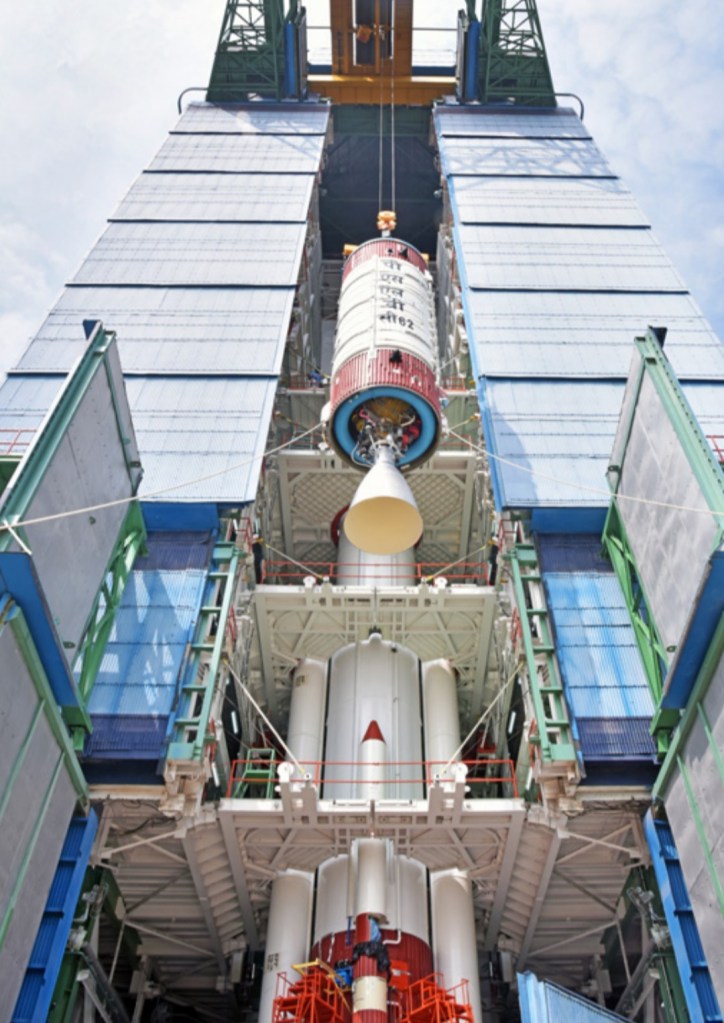
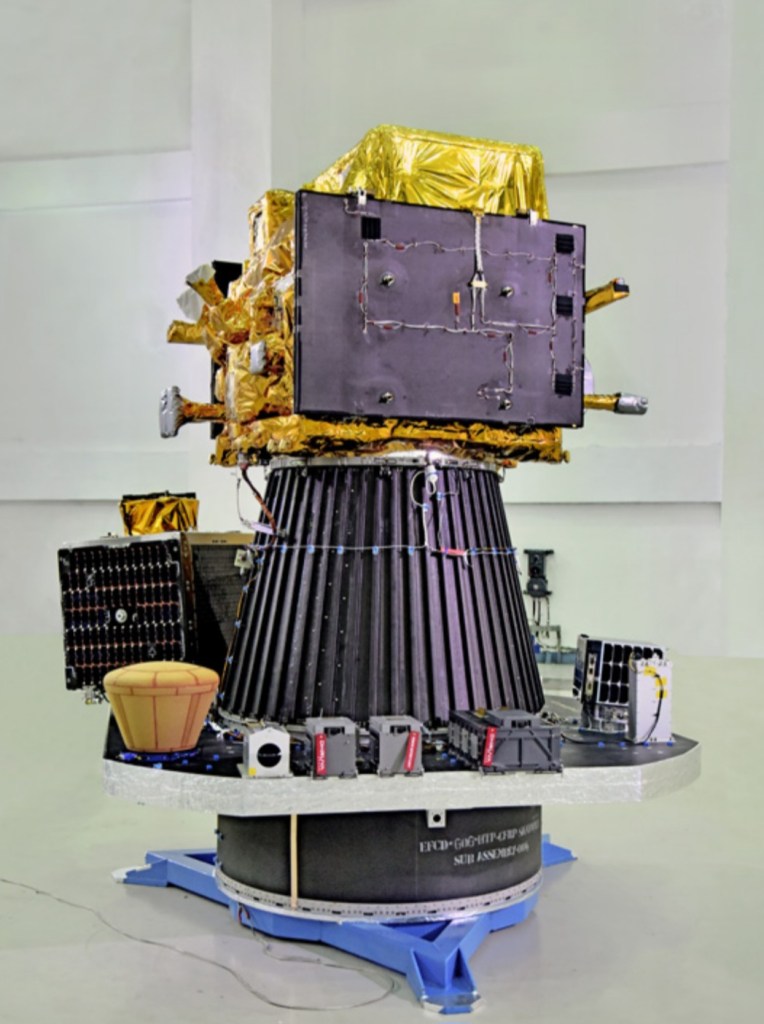
On 12 January 2026, history repeated itself. PSLV-C62, carrying Anvesha, a military satellite developed for DRDO, again failed due to an anomaly in the third-stage solid motor — strikingly similar in nature and timing to the PSLV-C61 failure. Two identical failures in the same stage, within months, in a system that “never fails”, cannot be brushed aside as chance. If corrective measures had been identified after the first failure, why did the second occur? More importantly, why was PSLV-C62 cleared for launch without public closure of the PSLV-C61 failure analysis?
The contrast with other missions during the same period is stark. GSLV-F16, carrying the Indo-US NISAR satellite, was launched successfully on 30 July 2025. In December 2025, LVM-3 M6 successfully placed the foreign BlueBird Block-2 satellite into orbit. These were complex, high-value missions. They succeeded without incident.
The record, therefore, is unambiguous. Every Indian military or strategic satellite mission in this period failed. Every foreign or international payload succeeded. This is not an allegation; it is a matter of fact.
What makes the situation even more perplexing is the conduct surrounding the PSLV-C62 launch. Why did ISRO Chairman V. Narayanan choose an unusually high level of pre-launch publicity and public hype for a military satellite mission? Strategic and defence payloads are traditionally handled with restraint, discretion and minimal disclosure. Excessive public signalling before such a launch serves no scientific purpose and runs counter to established norms of confidentiality. Was this an attempt to project confidence despite unresolved technical concerns? Or was it institutional overreach — publicity taking precedence over prudence?
ISRO’s official explanations so far fail to convince because they do not address the central questions. Why did redundancy fail redundantly in NVS-02? Why did solid motors fail twice in identical fashion? Why has the Failure Analysis Committee’s report not been placed in the public domain? And why are these failures confined to Indian military payloads alone?
India’s strategic space capability is far too critical to be shielded behind carefully worded press statements. Transparency is not a concession; it is an obligation. One failure can be excused. Two can be debated. Three consecutive failures demand accountability — and answers.
Until those answers are forthcoming, the pattern will continue to speak louder than official reassurances.
 This is News