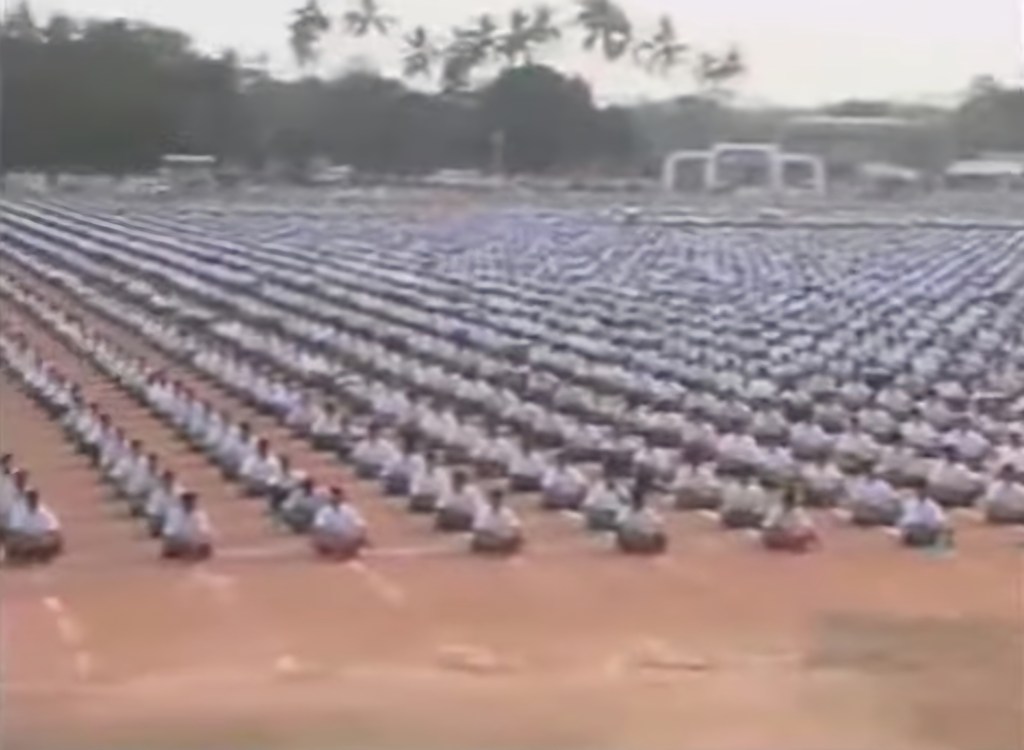
I have often praised the RSS for its discipline and simplicity while digging into its history and have also congratulated them for ongoing centenary celebrations.
The question, however, is where will the Sangh go from here? Will it really make India the Vishwa Guru with so many problems being faced by the Indian citizens?
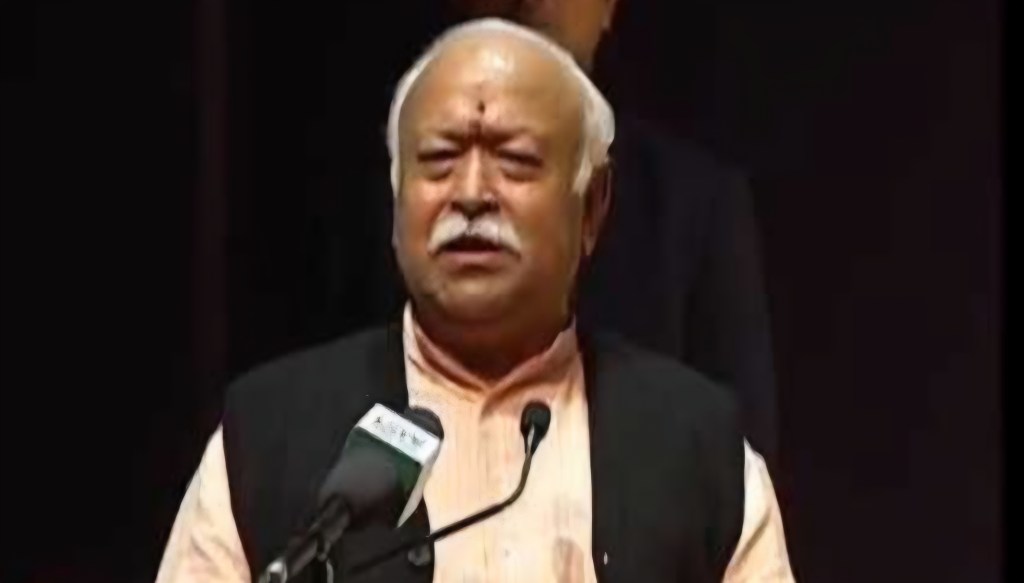
Sarsanghchalak (RSS chief) Dr Mohan Bhagwat
Started with the aim of Hindu consolidation without caste discrimination as the dream of Dr KB Hedgewar, the RSS now has almost an all-pervasive presence in Indian society–from labour unions to students; tribals to women; artistes to farmers and public health to politics (BJP). American author Walter K Andersen has enlisted 35 affiliates of the RSS (frontal organisations) that selflessly provide different services to the society through its lakhs of swaymsewaks.
Notwithstainding all the good work, there has been sharp criticism of RSS from the leftists and the Congress, not to speak of serious differences even within the ‘resurgent national organisation’. Bala Saheb Deoras, after his release from jail, post Emergency, was vehemently criticized for inviting Muslims to join the RSS; he was castigated by senior RSS men for taking RSS on a path not charted by its founder.
Deoras, just like his two famous predecessors, chanted the slogan of nation-building being the profound aim of the RSS through the daily shakhas. What has been the outcome? Has the nation been even half-built with improved civic sense? What about bribery, corruption, incidence of rapes, murders, and other scams?
RSS top decision-making body—the Akhil Bhartiya Karyakari Mandal–has been addressing many socio-political issues in its annual meetings. I have several old printed issues of the annual reports of the Akhil Bhartiya Pritinidhi Sabha that describe contemporary issues discussed by Sangh top brass.
Now that RSS has completed 100 years, what next? Has it ever thought of addressing the real and vexed issues the Indian society faces daily? Or it is still living in its own glass house?
In its Jabalpur congregation that began on 30th October, 2025, one Hope’s following issues would be discussed threadbare.
Representative image
Women Safety: People wonder what has the Sangh done for women? The National Crime Records Bureau releases data regularly showing rise in rapes and molestations of girls and women. I don’t remember if the Sangh supremo has called a meeting of any BJP state’s CM to discuss how this heinous crime can be effectively curbed. I know RSS does not meddle in BJP affairs overtly but most top leaders and CMs do try and seek guidance from the Sarsanghchalak and others. I wonder why RSS women’s wing, Rashtra Sevika Samiti, started in 1936, does not take out protest rallies (like their path sanchlans/route marches on occasions) against the unending crime their sisters suffer is beyond comprehension.
Corruption: Corruption in its every shape and scale in all walks of life has assumed mammoth and scary proportion in India. Will ‘nation-building’ be possible with the cancer of corruption eating into the vitals of the nation ? It has turned an ordinary man’s life into hell. Quality of all services offered by Government has constantly deteriorated. Why has RSS leadership not spoken openly about it ever? Why a ‘party with a difference’ (BJP) ia proving to be no different in terms of governance with RSS watching them over?
Cow Slaughter: In 1952, 17 million signatures were collected for cow slaughter ban by RSS. Nehru was in power then. After, 70 years of that action, the bovine population remains unprotected for want of any national legislation. States have made laws but they are feeble. Cows are being killed on roads and made to feed on garbage dumps. What has RSS done about that to be seen by people?
Crony Capitalism: Crony capitalism has spread its fangs very aggressively in the past 11 years. Has RSS ever discussed the pros and cons of making a handful industrialists very rich in India at the cost of others? A few groups, with brazen support of Government, have almost monopolized key business sectors. It has made many other business houses angry. Is the RSS not aware of it?
Education: Education and culture have always been RSS favourites. What is the one single big scalable change that India can associate with RSS in the field of education? I have met many RSS-appointed heads of education institutes and can vouch for the fact that they have ruined the institutions, in most cases. Just injecting Hindutva agenda into educational organisations must not be the aim. Their vice chancellors, who are appointed as administrators and wrongly called Kulgurus, must produce top class students as citizens. But do they have it in them – the ability to deliver?
Environment protection: In the name of infrastructure growth, India’s rivers, lakes, trees, national parks, mountains, urban biodiversity are being devastated. Urban trees are mercilessly cut while air, soil and water pollution have seen no abetment. Is it not the duty of the RSS to give a shout out to its own governments in the face of global warming threats?
Agrariandistress: Most of the farmers’ suicides in past years took place in Vidarbha where the RSS is headquartered (Nagpur) yet I have not heard of any strong action or policy interventions about agrarian crisis that India has been undergoing. Agri policies, land acquisition from farmers, better agriculture practices for more yield and government-farmers relations remain problematic areas for lakhs of farmers.
One hopes the 100-year-old RSS will now focus on more pressing issues of lakhs of Indian citizens, considering its clout. Merely holding shakhas and ‘boudhiks’ (brainstorming session won’t really help.
[The writer is a senior journalist from Madhya Pradesh.]