

Lalit Shastri
As the U.S. looks to reassert presence in Afghanistan, Pakistan’s old playbook resurfaces, China and Russia recalibrate, and India faces a decisive test of diplomatic nerve.
South and Central Asia are once again shifting under the weight of strategic realignment. The latest cross-border hostilities between Pakistan and Afghanistan have reignited tensions that go far beyond the immediate frontier. In a familiar act of deflection, Pakistan has accused India of being the “biggest exporter of terrorism.” Afghanistan, however, swiftly countered, asserting that it will never allow its soil to be used by another nation for proxy warfare. Beneath these sharp exchanges lies a deeper story — the reawakening of old rivalries and the re-entry of global powers into a region that never really escaped the shadow of the Great Game.
At the centre of this quiet storm stands Bagram Airbase, located just north of Kabul — a name that once symbolised America’s longest war and its most abrupt withdrawal. Four years after U.S. troops exited Afghanistan, Washington’s renewed interest in Bagram suggests that the chapter may not have closed after all. Bagram is not an ordinary airfield; it is geography at its most strategic — within range of China’s Xinjiang, Russia’s southern flank, Iran’s borders, and Pakistan’s restive frontier. Whoever controls it commands a rare vantage point over the world’s most volatile geopolitical theatre.
For the United States, regaining access to Bagram offers something no naval carrier or Gulf outpost can provide — a direct hand on the pulse of the Eurasian heartland. The rationale is not about rebuilding Afghanistan or curbing terrorism. It is about restoring strategic depth — monitoring Iran’s nuclear pathways, countering Russia’s reach into Central Asia, and keeping a watchful eye on China’s Belt and Road expansion. In other words, Bagram is the pivot point for Washington’s return to the region’s strategic calculus, dressed in the language of stability but rooted in power projection.
As Afghanistan re-emerges as a theatre for global power play, India’s diplomatic re-engagement with Kabul and Washington’s renewed interest in Bagram Airbase mark a pivotal moment. The Great Game has returned in a new form — and this time, India cannot afford to be an observer.
But each time America circles back to Afghanistan, Pakistan smells opportunity. History has shown that whenever Washington needs access or logistics, Islamabad positions itself as indispensable — the same act it has perfected since the Cold War. Yet this partnership has always carried a paradox. Pakistan plays facilitator by day and enabler of extremism by night, feeding instability that it then trades as strategic currency. Should Bagram become active under renewed U.S. oversight, Pakistan’s leverage will rise again — not as a force for peace but as a middleman of mischief. India, having witnessed this duplicity for decades, can ill afford to view the development as routine.
Meanwhile, China and Russia are watching the chessboard shift with growing unease. Beijing, which has quietly cultivated ties with the Taliban through mining projects and political engagement, views any American comeback as an intrusion near its most sensitive frontier — Xinjiang. A reactivated Bagram under U.S. influence threatens to unravel Beijing’s slow but deliberate investment in Afghan stability on its own terms. Russia, overstretched by its war in Ukraine, perceives the same move as another front in Washington’s attempt to squeeze its southern flank. Both powers may deepen coordination in response, tightening their grip on Central Asia and leaving India in the delicate position of balancing between old friends and new alignments.
Amid this flux, India’s decision to reopen embassies with Afghanistan carries both symbolism and substance. Unlike others, India’s engagement with Afghanistan has never been predatory or self-serving. It has been defined by development, connectivity, and trust. Roads, schools, hospitals, dams, and the Afghan Parliament itself stand as monuments to that goodwill. Yet goodwill alone cannot anchor influence. With the changing geometry of power around Afghanistan, India’s re-engagement is no longer an act of nostalgia — it is a strategic necessity. The restoration of diplomatic ties gives India a window to safeguard its investments, counter false propaganda, and project its voice in decisions that directly affect its security environment.
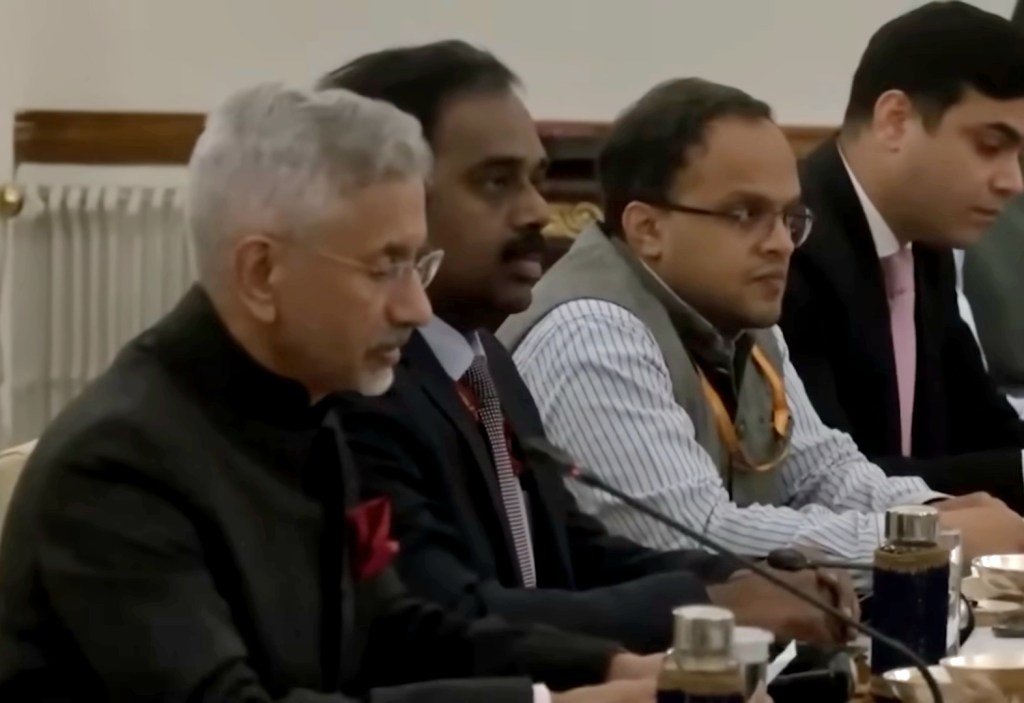
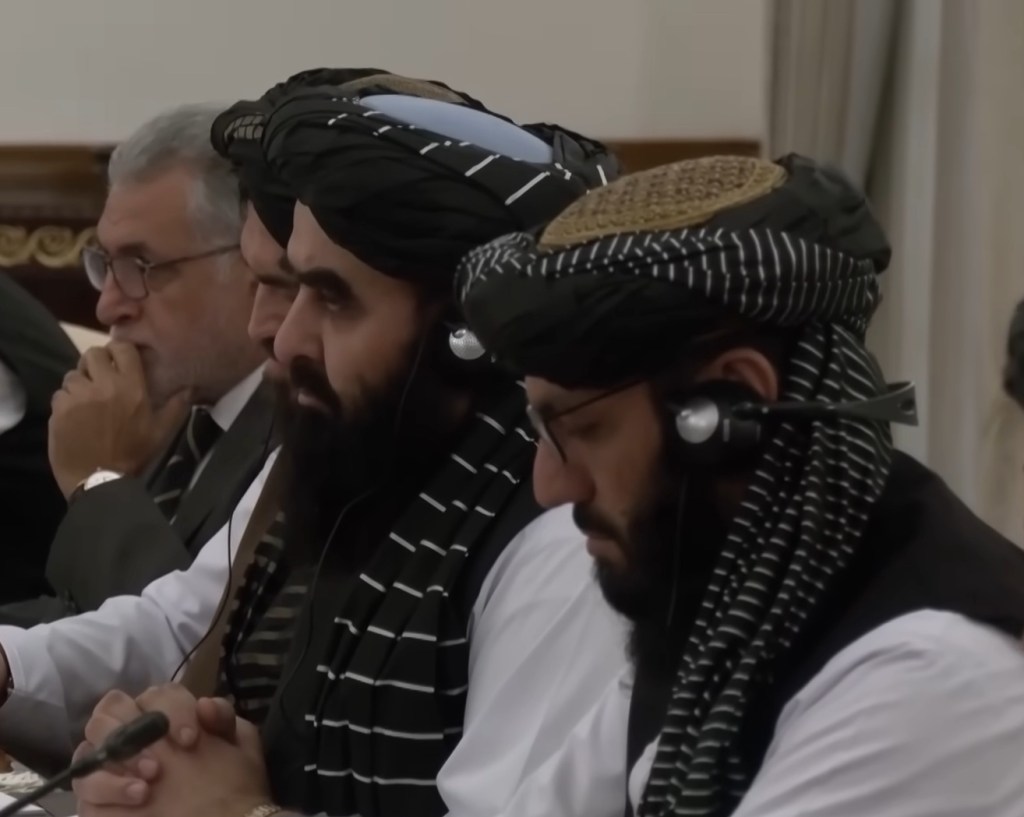
The renewed diplomatic warmth between New Delhi and Kabul was underscored by the External Affairs Minister’s opening remarks during his meeting with the Afghan Foreign Minister on October 10, 2025. In a carefully balanced statement, he reaffirmed India’s role as a contiguous neighbour and steadfast partner in Afghanistan’s development, announcing the upgrade of India’s Technical Mission in Kabul to full embassy status. The Minister detailed a comprehensive package of humanitarian and developmental assistance — including six new projects, advanced medical equipment for hospitals, a gift of ambulances, vaccines, and cancer medicines — along with continued food aid and reconstruction support for earthquake-hit regions. He also pledged India’s help in building homes for forcibly repatriated refugees and advancing cooperation in water management, irrigation, and mining. On trade and people-to-people ties, the emphasis was on expanding air connectivity, scholarships, and sporting exchanges, especially cricket. Importantly, the Minister underlined the shared threat of cross-border terrorism that endangers both nations, appreciating Afghanistan’s solidarity with India after the Pahalgam attack. The tone of the dialogue was both empathetic and assertive — a reaffirmation that India’s commitment to Afghanistan’s sovereignty and stability is not reactive diplomacy but a conscious, values-driven strategy rooted in partnership and peace.
The recalibration around Bagram marks not merely a military shift but the reopening of the Great Game in its digital, intelligence-driven form. The contest today is fought through surveillance grids, cyber tools, infrastructure routes, and media narratives rather than cavalry and caravans. For Washington, it is about relevance; for Beijing and Moscow, it is about resistance; for Islamabad, revival. For New Delhi, it is about resolve. Neutrality, in such a landscape, amounts to vulnerability. India’s extended neighbourhood is again in play, and inaction carries a cost that far outweighs caution.
Bagram may lie within Afghan soil, but its shadow stretches across continents. It reflects the anxieties of a world where old fault lines are being redrawn by new players. For the United States, it is a base of re-entry; for Pakistan, a familiar lifeline; for China and Russia, a provocation; and for India, a test of strategic clarity. The Great Game has returned — but this time, it will not be decided by the power that shouts the loudest, but by the nation that acts with the greatest foresight.
India has already taken the first step by re-establishing its diplomatic bridge to Kabul. It must now build on it — through economic corridors, intelligence partnerships, and narrative strength. Because in the volatile skies above Bagram, where power is once again seeking permanence, silence and hesitation are no longer strategies. They are forfeitures.
 This is News