

Lalit Shastri
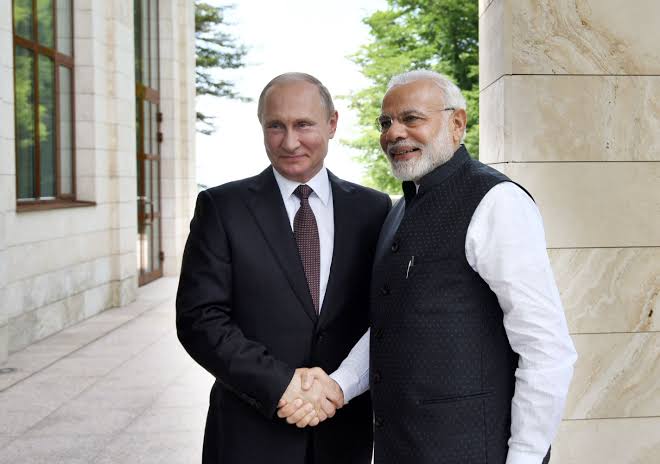
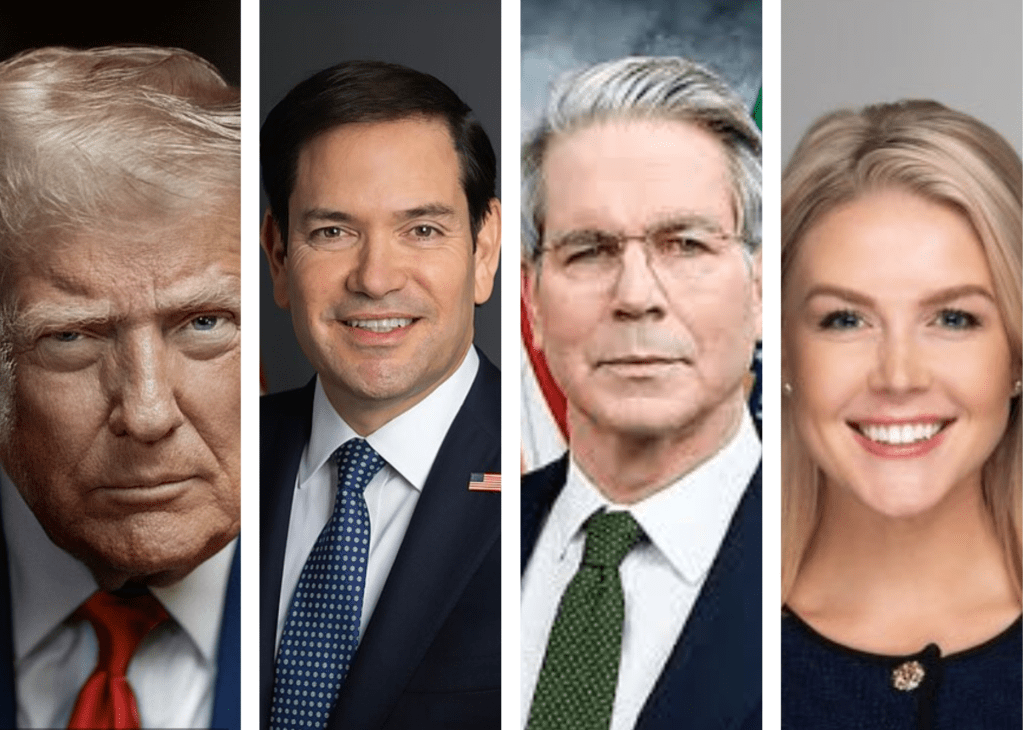
The White House didn’t mince words. When spokesperson Karoline Leavitt declared that President Trump has imposed “sanctions” on India to force an end to the war in Ukraine, it wasn’t a diplomatic statement — it was a blunt warning. The deliberate use of the term “sanctions” instead of the more technical “tariffs” signals a decisive shift: the United States is no longer cajoling India — it is arm-twisting. At its core, this language exposes the brutal reality that Washington views India’s sovereign decisions on energy security not as legitimate national choices, but as variables to be controlled in pursuit of its own geopolitical objectives. In other words, comply — or be punished. The hypocrisy becomes even starker when one considers that the same administration continues to cosy up to a terror-sponsoring state — India’s neighbour Pakistan — making a complete mockery of the so-called “strategic partnership” with India and revealing just how hollow that notion has become.
In one decisive stroke, the Trump administration has laid bare its own duplicity—slapping punitive sanctions on India for purchasing discounted Russian oil while simultaneously expanding its own trade with Moscow in recent months. This blatant double standard not only erodes the credibility of U.S. foreign policy but also exposes an ugly truth: Washington is willing to weaponise sanctions when it suits its geopolitical interests, even against a strategic partner like India.
It is reported that both the U.S. Secretary of State and the Treasury Secretary have taken turns lecturing India, accusing New Delhi of “undermining the global effort” against Russia by continuing crude purchases. The rhetoric is deliberately harsh – suggesting India is prioritising profit over principle – even though the same Washington establishment remains completely silent about the sharp spike in U.S.–Russia trade since President Trump returned to the White House.
It is further reported that the White House Press Secretary, Karoline Leavitt, has sought to justify these measures by arguing that tougher action against India is necessary to “exert secondary pressure” on Russia. Even more astonishing is the justification used to let the United States itself off the hook: the claim that American procurement of Russian goods is “strategically calibrated” and therefore acceptable. It is difficult to imagine a more brazen case of one rule for America and another for the rest of the world.
Only a few months ago, top U.S. officials—including senior figures in the Treasury Department—had publicly conceded that India’s continued oil imports were helping stabilise global markets and preventing an even sharper spike in international prices. Now the narrative has conveniently shifted, and the same purchases are being painted as a threat to international security. Hypocrisy, not consistency, is clearly driving U.S. policy.
At the same time, it is no secret that American refiners have substantially increased their intake of Russian-origin oil products—especially through intermediaries—over precisely the same period in which Washington has threatened New Delhi with punitive tariffs. So the real question is simple and unavoidable: Why is it unacceptable when India buys affordable crude to meet its developmental needs, but perfectly acceptable when the United States does exactly the same for its own economic gain?
The answer is obvious. This is not about morality or principles. It is about preserving hegemony. India’s energy partnership with Russia strikes directly at the foundations of the petrodollar system and reduces U.S. leverage over global oil flows. That is precisely why the current administration has reacted with such fury. Ironically, the harder Washington presses, the more it confirms that India’s decision is strategically sound and long overdue.
In an increasingly multipolar world, India cannot be expected to sacrifice its energy security or national interest merely to protect American geopolitical narratives. Nor should it. The fact that U.S. officials continue to preach restraint to New Delhi while expanding their own trade with Moscow is not just hypocritical—it is insulting.
In fact, the U.S. is not angry because India is buying oil — it is angry because a single, well-calculated trade has done what decades of diplomacy could not. By purchasing discounted Russian crude and refusing to bow to Western diktats, India has triggered the slow but unmistakable demolition of U.S. hegemony and struck directly at the core of the petrodollar’s monopoly. That is the real reason behind the tariffs, the threats and the sanctimonious lectures. And that is precisely why India must stay the course.
 This is News