
Lalit Shastri
A High-Stake Encounter with Low Strategic Yield
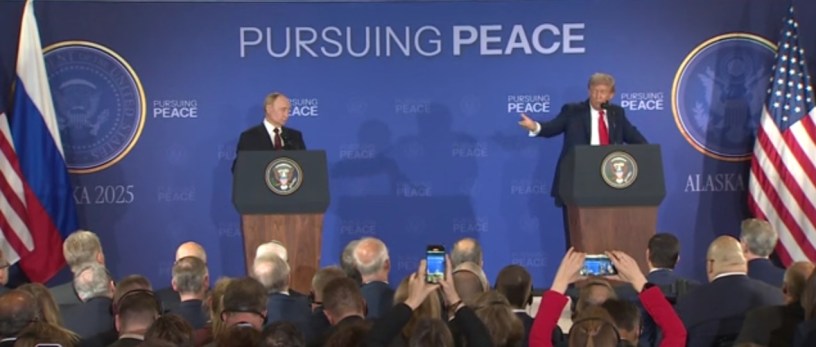
The much-anticipated meeting between thel U.S. President Donald Trump and Russian President Vladimir Putin at Anchorage, Alaska, was projected in many quarters as a possible diplomatic breakthrough -perhaps even an opportunity to arrest the relentless slide of Ukraine’s territorial integrity. Instead, it ended up as a carefully choreographed display of protocol and symbolism, tactically exploited by Moscow to buy more time on the battlefield.
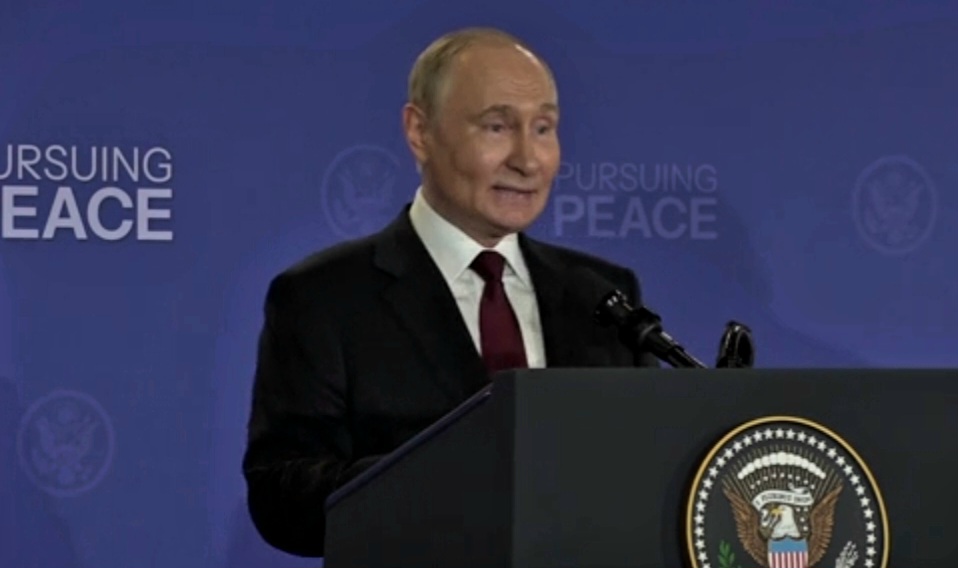
Putin was the first to speak and, true to form, dominated the opening narrative with a prepared statement that was long on historical references and short on actionable commitments. From invoking centuries-old church and cultural ties to repeating the well-crafted assertion that the war would never have started had Trump been in office, everything was designed to reinforce a single message: Russia remains open to dialogue, but solely on its own terms.
Putin positioned himself not as an aggressor looking for compromise, but as a victor graciously offering space for dialogue.
Trump’s Uncharacteristic Restraint and a Very Brief Response
In sharp contrast, Trump took the microphone visibly unsettled. His remarks were short, almost perfunctory, and lacked the characteristic bravado that usually defines his public appearances. While he acknowledged that “the killing must stop” and promised consultations with President Zelensky and European allies before any further step, the statement effectively underlined a harsh reality — Washington does not currently hold the initiative.
The US President’s commitment to brief Kyiv and America’s European partners might sound reassuring from a diplomatic standpoint, but in practical terms it only further delays any concrete move while Russian troops continue to map out gains on the ground. The restrained tone, far removed from his usual combative style, signaled that even Trump recognises the limits of U.S. leverage in the present situation.
Moscow’s Tactical Masterstroke: The Surprise ‘Next Meeting’ in Moscow
The defining moment of the meeting, however, came not from anything Trump said — but from what Putin offered. In a surprise move, the Russian president proposed that the next round of talks be held in Moscow. The message behind the gesture was unmistakable: Russia is confident, unthreatened, and willing to project an image of magnanimity even while its forces press forward.
This is not merely symbolic diplomacy — it is a tactical manoeuvre designed to stall Western intervention, divide opinion in the U.S., and send a soft signal to Kyiv that the war could end, provided it accepts Moscow’s terms.
The Anchorage talks did not slow the war — they extended a diplomatic rope that Moscow will now use to tighten its grip on Ukraine.
Europe Reacts with Rhetoric, but No Real Response
Across Europe, the immediate reaction has been one of frustration and anger — but not of action. Statements condemning Russia and demanding an end to the invasion are already being drafted, but Europe’s military and political dependence on the United States limits its ability to respond beyond vocal outrage. As a result, Putin faces no meaningful pushback. He knows that so long as he keeps the diplomatic door technically ajar, Europe will remain locked in a cycle of condemnations but no escalation.
The danger for Kyiv is obvious. With each passing day, more lives and more territory are lost. What little bargaining power remains will erode further if Ukraine waits for a Western initiative that never arrives. In brutal terms, delay is defeat — and Putin understands that better than anyone else involved in this conflict.
A Tactical Pause that Favours Moscow
The Anchorage meeting has not shifted the strategic balance — it has merely formalised it. Putin walked in with the advantage and walked out with even more of it. Trump returned to Washington empty-handed and immediately diverted to address a domestic law-and-order issue in the Washipngton DC. Meanwhile, the Kremlin continues its methodical advance, reinforced by the knowledge that neither the United States nor Europe are ready to escalate.
Far from being a peace initiative, the Anchorage meeting may go down as the moment Russia gained time — and momentum — to finish what it started.
The Real Target: India’s Rise is the Threat They Fear
Taking a closer look at the Putin-Trump meeting and what was said in the end, let’s call it what it is — Russia is just the convenient pretext. The real pressure point is India, because unlike China, New Delhi has openly defied Washington’s or should I say Trump’s coercive playbook and charted its own sovereign path. Whether it was refusing to cut energy ties with Moscow or bluntly rejecting western prescriptions on Ukraine, India hit the United States harder than anyone expected — and did so without raising its voice. That is precisely why Trump now feels compelled to “re-balance” the geopolitical equation.
Make no mistake: the emerging power Washington worries about is India, not China. They have already factored Beijing into their containment strategy. It is India’s independent rise, supported by deepening partnerships with both Russia and the Global South, that has completely unsettled them. Putin’s remark that US–Russia trade has spiked by 20% since Trump’s return, despite the so-called sanctions regime, only exposes the broader hypocrisy, and more particularly Trump’s double face — Russia is not being isolated; only India is being targeted for not falling in line.
Key Takeaways from the US President Trump and Russian President Putin’s Anchorage Statements
A Reset Wrapped in History and Neighbourhood Diplomacy
President Vladimir Putin opened the post-meeting remarks with a carefully calibrated historical narrative, emphasising centuries-old ties between Russia and the United States and invoking the spirit of past cooperation — from cultural linkages in Alaska to the shared sacrifices during World War II. By repeatedly referring to America as a “close neighbour” and highlighting positive memories such as the Lend-Lease air route and Russian-American combat camaraderie, Putin attempted to frame the Alaska meeting not merely as a diplomatic event, but as a historic re-opening of a long-dormant partnership.
He made it clear that relations between the two nations had deteriorated to their worst level since the Cold War, and argued that it was both necessary and overdue to move from confrontation to dialogue. While stressing Russia’s grave concerns over the Ukraine conflict, he reinforced Moscow’s stated position that any lasting settlement must involve addressing the “root causes” and restoring what Russia perceives as a “fair security balance” in Europe.
Importantly, Putin openly acknowledged President Trump’s readiness to understand those concerns and welcomed Washington’s renewed willingness to engage directly, signalling that the Anchorage dialogue could become a turning point in restoring pragmatic ties.
Putin’s Message: Progress Possible — But Only on Russia’s Terms
Putin underscored that Russia remains “sincerely interested” in ending the conflict in Ukraine, but only through long-term arrangements that meet Moscow’s security requirements. This places the burden squarely on Kyiv and European capitals not to obstruct the emerging process. He also hinted at cautious optimism, noting the 20% rise in bilateral trade after the Trump administration took office and outlining new areas of cooperation in energy, technology, and Arctic development.
By concluding with a pointed reminder that he had warned the previous U.S. administration against pushing events to the point of war — and then explicitly stating that if Trump had been President, there would have been no war — Putin reinforced the central theme of the Russian narrative: that today’s talks reflect a return to “trust-based” leadership diplomacy.
Trump’s Message: Real Progress, But No Deal — Yet
President Trump characterised the meeting as “extremely productive”, highlighting that both sides reached agreement on a broad range of issues, while candidly acknowledging that one major topic — widely understood to be Ukraine — still remains unresolved. Reiterating that “there is no deal until there is a deal”, Trump confirmed he would immediately brief NATO allies and President Zelensky, making it clear that the United States is not prepared to act unilaterally or bypass its treaty commitments.
Trump was emphatic that both leaders share a genuine desire to stop the bloodshed and noted the presence of senior officials and business leaders from both countries as an indicator of their seriousness. He also reaffirmed his longstanding personal rapport with President Putin, describing it as “fantastic” and pointing out that past progress had been constrained by what he termed the “Russia hoax” — but was now possible to revive.
In closing, Trump stated that the door for a follow-up meeting remains open and indicated that even a Moscow venue could be considered — a remark which, though partly light-hearted, has a deeper strategic subtext: Washington is willing to keep talking, so long as it can secure a meaningful outcome.
Both leaders used the Anchorage talks to signal a return to direct great-power diplomacy after years of mutual hostility and strategic paralysis.
- Putin framed the meeting in historic and emotional terms, stressed Russia’s legitimate security concerns, and positioned Moscow as the party open to peace — provided its terms are respected.
- Trump emphasised progress and personal rapport, made clear that the United States will act in concert with its allies, and left the door open for further engagement — but stopped short of any commitment on a ceasefire.
In essence, the two presidents have reopened a channel, set a more pragmatic tone, and agreed to keep talking.
What they have not done — at least yet — is bridge the fundamental divide over Ukraine.
That remains for the next round.
