
Lalit Shastri
The Broken Western Lens

I no longer see the world through the colonial prism drawn by the West. That lens is shattered — irreparably. The Western world, once the self-proclaimed guardian of global morality, economy, and order, is now stumbling under its own contradictions.
“Take my word for it — the age of their dominance is ending.”
The West’s long and manipulative winter is finally coming to an end. India is rising, and no power on earth can halt this awakening.
A World Defined by Western Wars
From the World Wars to the Cold War, to the post-Soviet chaos, the global order was crafted — and rigged — by Western powers. The result: economies built on the ruins of others, and peace maintained through perpetual conflict.
“The Global South paid the price, while the Global North cashed the cheque.”
While nations like India toiled to recover from colonial looting, the West dominated by the industry of arms, armaments, and mass destruction indulged in war-profiteering — building a global order where destruction was monetised, peace was politicised, and power was centralised.
Trump’s Tariff Tantrum: A Sign of Panic, Not Power
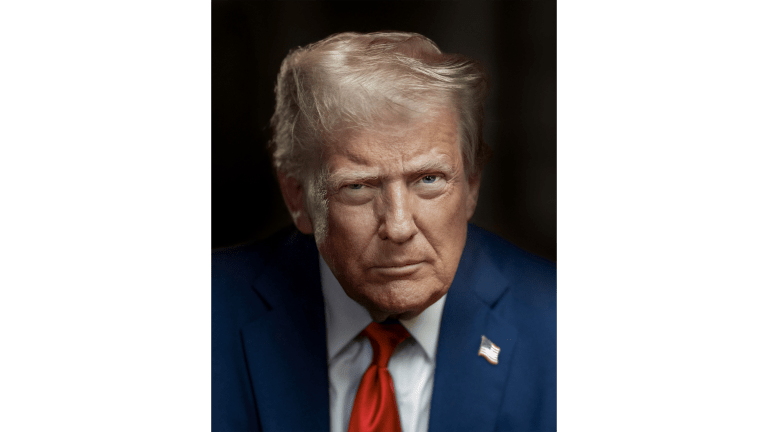
Now, in a brazen and barely concealed display of pressure politics, US President Donald Trump has lashed out at India in a message posted on his social media platform Truth Social.
“India is our friend,” Trump wrote, “but their tariffs are far too high… They will therefore be paying a tariff of 25%, plus a penalty, starting August 1.”
He further accused India of having “obnoxious non-monetary trade barriers,” maintaining defence ties with Russia, and being one of the largest buyers of Russian energy — all while hypocritically claiming to seek peace in Ukraine.
“This isn’t diplomacy. It’s desperation dressed up as bravado.”
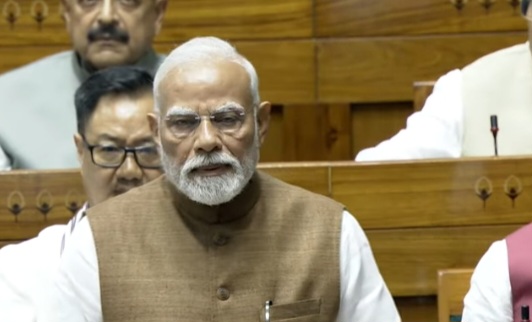
But what exposes Trump’s grandstanding even more brutally is the timing of his post — it came immediately after Indian Prime Minister Narendra Modi stood in Parliament and made it absolutely clear by stating “Operation Sindoor is still on”. He also went on to underscore:
“No world leader had asked India to halt Operation Sindoor” — India’s ongoing action against terror groups operating from Pakistan.
This singular statement from Modi tore through Trump’s long-peddled lie that he had somehow “brokered peace” between India and Pakistan. The reality is stark — India’s security doctrine is sovereign, unapologetic, and no longer subject to Western mediation or muscle-flexing.
“India will never outsource its national security to self-declared global ‘dealmakers’ who mistake tweets for treaties.”
Trump’s outburst — timed ahead of a unilateral tariff regime — is not a projection of power, but a public admission of waning influence. The West is rattled not because India is erring — but because India is choosing its own path.
India’s Moment of Reckoning
India is not just rising — it is rewriting the script.
“India has called the bluff of the so-called liberal democracies whose hypocrisy stands exposed.”
India is building indigenous technological and digital ecosystems and ensuring its energy security through diversified partnerships. It is advocating multipolarity in forums like BRICS and SCO, while staying clear of Western proxy wars. India is no longer playing by the West’s rules — it is changing the board entirely.
The Collapse of the Atlantic Illusion
The idea that the West — particularly the US, EU, and Britain — could shape the world in its image through military might, economic coercion, and soft power influence was born in the wreckage of the 20th century’s greatest upheavals.
Between 1935 and 1945, the world was devastated by a global conflict that pitted the Allied Powers against the Axis, resulting in over 70 million deaths and the emergence of a new geopolitical order. In the aftermath of World War II, the United States positioned itself not just as a victor but as the architect of a global system — establishing institutions like the UN, World Bank, IMF, and NATO to entrench a Western-centric world view under the garb of cooperation and democracy — not before Britain presided over the partition of India. In 1947, the great Indian land, that is Bharat, was divided into two nations, India and Pakistan, on the basis of religion. The Islamists, led by Mohammad Ali Jinnah and his two-nation theory, unleashed a horrific wave of sectarian violence that claimed hundreds of thousands of lives, plunged the subcontinent into chaos, and triggered the largest mass displacement of population in recorded human history.
The 1960s Cold War phase intensified the divide between East and West. The ideological battle between capitalism and communism played out violently across Asia, Africa, and Latin America. Vietnam became a symbol of Western imperial failure, as the US attempted to crush nationalist movements under the pretense of stopping communism — leaving behind a legacy of devastation. Simultaneously, the Middle East became a strategic playground for Western powers, who installed or toppled regimes, inflamed sectarian tensions, and ignited a cycle of conflict that continues today — in Iraq, Syria, Palestine, and Yemen.
Afghanistan, too, became a casualty of Cold War paranoia. First devastated by the Soviet invasion in the 1980s, and then pulverized by decades of American intervention, the country stands today as a testament to how the West destroys what it cannot control. What is often overlooked is how Pakistan was weaponised by the United States during this period — first turned into a training ground for terror outfits to fight a proxy war against the Soviets in Afghanistan, and later used to wage a low-intensity conflict in Jammu and Kashmir aimed at destabilising India. These terror factories, nurtured by CIA funds and ISI logistics, metastasized into global jihadist networks that continue to bleed the region. Even now, the West’s duplicity is on full display — with the IMF approving a generous bailout package for Pakistan immediately after the Pahalgam terror attack, and U.S. President Donald Trump hosting a private lunch for the Pakistani Army Chief. Such actions serve as a stark reminder of the West’s two-faced approach — preaching counter-terrorism while rewarding the very architects of cross-border terror.
In the late 1980s, Glasnost and Perestroika, introduced by Mikhail Gorbachev, were meant to reform and democratize the USSR. Instead, they inadvertently precipitated its collapse. The breakup of the Soviet Union in 1991 and the unification of Germany ushered in the most arrogant phase of Western dominance — where the US, EU, and Britain claimed an unchallenged moral and economic superiority. Their victory lap was paved with military interventions (Yugoslavia, Iraq, Libya), regime change campaigns, and economic sanctions that devastated populations while enriching defense contractors and currency cartels.
“But this illusion — that the West alone has the right to dictate the rules of the world — is now fracturing under the weight of its own hypocrisy.”
The Price of Western Greed: Climate Catastrophe
Alongside war and hegemony, another silent weapon of mass destruction emerged from the West — unchecked consumerism. The rise of hyper-capitalist lifestyles, glorified by Hollywood and backed by exploitative global supply chains, has ravaged the environment and gutted the planet’s natural resources. The mantra of “bigger is better” — bigger cars, bigger homes, bigger appetites — led to a vulgar display of wealth and waste, while the rest of the world was fed austerity sermons.
The climate crisis we face today is the direct consequence of Western industrialisation, greed, and reckless consumption. From fossil fuels to plastics, from deforestation to oceanic pollution, the majority of the historical carbon emissions have come from the Global North, while the Global South bears the brunt in the form of floods, droughts, food insecurity, and migration.
“It is time the West was taxed — not just monetarily, but morally — for the climate debt it owes to humanity.”
The so-called climate leadership of the West is a sham. The same countries that polluted the Earth now seek to dominate the green economy, hoard patents, and pressure developing nations to comply with environmental targets they themselves never met. This hypocrisy cannot go unchallenged.
Today, nations like India — deeply rooted in civilisational sustainability — are taking the lead in advocating for climate justice, equitable energy transitions, and responsible development.
“The West must be held accountable. The age of impunity is over.”
India’s voice is not just rising — it is resonating. And the illusion of Atlantic supremacy is fading fast.
India is the New Axis of Balance
India isn’t a client state. It’s not waiting for permission from Washington, Brussels, or any other capital.
“India is not here to replace the West as a master — it is here to end the idea of masters altogether.”
We are the new balance — rooted in dharma, armed with technology, and driven by inclusive globalism. Whether the old powers accept it or not, the world is tilting toward India’s centre of gravity.
The Verdict of History Has Shifted
This is not just geopolitics. It is a historic correction. A civilisational shift. India, once plundered by colonial empires and patronised by postwar blocs, is now standing in its own light — and casting a long shadow on the hypocrisy of the West.
“India will rise and rise, come what may.”
Trump’s penalties won’t change that. Threats won’t slow it. The world is moving — and India is leading that motion.
Final Word
This is India’s century — and it won’t be negotiated under pressure.
“India has seen through the farce. India has called the bluff. And the world will never be the same again.”
Let Trump fume. Let the West retaliate.
India will not retreat.
The age of compliance is over.
The era of Indian confidence has begun.
 This is News