

Lalit Shastri
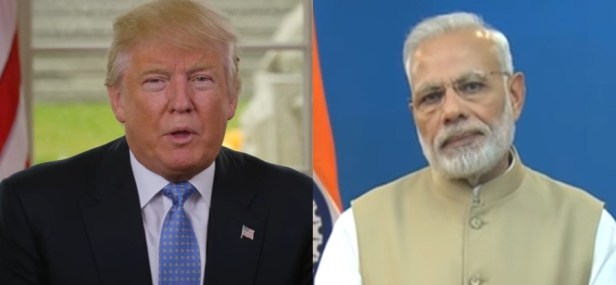
The United States’ decision to impose a 25% base tariff along with a penalty on Indian exports, starting August 1, 2025, is not merely a matter of trade—it is a coercive signal, an unmistakable act of strategic retaliation. This move follows India’s categorical rejection of U.S. mediation claims during Operation Sindoor, where responding to Opposition’s assertion that India went for ceasefire against Pakistan due to pressure from the United States, Prime Minister Narendra Modi firmly asserted in Parliament on Tuesday July 29 that no world leader asked India to stop the operation. Washington’s response: economic punishment for political non-compliance.
But the real message from India is this: Strategic autonomy and national sovereignty are non-negotiable.
This Isn’t Trade Policy. It’s Diplomatic Bullying
Unlike other Asian economies like Indonesia, Vietnam, or the Philippines—who will face 19–20% tariffs—India has been singled out with an additional penalty. The US President Trump’s justification cites “India’s high tariffs,” “non-tariff barriers,” and even India’s independent strategic ties with Russia. But let’s not be naïve—this has little to do with trade friction and everything to do with geopolitical optics.
The U.S. wanted the world to believe it brokered peace in South Asia. India’s refusal to validate this narrative was seen as defiance. And Trump, true to form, has responded with economic intimidation.
The Quad in Peril: Trump Risks Undermining a Key Indo-Pacific Alliance
This aggressive posture by Washington now threatens to jeopardize the very foundation of the Quad alliance—a four-nation security framework comprising the U.S., India, Japan, and Australia, aimed at counterbalancing China in the Indo-Pacific.
India has been a pillar of the Quad—offering legitimacy, regional insight, and boots-on-ground capability. But Trump’s tariff salvo raises a pivotal question: How can strategic partners trust a country that uses economic coercion as a tool of diplomacy?
If Trump seeks to weaken China’s rise, undermining India is a suicidal move. With this act, Trump—not Beijing—may end up sabotaging the Indo-Pacific security framework the U.S. itself helped create.
BRICS: India Now Has a Platform to Rebalance Global Power
As India leads and expands its engagement in BRICS—an alliance of emerging powers including Brazil, Russia, India, China, South Africa, and several new entrants—it finds itself in a position to offer a serious alternative to U.S.-led global frameworks.
The BRICS coalition is increasingly gaining traction in setting up alternative financial institutions, payment systems, and trade mechanisms that bypass the U.S. dollar. If pushed further, India has both the moral legitimacy and market weight to shift its focus from the Quad to BRICS, accelerating the global south’s realignment away from U.S. hegemony.
Trump’s Global Scorecard: Failures on Ukraine and the Middle East
Trump’s attempt to punish India also comes at a time when his global credibility is under strain:
- Ukraine-Russia War: Despite grandstanding, Trump has failed to offer any viable solution to end the war. The U.S.’s role has largely been that of an arms supplier—not a peacemaker.
- Middle East Crisis: With the Israel-Gaza conflict spiraling and no roadmap to peace, Trump’s diplomacy stands discredited in the region.
Against this backdrop, targeting India—a responsible and stabilizing global actor—is both self-defeating and dangerous.
India’s Middle Class: A Sleeping Giant with Strategic Potential
With a thriving middle class of over 400 million, India is one of the largest consumer markets on Earth. American multinationals—from tech giants and automotive companies to luxury and agriculture exporters—rely heavily on Indian demand.
A reciprocal tariff on U.S. imports will not just impact trade—it will spark domestic backlash in the U.S., where corporate America is already jittery about declining global demand and overdependence on shrinking markets.
India’s Response: Measured, Assertive, and Strategic
India need not match Trump’s recklessness with rhetoric, but it must respond with calibrated strength:
1. Reciprocal Tariffs on U.S. Goods
Target sectors with high American dependence: premium tech products, defense procurements, consumer goods, and agri-exports like almonds and apples.
2. Accelerated BRICS Integration
Strengthen payment systems like BRICS Pay, de-dollarized trade settlements, and joint infrastructure funding—offering the Global South an exit ramp from U.S.-led institutions.
3. Reassessment of Quad Commitments
Send a clear signal that partnerships must be built on mutual respect, not transactional coercion.
4. Support for a Multipolar World Order
Continue championing sovereignty-first diplomacy, and engage like-minded nations across Eurasia, Africa, and Latin America to build independent blocs of influence.
This Is More Than Tariffs—This Is a Test of India’s Strategic Resolve
Trump may believe that penalizing India economically will yield political submission. But the reality is that such moves will only push India to deepen its strategic autonomy, explore non-Western alliances, and champion a more equitable, multipolar world order.
If the Quad collapses under the weight of American arrogance, and if BRICS emerges stronger, Donald Trump alone will be responsible for accelerating the global shift away from U.S. primacy.
India now has the chance to turn this challenge into opportunity—and it must.
