
Lalit Shastri
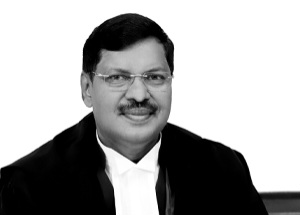
When the Chief Justice of India addresses a gathering of foreign judges — as CJI B. R. Gavai did recently at the Milan Court of Appeal — the world listens not just to what is said, but also to what is carefully omitted.
Justice Gavai, reflecting on “75 Years of the Indian Constitution,” proudly highlighted the Supreme Court’s intervention against what he called “bulldozer justice.” He recalled the apex court’s 2023 ruling barring state authorities from demolishing homes of accused persons without due process, calling it a protection of socio-economic rights and quoting emotionally, “A house is not just property; it embodies dreams and aspirations.”
Stirring words indeed. But selective empathy — especially when paraded on international platforms — is neither justice nor statesmanship.
While Justice Gavai pontificated on executive overreach, did he also inform his Italian audience about the unchecked immunity the judiciary has claimed for itself under the Collegium system — a system that has zero constitutional basis, operates without transparency, and is utterly beyond the reach of public accountability?
Did he speak of how the same judiciary that guards the “right to shelter” goes mute when one of its own is found with bundles of cash in his official residence, as in the case of Justice Yashwant Verma?
More than two months have passed since that explosive discovery in Lutyens’ Delhi. No FIR. No arrest. No interrogation. Just a carefully constructed wall of in-house procedure. The Vice President of India, Shri Jagdeep Dhankhar, has rightly questioned this silence. He called the Veeraswami judgment of 1991 a piece of “judicial legerdemain” that created a scaffolding of impunity around judges, effectively shielding them from prosecution. The judiciary has yet to answer him.
But abroad, the story is different. There, we showcase ourselves as the guardians of the poor, the saviors of the Constitution, the last line of defense against the State. A judiciary that does not bat an eyelid before ordering elections in Jammu and Kashmir — disregarding national security — will go to any extent to assert its primacy. That, evidently, was the real motive behind the Milan monologue: to prove to a European audience that India’s judiciary keeps its government in check.
Did CJI Gavai, in the same breath, care to explain how the Supreme Court finds the will to open its doors at midnight — not for the poor and marginalized — but for high-profile accused, for activists like Teesta Setalvad, and for those like Congress spokesperson Pawan Khera, who publicly insulted the Prime Minister’s late father?
Did he tell the Italian judges how a politician like Lalu Prasad Yadav, who has been convicted of corruption, continues to enjoy a luxurious life outside prison, thanks to never-ending legal indulgences? Or how the apex court has tried to shield its own, including the now-discredited Justice Verma, even when grave corruption is visible to the naked eye?
He did not.
The pattern is discernible as selective outrage and curated narrative have become the tools of the elite left-liberal judicial class.
And what of the crores of pending cases clogging the Indian legal system? What of the victims who die before their cases are heard, the poor undertrials who rot in jails, the citizens who live in legal limbo for decades? None of this, apparently, made it to Milan.
If the judiciary truly sees itself as the last bastion of democracy, it must begin not by projecting moral superiority abroad, but by ensuring internal accountability at home.
Justice cannot be selective.
It cannot weep for bulldozed structures and ignore eroded constitutional faith.
It cannot cry foul at executive action while remaining blind to judicial excess.
And it certainly cannot use foreign forums to present half-truths that flatter itself while evading real scrutiny.
This tendency toward selective morality and institutional overreach has deeper roots. In this context, a serious constitutional question arises: why did the then Chief Justice of India agree to be part of the selection panel for the Chief Election Commissioner, a role never envisaged for the judiciary under the Constitution? This arrangement—instituted through judicial interpretation around 2012—blurred the foundational separation of powers, making the head of the judiciary a participant in an executive function. The judiciary’s role is to interpret the law, not to occupy space within the executive’s domain. Recognising this distortion, Parliament enacted the Chief Election Commissioner and Other Election Commissioners (Appointment, Conditions of Service and Term of Office) Act, 2023, which clearly restores the process: the President appoints the CEC on the recommendation of a committee comprising the Prime Minister, the Leader of the Opposition in the Lok Sabha, and a Union Minister nominated by the PM. With this law, institutional boundaries were rightly redrawn. That the judiciary once accepted and exercised a role outside its mandate remains a troubling reminder of how far even constitutional guardians can stray from the text they are bound to uphold.
The Supreme Court’s motto is “Yato Dharma Tato Jaya” — where there is justice, there is victory.
But justice begins with truth. And truth is not selective.
It is not what sounds good in Milan.
It is what stands unafraid in Delhi.
 This is News