
ThisisNews Network
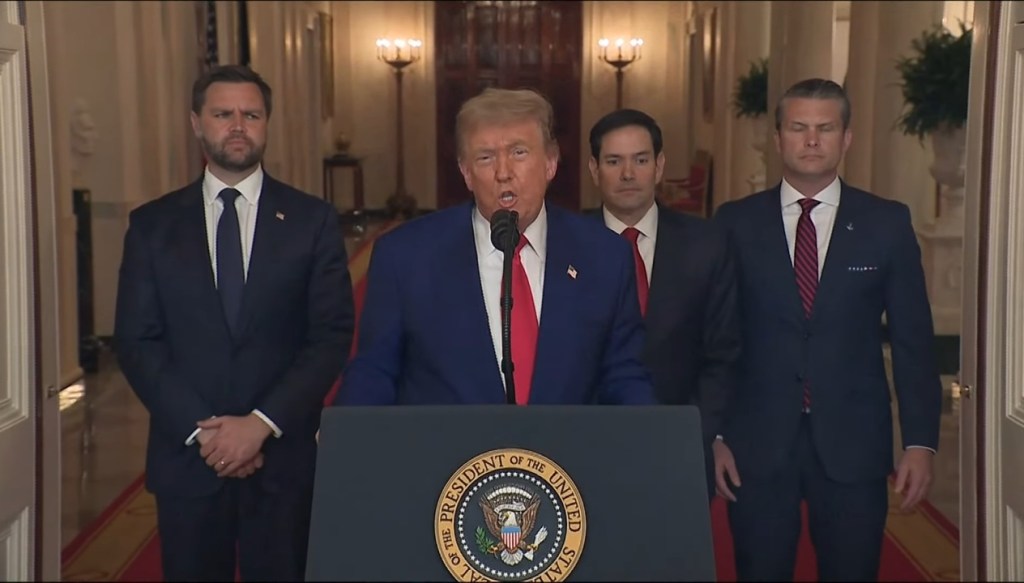
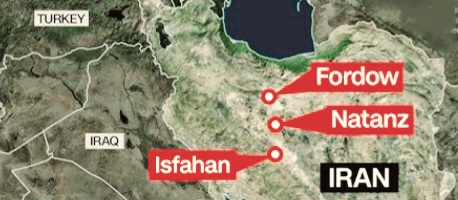
In an unprecedented escalation of hostilities in West Asia, the United States launched a surprise military operation just hours ago, striking three key Iranian nuclear facilities—Fordow, Natanz, and a site near Isfahan. The airstrikes were carried out using B-2 Spirit stealth bombers equipped with Massive Ordnance Penetrator bombs, complemented by Tomahawk cruise missiles launched from U.S. Navy submarines positioned in the Gulf. The coordinated strikes reportedly began around 2:30 a.m. local time in Iran. The US President Trump, in an early morning address from the White House, declared the mission a “spectacular military success,” claiming that Iran’s uranium enrichment infrastructure had been “completely and totally obliterated.” The president issued a stark warning, stating that further attacks would follow unless Iran agreed to what he described as “a path to peace.”
Iran’s Reaction: Vows of Retaliation
The Iranian government has condemned the U.S. strikes as a gross violation of international law and sovereignty. In a strongly worded statement, Tehran vowed “everlasting consequences” and declared that it reserves the right to use “all options” to defend its territory. Early reports indicate that at least one of the targeted facilities had begun partial evacuation ahead of the strikes, although independent verification of the damage inflicted remains unavailable at this hour. Iran’s Supreme Leader Ayatollah Ali Khamenei has reportedly convened an emergency session of the Iranian National Security Council to chart a response, even as military assets were placed on high alert across the country.
A Strategic Gamble: First Use of Massive Bunker-Busters
This military action marks a significant turning point in the regional conflict, being the first combat deployment of the 30,000-pound GBU-57 Massive Ordnance Penetrator—a weapon designed specifically to destroy deeply buried nuclear infrastructure. The strikes came in the wake of weeks of intensifying Israeli air raids on Iranian military positions and suspected weapons facilities. Sources confirm that Israel was alerted in advance of the U.S. mission, and Israel’s Prime Minister Netanyahu has welcomed the operation, describing it as a “historic moment” that demonstrates the strength of the U.S.-Israel alliance.
Political Repercussions at Home and Abroad
The strikes have triggered immediate political reverberations in Washington. While Republican leaders have hailed the operation as a decisive blow against nuclear proliferation, several Democrats and constitutional scholars have raised concerns about the legality of the action, citing the absence of prior congressional authorization. On the international front, UN Secretary-General António Guterres has issued a statement expressing deep concern over what he called a “dangerous escalation” that could destabilize the entire region. Oil markets have already reacted sharply, with crude prices spiking amid fears of disruptions in the Gulf and possible closure of the Strait of Hormuz.
What Lies Ahead
The world now watches anxiously for Iran’s next move. Analysts warn of a broad spectrum of retaliatory options ranging from missile strikes on U.S. military bases in the Gulf, cyber attacks, maritime disruption, or the activation of proxy forces across the region. Diplomats are urging immediate de-escalation, but with military assets now on hair-trigger alert on all sides, the situation remains volatile and unpredictable. Calls are growing in Washington for Congress to convene and assert its authority under the War Powers Resolution, as the risk of a wider regional war looms large.
