

A Reflection on Father’s Day
Uday Kumar Varma

Father’s Day is not an Indian tradition, yet it’s quiet arrival each June has begun to find a place in our consciousness. Perhaps its popularity owes something to commercial enthusiasm, but behind the greeting cards and curated gifts lies an occasion—a pause in the stream of days—to honour the men who once walked before us, the men we became, and the ones still emerging in our children.
“Behind the greeting cards and curated gifts lies an occasion—a pause in the stream of days—to honour the men who once walked before us, the men we became, and the ones still emerging in our children.”
For me, it is a triadic reflection. I remember my father with reverence, I look at my own journey with humility, and I now watch my sons with a mixture of pride and wonder, as they begin to fashion their own vocabularies of fatherhood. Between these generations lies not only the passing of time but the slow and silent shaping of values, the evolution of presence, and the enduring grammar of love.
Babuji’s Legacy
I have spoken before of my father, whom we called Babuji. He left us forty-five years ago, but not a day passes without some invocation of his name, some echo of his words, or some moment illuminated by his memory. Time, that great dimmer of detail, has only sharpened the luminescence of his character.
“His was a life that asked for nothing, and gave everything.”
He was a man of extraordinary grace and quiet power—stoic, humble, yet unwavering in his responsibilities. He belonged to a generation that expressed love not in flourishes or phrases, but in sacrifice, in self-denial, in the relentless carrying of burdens so that others might walk more lightly. His was a life that asked for nothing, and gave everything.
What remains of him is not only memory, but legacy. If I were to summarise his approach and philosophy, I would say that intellect, integrity, and industry were the three cardinal virtues he lived by—and sought to instil in us, without sermon or insistence. They were not values he named, but values he enacted—quietly, ceaselessly, firmly.
“Perhaps his greatest gift to us was not comfort, but compass.”
We never spoke of these things as children. But now, across the distance of years, I see that he was laying the foundation of a family ethos—where merit must rise from effort, where truth must guide all conduct, and where the mind must never cease to question, strive, and grow. Perhaps his greatest gift to us was not comfort, but compass.
To honour such a man is not to merely remember him, but to continue what he began. We must collectively strive to make his unspelt dream a reality, his unspoken vision a living tradition. This is not only the truest tribute, but the only way to redeem our quiet and lifelong debt to him.
The Mirror and the Shadow
To examine one’s own journey as a father is not easy. It is like holding a mirror in flickering light—some contours appear clear, others are cloaked in shadow. I did not inherit my father’s stoicism in full, nor his near-sacred patience. I faltered where he stood firm, questioned where he quietly endured.
Fatherhood, in my time, came with different complexities. The world was noisier, faster, and children no longer sat at your feet—they stood beside you, sometimes even ahead of you, challenging and demanding a new kind of presence. I tried to be there. Sometimes I succeeded, sometimes I fell short.
If I am to be remembered as even a flickering reflection of my father—his dedication, his decency, his depth—I will have earned more than I deserve.
“We struggle, often, to balance affection with authority, proximity with principle.”
I will not shy away from saying that today’s fathers, myself included, sometimes suffer from the erosion of patience. The distractions are many, the expectations endless, and the silence that once bound generations is now replaced with a restlessness of proving and performing. We struggle, often, to balance affection with authority, proximity with principle. In this ceaseless juggle, something of the old serenity has been lost.
The Sons Who Become Fathers
And now, I watch with quiet joy as my two sons step into the challenging arena of fatherhood. I see in them not only the future, but a return of something long familiar. In their late-night worries, in their fierce protectiveness, in the softness with which they hold their children—I glimpse again the arc of inheritance.
“Their challenge is not only to provide or protect, but to preserve the innocence of childhood in a world where attention is currency and silence is rare.”
But their test is unlike ours. The enemy they face is not hunger or hardship, but hyperconnectivity—an overabundance of screens, information, distractions. Childhood today is shaped not just by home or school, but by the unfiltered flood of social media, the addictive lure of the virtual world.
This is their mountain. Their challenge is not only to provide or protect, but to preserve the innocence of childhood in a world where attention is currency and silence is rare. I can only urge them to be vigilant, to create boundaries where algorithms trespass, and to reclaim space for wonder, slowness, and face-to-face affection.
It is too early to know what kind of fathers they will finally become. That verdict belongs to their children. But already, there are flickers of the same care, the same concern, the same anxious love. And I find myself wondering: has the spirit of Babuji, passed through me, found its way into them?
“If so, then the river flows unbroken.”
A Bond Beyond Time
What, then, does Father’s Day mean to me?
It is not just a celebration. It is a meditation. It is a moment to bow inwardly to the men who made us, and to understand that fatherhood is not a role—it is a way of being. It changes shape with time, but its soul remains unchanged. It is love in action, responsibility in silence, and belief without condition.
“From Babuji to me, and from me to my sons, the passage of fatherhood is not a straight line but a spiral—each generation learning anew, but always rooted in the same essential soil.”
If I have failed at times, faltered in moments, I hope I have still kept alive the essence: intellect, integrity, industry—the three silent pillars on which my father built not just a life, but a lineage. And I do hope my sons carry this legacy in the fullest measure.
In the end, to be a father is to be a custodian of hope—planting trees whose shade we may never sit under, trusting that one day, our children will carry forward what we could only begin.
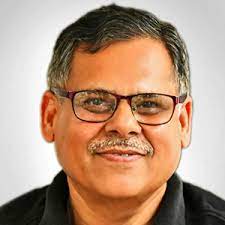
Uday Kumar Varma, a 1976 batch IAS officer of Madhya Pradesh cadre, was Secretary Information & Broadcasting, member of the Central Administrative Tribunal (CAT) and member of the Broadcasting Content Complaints Council, a self-regulatory body for general entertainment channels. As Secretary I&B, he spearheaded the nationwide digitisation programme.
