
ThisisNews Network
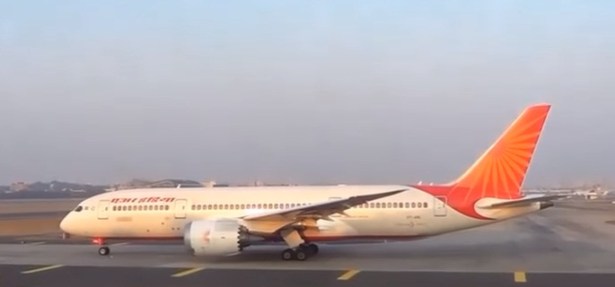
Ahmedabad: In a catastrophic aviation disaster that has shocked the world, Air India’s Boeing 787-8 Dreamliner operating as Flight AI 171 from Ahmedabad to London Gatwick crashed shortly after takeoff. Earlier it was reported that there are no survivors but later it was gathered that there was a lone survivor in seat 11A. The incident marks the first fatal crash of a Boeing 787 Dreamliner since the aircraft entered commercial service in 2011.
While rescue operations continue and grief engulfs the nation, questions swirl around the cause of the crash. The fact that the experienced captain reportedly issued a sudden Mayday call moments before the aircraft went down has raised serious concerns. Whether this was a case of catastrophic engine failure, electrical failure, a technical systems collapse, bird hit, or an act of deliberate sabotage, only a thorough and independent inquiry will uncover the truth. Investigators from India’s Aircraft Accident Investigation Bureau, alongside international experts, including those from the Bowing company, will now examine black box data, cockpit voice recordings, and aircraft maintenance logs to determine what exactly brought down a jet once hailed as the safest in the sky.
Tragedy Unfolds Seconds After Takeoff
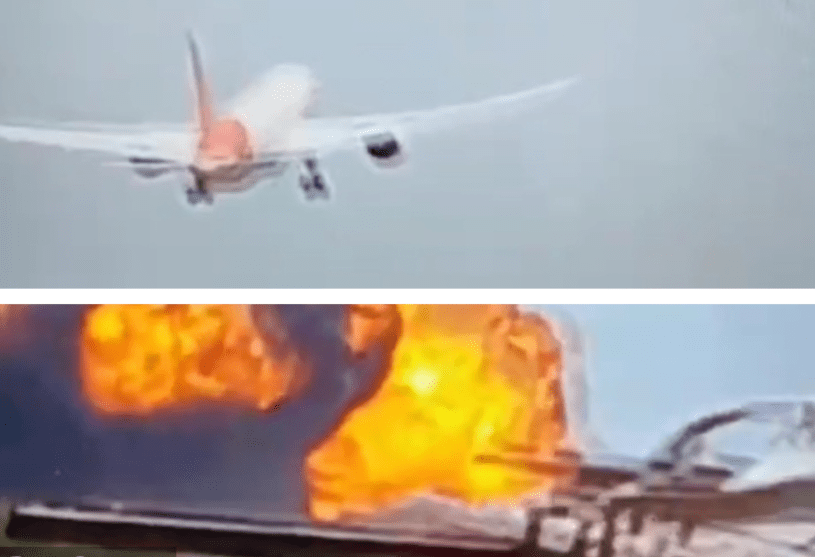
Flight AI 171 departed from Ahmedabad’s Sardar Vallabhbhai Patel International Airport at 1:38 PM local time. Within moments of takeoff, the aircraft climbed to an altitude of barely 825 feet before nosediving and exploding into a fireball in the densely populated Meghani Nagar area, just 4 kilometers from the runway.
Flight radar records confirmed a sharp altitude drop, and eyewitnesses reported seeing flames erupt from the engines moments before the aircraft disappeared behind buildings and plummeted into a residential structure.
Victims and Rescue Operations
The Dreamliner was carrying 242 people, including 230 passengers and 12 crew members. Among the dead are citizens of India, the UK, Portugal, and Canada. Former Gujarat Chief Minister Vijay Rupani was reportedly among the passengers, although his status remains unconfirmed.
Emergency responders rushed to the site, which is adjacent to a doctors’ hostel associated with B.J. Medical College. By late afternoon, more than 30 bodies had been recovered, with scores still unaccounted for. Search operations continued into the evening under the supervision of the National Disaster Response Force (NDRF) and state police.
Eyewitnesses and emergency responders have confirmed that the ill-fated Air India Dreamliner crashed into a densely populated section of Meghani Nagar, directly striking a multi-storey doctors’ hostel affiliated with B.J. Medical College. Initial rescue efforts indicate that several people on the ground were either killed or severely injured as the aircraft exploded upon impact, igniting a fire that engulfed the lower floors of the building and adjacent structures. While official figures are still awaited, authorities fear that the ground death toll could rise significantly, with multiple residents feared trapped under the debris. Local hospitals have been placed on high alert as casualties continue to be pulled from the rubble.
Chaos at the Airport
Air traffic at Ahmedabad airport was immediately suspended following the crash. Dozens of distraught relatives gathered at the terminal and hospital emergency wards, awaiting news of their loved ones. Air India officials set up crisis centers and activated emergency contact lines, while the Gujarat government deployed disaster relief teams and medical staff to assist.
Crew Experience and Aircraft Details
The aircraft involved, tail number VT-ANB, was part of Air India’s long-haul international fleet and had been in service since 2014. Captain Sumeet Sabharwal had logged over 8,200 hours of flight time, while First Officer Clive Kundar had around 1,100 hours.
The Dreamliner is often considered among the safest and most advanced aircraft in the world. This incident marks the first time a Boeing 787 has been involved in a fatal crash, shattering the aircraft’s pristine safety record.
Government and Global Reactions
Prime Minister Narendra Modi expressed deep sorrow over the tragedy, stating, “This is a dark day for India. My prayers are with the families of those who perished.” Civil Aviation Minister Kinjarapu Ram Mohan Naidu confirmed a high-level probe and assured that every agency would be mobilized to investigate the cause.
The UK Foreign Office activated its crisis response unit, as the flight was bound for London Gatwick. British Prime Minister Keir Starmer and Foreign Secretary David Lammy issued statements expressing grief and pledged all support to affected families.
Boeing Under Global Scrutiny
Boeing issued a brief statement acknowledging the incident and said it was cooperating with Indian aviation authorities. Global markets responded with concern, with Boeing stock plummeting more than 7% in pre-market trading.
Aviation analysts have already begun questioning whether mechanical failure, software anomalies, or crew misjudgment played a role. The Aircraft Accident Investigation Bureau of India (AAIB) will lead the formal investigation, in collaboration with experts from the U.S. National Transportation Safety Board (NTSB).
A Blow to the Dreamliner Legacy
Designed to be the future of long-haul flying, the Boeing 787 Dreamliner had, until today, an impeccable safety record. With over 1,000 units in service worldwide, it is a backbone of international fleets for many carriers. The crash of AI 171 has now marred that legacy and triggered fresh debate over pilot training, aircraft maintenance, and system redundancy.
The full impact of the AI 171 crash will unfold in the coming days. For now, the focus remains on rescue, identification, and delivering justice to the families devastated by one of the most tragic air disasters in Indian history—and the first ever involving a Dreamliner. The aviation world is watching, as investigators begin the daunting task of piecing together what went wrong aboard a plane that was never supposed to fail.
