
Lalit Shastri

When artificial intelligence echoes colonial lies and digital platforms become battlegrounds for ideological warfare, Bharat must strike back with facts, firepower, and civilizational pride.
A dangerous wave of misinformation is sweeping across digital platforms. Videos like the one recently circulated on YouTube, quoting “what Grok says,” peddle skewed historical narratives under the pretext of neutrality and fact. In reality, they are the latest weapons in an unrelenting cognitive war against Bharat’s cultural, historical, and civilizational identity.
Let us state it clearly: It’s not Grok’s fault. It only knows what exists out there in print. The problem is the content it has access to. And what exists out there is, unfortunately, heavily biased against Sanatana Dharma, against India’s real history, and against its immense contributions to mathematics, astronomy, medicine, philosophy, and consciousness studies. The “data”—books, papers, digital archives—are the legacy of colonial distortion, orientalist prejudice, and Western-centric gatekeeping.
Even the new content being generated on social media is not immune. It is being hijacked in real-time by troll farms, propaganda bots, and ideological mercenaries. TikTok and X are swarming with posts promoting how Chinese equipment and Pakistani forces supposedly outperformed India in the latest military standoff. These falsehoods are being magnified and fed back into the AI systems that now shape global opinion.
There are a lot of Pakistani, Chinese, Islamic fundamentalists, and Hinduphobics, including some Dalit extremists, Dravidian supremacists, and left-wing radicals deeply enconsed in educational and diverse institutions across the US and western countries, spreading hateful misinformation and civilizational slander. Alas, most major world media have been compromised—from The New York Times and The Washington Post to The Guardian and Wall Street Journal—repeating or amplifying these falsehoods under the guise of investigative journalism or academic neutrality.
India must act. And urgently.
The recent move to send an inter-party parliamentary delegation abroad is a positive step—but it is not enough. These delegations must do more than diplomacy. India must generate structured, authoritative content—in digital, textual, and video formats—that can be ingested by Grok and every other LLM. Only then will the next generation of AI be trained on balanced, Bharatiya perspectives.
Reclaiming Truth: What Ancient Indian History and Spiritual Knowledge Really Reveal
Amid this orchestrated distortion, here are unshakable facts that every Indian—and the world—must know:
1. Bhirrana: Civilization Beyond Recorded Time
Bhirrana in Haryana, excavated by the ASI, dates back to 8000 BCE, predating Harappa and Mohenjodaro by over 3,000 years. This disrupts the colonial construct of India being a “late bloomer” and establishes Bharat as one of the oldest continuous civilizations.
2. Indus Valley Was Profound
Advanced drainage, granaries, and city grids across sites like Dholavira and Rakhigarhi point to a decentralized yet highly developed civic model. Trade links, maritime prowess, and engineering marvels flourished, untouched by so-called Western influence.
3. Saraswati Civilization: Myth Turned Scientific Reality
Satellite imaging has confirmed the ancient Saraswati riverbed, supporting Rigvedic descriptions. Over 1,400 archaeological sites along its course reaffirm that India’s civilizational origins are indigenous and expansive.
4. Vedas: The Infinite Fountainhead of Knowledge
The Rigveda, humanity’s oldest scripture, pays homage to rivers, winds, fire, and mountains—the divine embodiment of nature. The Yajurveda elaborates on karma and ritual. The Samaveda celebrates musicality, performance, and memorization, while the Atharvaveda covers engineering, medicine, and architecture.
These Vedas weren’t read from books—they were memorized, debated, and transmitted orally through the Guru-Shishya parampara (teacher-student tradition), an unbroken lineage of intellectual and spiritual heritage.
5. From Oral Traditions to Stone and Leaf
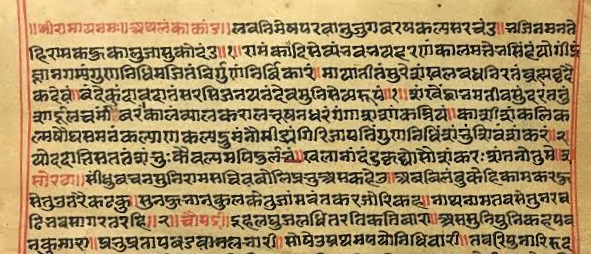
Before stone inscriptions became widespread, Indian sages documented knowledge on palm leaves, birch bark, and treated cloth. Architecture in early cities like Pataliputra was predominantly wood-based—leaving little for today’s archaeologists to recover, not due to lack of sophistication, but due to the natural perishability of these mediums.
Tragically, many treasures of knowledge were deliberately obliterated. The ancient universities of Takshashila and Nalanda, which once drew scholars from Greece to China, were systematically destroyed by Islamic invaders. Libraries that once held thousands of scrolls and manuscripts were set ablaze. This wasn’t incidental—it was a civilizational erasure by design.
Stone inscriptions, though often cited as historical anchors, came much later. Much of India’s early documentation was non-permanent, which is why the oral tradition, mnemonic techniques, and philosophical transmission through discourse became critical pillars of Sanatana Dharma.
6. From Upanishads to Quantum Thought
The Upanishads, born from Vedic inquiry, probe consciousness, the universe, and reality itself. Vedanta emerges as the pinnacle of this thought stream. Among its schools, Advaita Vedanta stands as a profound philosophy of non-dualism: that all is Brahman—the infinite.
This aligns astonishingly with modern quantum physics. Just as observers change the nature of observed reality, Maya describes how time-space coordinates influence perception. Reality, say the sages, is not what you see—it’s what lies beyond illusion.
7. Adi Shankaracharya: Countering Nihilism with Infinity
When Buddhism’s renunciation and concept of Nirvana (zero) destabilized social structure, Shankara restored balance. He declared Brahman, not Nothingness, as the ultimate. Society, not isolation, was the path to truth. And knowledge—not escape—was the weapon.
His revival of the Advaita tradition didn’t reject other beliefs; it elevated discourse. Today’s spiritual practitioners must return to that essence: teaching Vedanta not merely through rituals, but through rational, relatable articulation.
8. Advaita: The Hypothesis of Oneness
Vedanta—Veda + Anta (end or pinnacle)—is not a dogma. It’s a scientific hypothesis of consciousness, of Brahman, of Atman, and of Satchitananda: Being, Consciousness, and Bliss. It tells us: “I am the universe, and the universe resides within me.”
Maya (illusion) is not superstition; it is perspective bound by time and space. Karma is not fatalism; it is causality. Vedanta, in its truest form, is India’s gift to the intellectual and spiritual evolution of mankind.
AI Isn’t the Problem—Ignorance Is
Videos and AI summaries parroting lies about India’s past aren’t accidental—they’re algorithmic colonization. Most LLMs have been trained on texts from biased institutions, Hinduphobic scholars, and distorted interpretations that intentionally downplay India’s contribution to human civilization.
And the damage is real. Youth are consuming misinformation at scale. Global audiences are being misled. Even well-meaning truth-seekers fall prey to narratives shaped by those who never understood Bharat’s essence—or worse, those who fear its resurgence.
Time for Bharat to Fight Back
India must not sit quietly while its history is being mangled. We must mobilize:
- Create content: High-quality, referenced, accessible material rooted in Vedic and post-Vedic literature must flood the digital space.
- Engage LLM developers: Platforms like OpenAI and xAI must be pressed to diversify training data and include authoritative Indic sources.
- Deploy counter-narrative forces: On X, YouTube, Reddit—wherever misinformation festers, Bharat must rebut with truth.
- Revive knowledge systems: Vedic wisdom, Sanskrit texts, and indigenous philosophies must be reintroduced, reinterpreted, and reasserted in global academia.
- Support strategic policy: The Government of India must dedicate resources—human, financial, technological—to this digital dharmayudh. Creating content hubs, AI partnerships, and Indic knowledge databases should be national priorities.
Bharat Is Not a Footnote—It Is the Prologue
This is not merely a cultural war—it is cognitive warfare. If Bharat fails to assert her narrative, her children will learn their story from the mouths of enemies. That cannot be allowed.
Let it be known—India will no longer be defined by colonial hangovers, Western ignorance, or algorithmic error. We will define ourselves. With pride. With facts.
Jai Hind.
