

Lalit Shastri

At a time when the Indian Armed Forces have delivered one of the most successful anti-terror offensives in the history of modern warfare—decimating the operational backbone of Pakistan-based jihadi outfits—Congress leader Jairam Ramesh has chosen to play the role of a political saboteur.
In a stunningly insensitive and irresponsible statement, he remarked:
“These terrorists were involved in four attacks and are still roaming freely. Our MPs are roaming, and terrorists are also roaming.”
This is not satire. This is slander.
And it is categorically false.
Setting the Record Straight: Terrorists Are Not Roaming Free—They’re Dead
In Operation Sindoor, launched at dawn on May 7 in the wake of the Pahalgam massacre of April 22—where 26 unarmed men were executed by Pakistan-backed terrorists—India launched calibrated, surgical strikes across Pakistan and Pakistan-occupied Kashmir (PoK), targeting high-value terror camps, launch pads, and even 12 key Pakistani military airbases.
According to top government sources, the operation:
- Eliminated over 100 terrorists
- Injured more than 60 others
- Took down five top-rung commanders of proscribed groups like Lashkar-e-Taiba (LeT) and Jaish-e-Mohammed (JeM)
Those neutralized include:
- Mudassar Khadian Khas (Abu Jundal) – A senior LeT commander, buried in a Pakistani government school in a funeral attended by top Pakistan Army and Punjab Police officials.
- Hafiz Muhammad Jameel – Brother-in-law of JeM founder Maulana Masood Azhar, marking a severe blow to the family-run terror syndicate.
- Mohammad Yusuf Azhar – Also known as Ustad Ji and Mohd Salim, prime accused in the IC-814 hijacking.
- Khalid, aka Abu Akasha – LeT’s handler of J&K operations and arms routes from Afghanistan.
- Mohd Hassan Khan – Son of JeM commander Mufti Asghar Khan Kashmiri, and a key orchestrator of PoK-based strikes.
These were not fringe elements. They were the nerve centers of Pakistan’s cross-border jihadist campaign. They are not “roaming”—they have been eliminated.
Precision Strikes on Military-Backed Terror Infrastructure
India’s operation struck 12 Pakistani airbases, exposing how deeply embedded terrorism is within the Pakistani military ecosystem. These included:
- Nur Khan (Rawalpindi) – Near Islamabad, housing Pakistan’s strategic airlift and refueling aircraft.
- Murid (Chakwal) – Drone base believed to have launched missile attacks against India.
- Chunian (Punjab) – Pakistan Army aviation hub near Lahore.
- Rafiqui (Central Punjab) – Hosting four fighter squadrons, including JF-17s.
- Sukkur (Sindh) – Housing the 41 Tactical Wing, including F-16s, JF-17s, and Erieye early warning aircraft.
- Rahim Yar Khan (Southern Punjab) – Strategically placed to deploy assets across southern Pakistan.
These were not symbolic strikes. They were strategic disruptions—crippling the ability of Pakistan’s deep state to shelter terrorists with impunity.
India’s Diplomatic Blitz: MPs Carry the Nation’s Voice
While India was launching military retaliation, it also activated a global diplomatic campaign. Seven multi-party delegations were dispatched to 33 global capitals. Their mission: to expose Pakistan’s terror nexus, galvanize international pressure, and assert India’s sovereign right to self-defense.
These MPs did not “roam” aimlessly—they represented the voice of 1.4 billion Indians, bearing witness to the blood of innocents and the nation’s resolve to strike back.
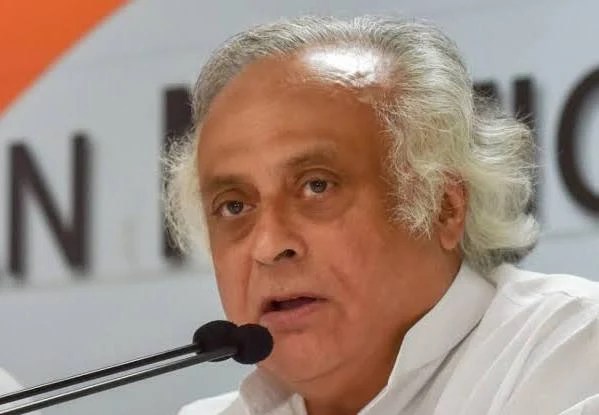
Jairam Ramesh’s derisive comparison between terrorists and Indian lawmakers is not just factually wrong—it is morally abhorrent and strategically damaging. His words echo the propaganda narratives of Pakistan. They undermine the sacrifices of our soldiers, and they belittle the diplomatic front India has opened with conviction and clarity.
Does Congress Endorse This Calumny?
The Congress party must answer: Does it endorse this comparison? Is this the official view of the principal opposition—that India’s elected MPs are morally equivalent to jihadi terrorists?
If not, then silence is cowardice. And delay is complicity.
India Has Spoken. Let No One in Delhi Try to Silence That Voice
India’s message to the world is clear: The era of restraint in the face of terror is over. Our response is no longer reactive—it is calibrated, comprehensive, and coordinated across military and diplomatic fronts.
Jairam Ramesh can choose his metaphors. But he cannot rewrite the facts. The terrorists are not roaming. Many of them are dead.
 This is News