

ThisisNews Network
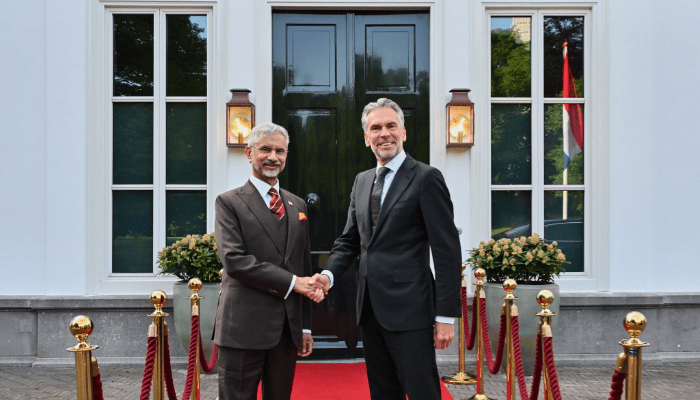
New Delhi/The Hague: India’s External Affairs Minister Dr. Subrahmanyam Jaishankar has categorically dismissed claims that the United States, or any other foreign power, mediated the recent suspension of fire between India and Pakistan. Speaking in a wide-ranging interview to Dutch broadcaster NOS, Jaishankar clarified that India unilaterally decided to pause Operation Sindoor following a direct ceasefire request from Pakistan’s military leadership.
“On May 10, the Pakistani Army sent us a message through the hotline that they were ready to stop firing. We agreed.”
— Dr. S. Jaishankar, Indian External Affairs Minister
Operation Sindoor, launched in response to a gruesome terrorist attack in Jammu & Kashmir on April 22, saw India launch a calibrated military retaliation that struck nine terror camps and eight Pakistani airbases, effectively neutralizing hostile capabilities across the border. Jaishankar described the campaign as a measured but firm assertion of India’s right to self-defense.
Not the U.S., Not Trump: India Called the Shots
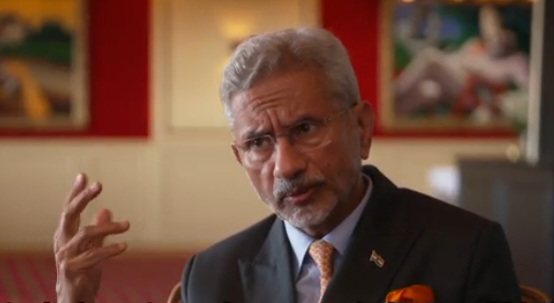
When asked about U.S. President Donald Trump’s public claim that he brokered the ceasefire and could solve the “1,000-year-old conflict,” Jaishankar was unequivocal.
“The Americans spoke with us, just as a few Gulf countries did. But we told everyone — if Pakistan wants to stop shooting, they need to say it to us.”
— Dr. S. Jaishankar
He acknowledged that U.S. Secretary of State Rubio and Vice President Vance were in communication with Indian and Pakistani officials, but made it clear that no foreign power orchestrated the ceasefire.
“The decision to stop hostilities was ours. We were not waiting for anyone’s permission or persuasion.”
— Dr. S. Jaishankar
Attack Designed to Destabilize Kashmir
Jaishankar opened the interview by recounting the April 22 terror attack that sparked the escalation. Twenty-six Indian tourists were murdered in cold blood in front of their families in Jammu and Kashmir. The perpetrators, affiliated with Lashkar-e-Taiba offshoot The Resistance Front, targeted civilians to sabotage the valley’s flourishing tourism economy and ignite communal discord.
“It was a barbaric attack, meant to destroy Kashmir’s main pillar of livelihood — tourism — and provoke religious division.”
— Dr. S. Jaishankar
India responded with precision strikes at terrorist hubs identified on the UN Sanctions Committee’s 1267 list. After four days of sustained shelling from both sides, the situation escalated to airbase attacks on May 10, when India crippled Pakistan’s aerial launch infrastructure.
“We struck airbases, runways, and command centers. That’s what forced the Pakistani military to request a ceasefire.”
— Dr. S. Jaishankar
A Ceasefire with a Message
While Pakistan’s call for a ceasefire prompted the pause in full-scale operations, Jaishankar stressed that Operation Sindoor is not over.
“We’re not firing now, but the operation continues. It carries a message: if terrorists strike, we will hit back — wherever they are.”
— Dr. S. Jaishankar
The India’s Foreign minister underscored that such clarity in response marks a doctrinal shift under the current administration. “Earlier governments may have hesitated, but our policy is firm: we will respond,” he said.
Bilateral Solution Only — No Third Party
Addressing Trump’s remarks offering to mediate the broader conflict, Jaishankar restated India’s longstanding stance: no third-party intervention in matters concerning Pakistan, especially on Kashmir.
“Kashmir is a part of India. The only discussion we’re open to is when Pakistan plans to vacate the territory it has illegally occupied since 1947.”
— Dr. S. Jaishankar
On whether Trump could play a role in negotiations, Jaishankar was candid: “This is something between us and the Pakistanis. No one else.”
Security and Economy: Two Sides of the Same Coin
When asked if such hostilities with Pakistan or rising tensions with China hinder India’s economic aspirations, Jaishankar offered a sharp counterpoint to Western assumptions.
“Defending your land is the first duty of any nation. Security and prosperity are not trade-offs — they’re interconnected.”
— Dr. S. Jaishankar
He emphasized that India’s resilience amid conflict is backed by solid fundamentals: a projected $4 trillion economy, robust infrastructure growth, and a youthful demography.
“Our economic progress is real. And it is not undermined by national security — it is protected by it.”
— Dr. S. Jaishankar
Dr. Jaishankar’s remarks reflect a confident, assertive India that is shaping its own geopolitical responses, free of dependency on foreign intermediaries. His articulation of a calibrated yet bold doctrine, rooted in self-determination and strategic autonomy, signals New Delhi’s emergence not just as a regional heavyweight — but a global power willing to set its own terms.
