

Lalit Shastri
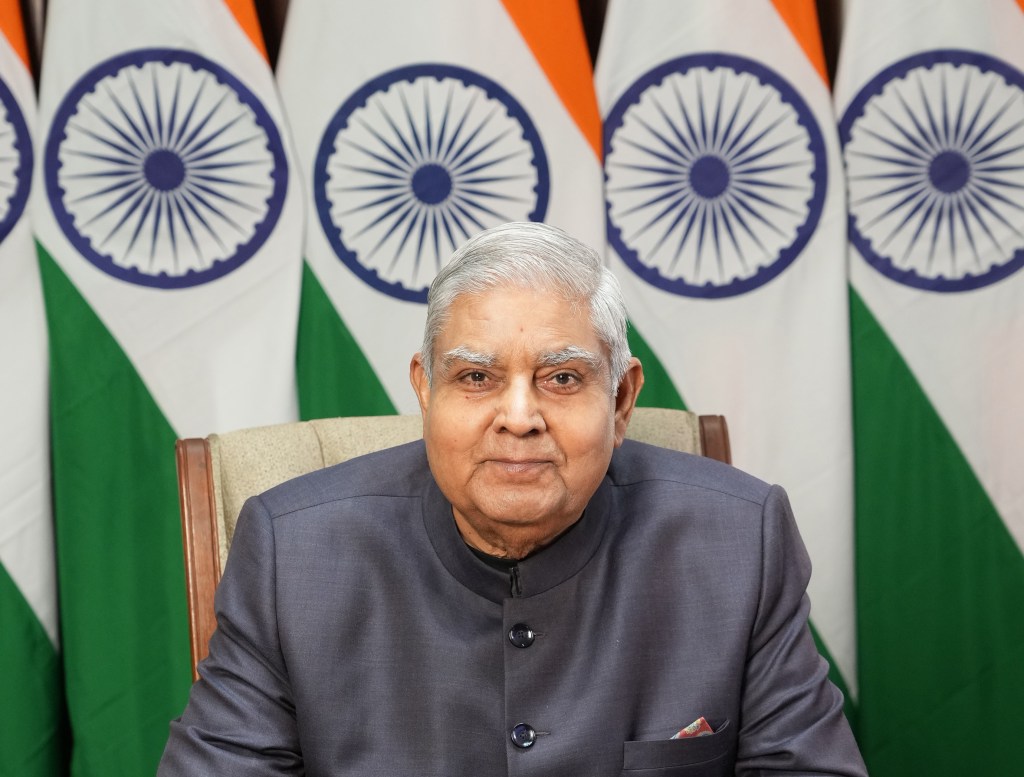
In a searing and unprecedented public statement, Vice President of India Jagdeep Dhankhar has ripped apart the veil of silence surrounding the Justice Yashwant Verma cash recovery scandal, questioning not just the sluggish pace of action but the deeply troubling double standards in the application of law in cases involving judges versus ordinary public servants.
When a public servant is caught with unexplained cash, he is immediately arrested, suspended, paraded in the media and subjected to criminal investigation.But when a High Court judge is found with charred bundles of currency notes at his Lutyens’ Delhi residence, he is not even named in an FIR — let alone arrested. This is not law. This is a mockery of justice. – Lalit Shastri
Vice President Dhankhar echoed this sentiment forcefully, calling attention to the fact that more than two months have passed since the incident on the night of March 14–15, when bundles of burnt currency were recovered from Justice Verma’s residence — and yet no FIR has been registered. “People are waiting with bated breath,” the Vice President said. “What is the money trail? What is its source? What was its purpose? Did it pollute the judicial system?”
K. Veeraswami Verdict a Judicial Legerdemain: VP
The Vice President did not mince words in calling for a complete overhaul of the legal shield provided to judges under the K. Veeraswami judgment (1991). Describing it as “judicial legerdemain,” he said the ruling had erected a “scaffolding of impunity,” neutralising accountability and making the higher judiciary a fortress beyond scrutiny. “It is time to revisit this judgment,” Dhankhar declared. “The rule of law is the very foundation of society — and there can be no room for exceptions.”
His statements, coming from the sitting Vice President and Chairman of the Rajya Sabha — and a former senior advocate and judge himself — are not just a rebuke but a clarion call. They point to the deep rot within the judicial accountability framework, where VIP judges are shielded from the very system they are sworn to uphold.
A Tale of Two Indias: One Law, Two Practices
In the Verma case, the Vice President laid bare the hypocrisy: “Everyone in the country is now thinking whether this will be washed off… how come the criminal justice system was not operationalised as it would have been for every other individual?”
This lays bare the two standards of justice India operates under today — one for judges and another for the common man. While public servants are thrown into the fire at the first spark of suspicion, judges remain cocooned in protocol, committees, and peer protection.
VP Questions Legality of the Three-Judge Inquiry Committee
Dhankhar went further, questioning the legal sanctity and constitutional validity of the three-judge committee constituted by the Supreme Court to probe the Verma matter. He stated bluntly that such a mechanism can only be constituted under a parliamentary procedure for removal of a judge — not through judicial “administrative evolution.”
The Vice President noted the irony: Chief Justices of two High Courts — already burdened with enormous judicial and administrative responsibilities — were pulled into an inquiry mechanism without constitutional authority and with no guarantee of consequence. He warned this comes at the cost of real justice and meaningful reform.
Protocol, Transparency, and Judicial Image
The Vice President also took a subtle yet significant swipe at how protocol is misused, even as accountability is evaded. “We must believe in protocol,” he said, referencing recent controversies over the absence of his official photographs in national events, adding with weight, “But protocol must never be used to shield wrongdoing.”
He commended the current Chief Justice of India for bringing some level of transparency, particularly by releasing visual evidence to the public in the Verma case. “That was a big step,” Dhankhar noted, saying it helped restore some faith in the system. Yet, he warned, “The entire nation was worried… how many such incidents may have taken place of which we are not even aware?”
Editorial
This Is a Test Case for Indian Democracy
This case is not just about one judge. It is about the principle of equality before the law.
It is about whether a nation of 1.4 billion can tolerate a justice system where some are above the law by virtue of their robes, while others are crushed by its weight at the first instance of suspicion.
Justice cannot be selective. It must be blind, impartial, and swift. If the judiciary claims to be the final custodian of constitutional morality, it cannot insulate its own from probe while demanding transparency from the rest of the system.
There is a growing sense across India — among lawyers, civil servants, journalists, and citizens — that justice itself is being mocked when judges are given time to “explain” but public servants are immediately arrested. The Vice President’s bold and clear-eyed statements reflect the voice of a democracy that is done being deferential to silence.
The truth must emerge — with speed, with scientific investigation, and without fear. And as the Vice President rightly said, “Truth alone will triumph.” Satyameva Jayate.
 This is News