Armed Forces act with “precision, precaution & compassion” to dismantle cross-border threat after Pahalgam massacre
New Delhi: In a decisive and calibrated counter-terror operation launched at dawn on 7 May, the Indian Armed Forces executed OPERATION SINDOOR, targeting terror infrastructure across the Line of Control in Pakistan-occupied Kashmir (PoK) and deep inside Pakistan. The action came in the wake of the brutal April 22 Pahalgam terror attack, which claimed the lives of 26 civilians, including a Nepali national, marking the deadliest terrorist incident in India since the 26/11 Mumbai attacks.
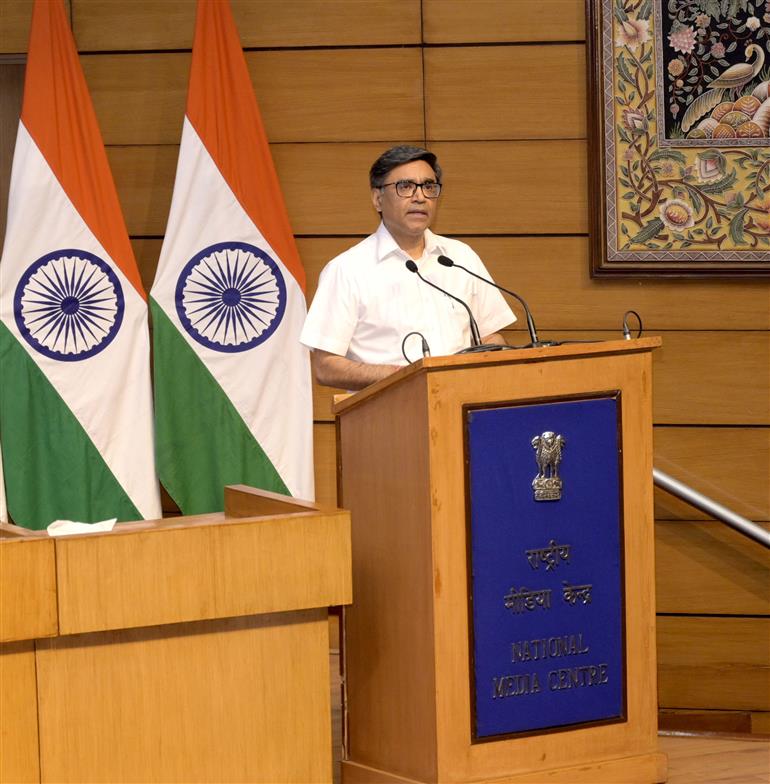
The Secretary, Ministry of External Affairs, Vikram Misri addressing the media on ‘Operation Sindoor’
Addressing a special press briefing in the national capital, Foreign Secretary Vikram Misri stated that the operation was a “measured, non-escalatory, and proportionate response aimed at pre-empting further cross-border attacks and dismantling terrorist infrastructure responsible for launching and sheltering Pakistani terror operatives”.
“The attack in Pahalgam was marked by extreme barbarity, with headshots delivered at close range in front of traumatized family members,” Misri said, describing the assault as an attempt to sabotage the return of normalcy and record tourism in Jammu & Kashmir, where over 23 million tourists visited in 2024.
The Foreign Secretary pointed to concrete intelligence and social media evidence linking the atrocity to Lashkar-e-Taiba (LeT), operating through its proxy, The Resistance Front (TRF)—a group India has flagged repeatedly to the UN Security Council’s 1267 Sanctions Committee. He also underscored Pakistan’s consistent denial, obfuscation, and failure to dismantle terror infrastructure or take any meaningful action against the perpetrators.
“Despite two weeks having passed since the massacre, there has been no demonstrable step from Pakistan to act. India was compelled to respond both to deter and to pre-empt,” Misri declared.
Colonel Sofiya Qureshi addressing the media on ‘Operation Sindoor’ at National Media Centre, in New Delhi on May 07, 2025
Joining the briefing, Colonel Sofia Qureshi and Wing Commander Vyomika Singh provided operational details, though specifics remained classified. Their presence signaled the strategic coordination between India’s ground and air strike capabilities, underscoring the precision nature of the operation.
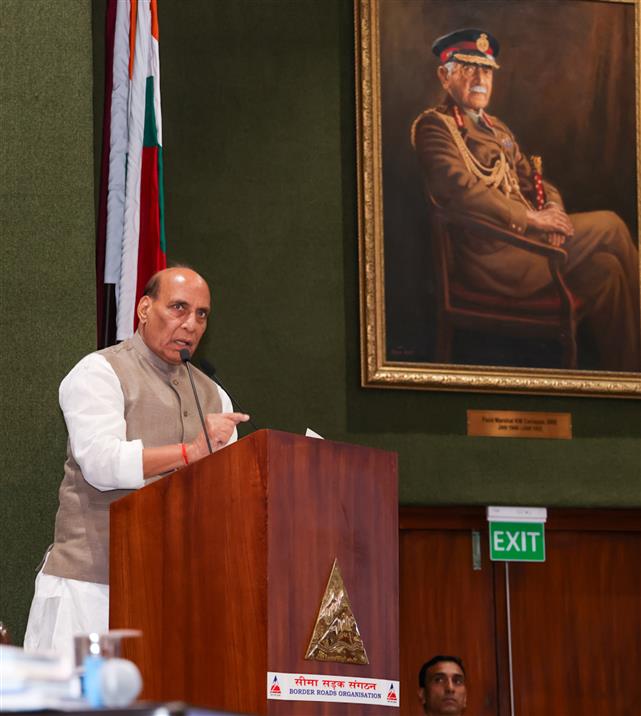
The Union Minister for Defence, Rajnath Singh addressing at the BRO Raising Day
Later in the day, Defence Minister Rajnath Singh, speaking at the 66th Raising Day of the Border Roads Organisation at the Manekshaw Centre, lauded the Armed Forces for executing Operation Sindoor with “precision, precaution, and compassion.”
“As per the plan, the targets were neutralized without harming civilian populations. Our Armed Forces have scripted history by giving a befitting reply, as warranted under our sovereign right to self-defence,” the Defence Minister affirmed.
Singh made it clear that the operation was conducted under the firm leadership of Prime Minister Narendra Modi, reflecting India’s evolving security doctrine that reserves the right to act unilaterally and decisively when the safety of its citizens is at stake.
International Context and UN Mandate
The Indian response also aligns with the April 25 UN Security Council press statement, which emphasized the global consensus on holding “perpetrators, organisers, financiers and sponsors of terrorist acts accountable.” India’s action, officials stressed, is not an escalation but a legitimate exercise of self-defence under international law.
India’s intelligence agencies have reportedly gathered irrefutable evidence of cross-border linkages in the Pahalgam attack, including real-time communication between terrorists and handlers in Pakistan, as well as dissemination of claims via known LeT-affiliated social media handles.
A Clear Message
The name “Operation Sindoor”—symbolic of sacred crimson mark worn by married Hindu women—was carefully chosen to reflect India’s unyielding support to all the women tourists who lost their husbands in the Pahalgam terrorist attack and the resolve to protect the citizens and the nation’s territorial integrity.
As the world watches, India’s decisive strike under Operation Sindoor marks a strategic and symbolic shift in its counter-terrorism posture: one that is not only reactive, but pre-emptive and resolute.
The Pahalgam terror attack on April 22, 2025, was a brutal and targeted massacre executed by Pakistan-based Lashkar-e-Taiba terrorists, operating under the proxy banner of The Resistance Front (TRF). In a chilling display of religiously motivated violence, the attackers reportedly identified victims based on their faith, asking them to recite the Kalma—an Islamic declaration of faith—and those who failed were shot point-blank, many in front of their families. A total of 26 civilians, including a Nepali national, were killed in this barbaric assault. Survivors recalled being forced to watch loved ones perish, with the terrorists ordering them to “carry the message back.” Designed to provoke communal discord and sabotage the return of normalcy and tourism in Jammu & Kashmir, the attack stands as one of the most heinous acts of religiously targeted terrorism in India since 26/11.



 This is News