

BOOK REVIEW | The Road Less Travelled by Rajeev Uberoi
Exclusive for This is News Network
By Lalit Shastri

Rajeev Uberoi’s The Road Less Travelled is more than a family memoir—it is a vivid canvas painted with memory, struggle, and legacy. This richly textured narrative is an ode to generations of the Uberoi family whose lives quietly intersected with some of the most defining moments of India’s modern history. Through its deeply personal lens, the memoir speaks not just to one lineage, but to the broader story of a nation in motion.
At the heart of this book is the figure of, the author’s great-grandfather, whose role in India’s Freedom Movement lends the memoir both historical gravitas and emotional resonance. Uberoi resurrects these moments with exceptional clarity, offering readers a portrait of not just one man’s courage but the collective spirit of resistance that pulsed through India’s struggle for independence.
One of the book’s most striking achievements lies in its ability to humanize history. The freedom fighters who populate its pages are not distant, idealized heroes—they are living, breathing individuals. They emerge from the narrative shaped by conviction, sacrifice, and emotion, their stories rooted in personal choices and the broader tide of change.
Uberoi’s literary craftsmanship is evident throughout. His prose is polished yet accessible, his narrative voice gentle but assured. Each chapter unfolds like a chamber in an ancestral home—filled with stories, voices, and the scent of memory. As he writes in one evocative passage from the book:
As I sat in the ancestral home, the scent of old wood and memories enveloped me. Each creak of the floorboards whispered tales of generations past, and the faded photographs on the walls seemed to watch over me, guardians of stories waiting to be retold.
This immersive style is one of the book’s defining features. Uberoi’s ability to blend personal recollection with archival material—photographs, letters, and oral accounts—creates a narrative that feels intimate yet expansive. He does not romanticize or sanitize the past; instead, he presents his family’s story with an honesty that is both refreshing and courageous. The joys, the heartbreaks, the silences, and the triumphs all find space in this account.
The memoir’s power is further underscored by reflections from within the Uberoi family itself. One particularly heartfelt tribute, written by a younger relative, captures the pride and emotion the book evokes:
Each chapter unfolds like a carefully preserved family photograph… What struck me most was the raw honesty of the narrative. Our family’s story isn’t presented as a polished, perfect tale, but as a real, breathing history of human experiences.
Indeed, The Road Less Travelled is a living document. It navigates not just India’s colonial past, but the immigrant experience, cultural identity, and the fragile thread that ties generations together. It explores how memory is inherited, and how stories passed down in whispers can shape a person’s sense of self and place.
The narrative’s emotional core is balanced by historical insight. For readers unfamiliar with India’s independence movement, Uberoi offers just enough context to orient and engage without burdening the prose with exposition. The book flows effortlessly across time and geography, showing how the family adapted to shifting social, political, and cultural landscapes—yet never lost sight of its roots.
While some readers might long for more detail on individuals mentioned only briefly, this editorial restraint serves the memoir’s coherence. It focuses on key moments and characters, allowing the story to breathe and resonate deeply.
Ultimately, The Road Less Travelled is an act of preservation. In telling his family’s story, Rajeev Uberoi has not only chronicled a lineage but carved out a meaningful space in the landscape of Indian historical memoirs. His work stands alongside those rare narratives that make history feel personal, and the personal feel timeless.
For readers interested in intergenerational sagas, Indian history, or the quiet heroism embedded in everyday lives, this memoir offers a rewarding, reflective journey. In taking the road less travelled through his own ancestry, Uberoi invites us to pause and consider the paths that brought us here—and the stories we carry forward.
This is not just a book. It is a legacy. And in these pages, it lives on.
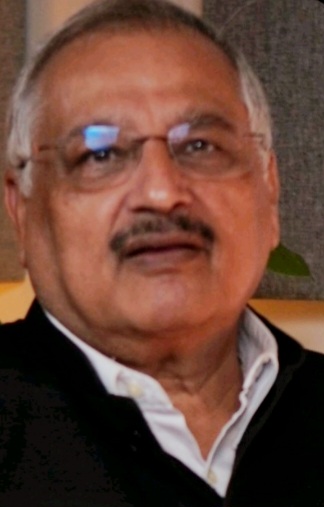
Rajeev Uberoi, the author, is a seasoned General Counsel with a proven track record in the banking sector. He brings deep expertise in financial risk, corporate finance, risk management, banking operations, and strategic management
 This is News