
Lalit Shastri

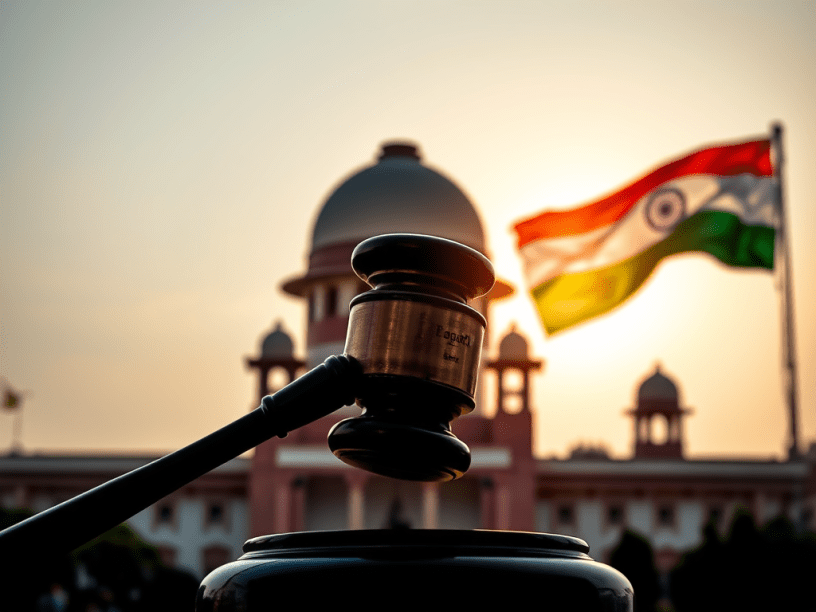
While the judiciary interprets the Constitution, the President embodies and protects its sovereignty. The Supreme Court’s recent directive may set a concerning precedent by encroaching upon the sovereign authority of the Head of State.
Can the Supreme Court Direct the President? A Constitutional Debate
Can the Supreme Court of India, under Article 141, issue directions to the President of India? This critical question has gained traction following a recent judgment where the apex court suggested a timeframe for presidential assent on bills. While this may seem like a procedural improvement, it raises a profound constitutional concern: Can the judiciary instruct the Head of State—who stands above Parliament, Executive, and Judiciary?
Interpretor vs. Protector: Understanding the Constitutional Hierarchy
Article 141 affirms that “the law declared by the Supreme Court shall be binding on all courts within the territory of India.” This establishes the Court’s interpretative supremacy.
The Supreme Court is the interpreter—but the President is the protector of the Constitution, and stands supreme over all institutions.
The President is not a subordinate authority. He is the sovereign protector of the Republic, symbolic of the Constitution itself. His authority, while exercised on ministerial advice, is not subject to judicial directives.
Article 74: Advice, Not Instruction
Article 74(1) mandates that the President shall act in accordance with the advice of the Council of Ministers. The 42nd Amendment made this binding, but with a constitutional safeguard—the President can return the advice once for reconsideration.
However, no constitutional provision empowers the Supreme Court to direct the President in the discharge of his functions, especially when Article 361 grants the President immunity from judicial proceedings while in office.
Judiciary’s Recent Directive: A Constitutional Fault Line
In prescribing that the President should act on state bills within three months, the Supreme Court stepped into uncharted territory. This directive, however well-intentioned, blurs the lines between interpretation and instruction.
“The Constitution does not envisage a scenario where the judiciary may issue instructions to the Head of State.”
This raises the question: Can procedural urgency override the foundational principle of institutional independence?
S.R. Bommai Case: A Nuanced Precedent
In S.R. Bommai v. Union of India (1994), the Court clarified it could examine the material basis of ministerial advice, not the advice itself. It did not claim authority to issue directions to the President.
“Article 74(2) and Article 361 were designed to shield the President from judicial scrutiny—not expose him to judicial command.”
Vice President’s Warning: Safeguarding Separation of Powers
Vice President Jagdeep Dhankhar has cautioned against judicial overreach. He reaffirmed that the judiciary cannot act as master of the Constitution. It may interpret the law, but cannot direct the President, who is the ultimate constitutional authority.
Constitutional Boundaries Must Be Respected
India’s constitutional architecture rests on a delicate balance. The Supreme Court may interpret the Constitution, but it cannot become an authority over the President, who embodies the will and conscience of the Republic.
“The President is not a subordinate of Parliament, the Executive, or the Judiciary—he is the sovereign protector of the Constitution.”
To maintain institutional integrity, each organ must respect its limits. The judiciary must not issue directives that reduce the President’s office to an executive rubber stamp. In the constitutional chain of command, the President remains first among equals, beyond instruction, above reproach.
