

Lalit Shastri
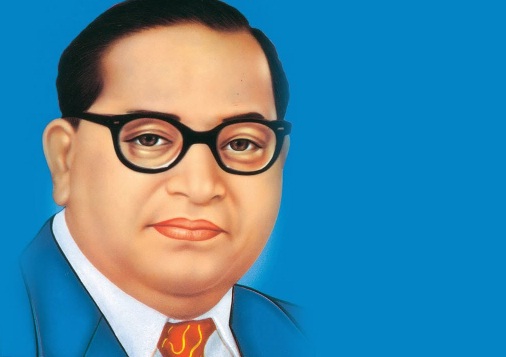
Dr. Bhimrao Ambedkar is widely remembered as the “Father of the Indian Constitution.” This title, while symbolic, reflects the pivotal role he played as Chairman of the Drafting Committee, where his legal intellect, clarity, and vision helped translate the Constituent Assembly’s deliberations into a comprehensive document. It’s also a tribute to his lifelong commitment to social justice and the upliftment of the oppressed.
Ambedkar Jayanti Special
Yet, to truly honour Ambedkar’s legacy, we must go beyond symbolic remembrance and examine how his ideas have played out in practice—especially the constitutional safeguards he championed for Scheduled Castes, Scheduled Tribes, and later Other Backward Classes, in the form of reservations.
Ambedkar’s advocacy of reservations was rooted in his belief that historical injustice must be acknowledged and corrected—but not indefinitely. He was clear that reservations were meant as a temporary support system, not a permanent entitlement. However, political reality in post-independence India has taken a different course.
Driven by electoral compulsions, successive governments have expanded and prolonged the quota system, making it a permanent feature of India’s socio-political landscape. Today, reservation-based appeasement politics dominates, with no political party willing to address the issue for fear of alienating vote banks.
This has led to growing unrest among meritorious individuals from the general category, who face reduced opportunities in government jobs and higher education despite strong qualifications. At the same time, we are witnessing a growing brain drain, as bright students from prestigious institutions like IITs and AIIMS choose to pursue their futures abroad, where merit-based systems prevail.
Far from fostering a casteless society, the prolonged implementation of caste-based reservations has only deepened social divisions. The need for a national conversation around a restructured, time-bound affirmative action framework is urgent—one that ensures genuine upliftment without institutionalising exclusion or mediocrity.
Ambedkar gave India a Constitution rooted in justice, liberty, equality, and fraternity. But if we continue to ignore his warnings against permanent reservations, we risk weakening the very spirit of the Constitution. His legacy deserves not just celebration, but introspection—and the courage to course-correct.
Why is Dr. Ambedkar Called the Father of the Indian Constitution?
The drafting of the Indian Constitution was indeed a collaborative effort, involving intense debates, multiple committees, and global inspirations. The Constituent Assembly comprised some of the finest minds of the time—lawyers, freedom fighters, economists, and administrators. These included Jawaharlal Nehru, Sardar Vallabhbhai Patel, Alladi Krishnaswami Ayyar, K.M. Munshi, Rajendra Prasad, and many others. The Constitution draws heavily from the Government of India Act, 1935, and the constitutions of the US, UK, Ireland, Australia, and Canada.
However, Dr. B.R. Ambedkar is widely acknowledged as the “Father of the Indian Constitution” for the following reasons:
Chairman of the Drafting Committee
Dr. Ambedkar was appointed the Chairman of the Drafting Committee on 29 August 1947, a position that entrusted him with the most crucial technical responsibility—converting the ideas and principles agreed upon by the Constituent Assembly into legal and constitutional language. This role was both complex and foundational.
Exceptional Legal and Scholarly Contribution
Ambedkar was a legal scholar of international repute, educated at Columbia University and the London School of Economics. His deep knowledge of law, governance, economics, and social justice enabled him to synthesize diverse influences into a coherent, progressive, and inclusive document.
Mastery Over Deliberations and Debates
While the Constituent Assembly debated every article, it was Ambedkar who frequently defended and clarified the intent behind various provisions, showcasing remarkable oratory, clarity, and constitutional vision. His speeches, especially during the adoption of the Constitution, are seminal in their scope and moral force.
Symbol of Social Inclusion
Ambedkar’s role also carried immense symbolic significance. As a representative of the most marginalized sections of Indian society, his leadership symbolized the inclusive vision of the Constitution—a document that sought to abolish untouchability, guarantee equality, and secure justice for all.
Ambedkar’s Own Acknowledgment of Collective Effort
To his credit, Dr. Ambedkar himself never claimed sole authorship. In his speech on 25 November 1949, he stated:
“I am quite prepared to say that I shall be the first person to burn it out. I do not want it. It does not suit anybody.”
He acknowledged that the Constitution was a product of compromise, adaptation, and collective will, not the creation of a single individual.
A Title of Honor
Calling Dr. Ambedkar the “Father of the Constitution” is not a denial of the collective genius of the Constituent Assembly. It is a recognition of his pivotal role in drafting, structuring, defending, and refining the final document. It honors his legal brilliance, social conscience, and the indelible imprint he left on the Indian Republic’s foundation.
If the Constitution is a house of Indian democracy, Ambedkar was its chief architect, even if many others designed the rooms, laid the bricks, and furnished the vision.
