

ThisisNews Network
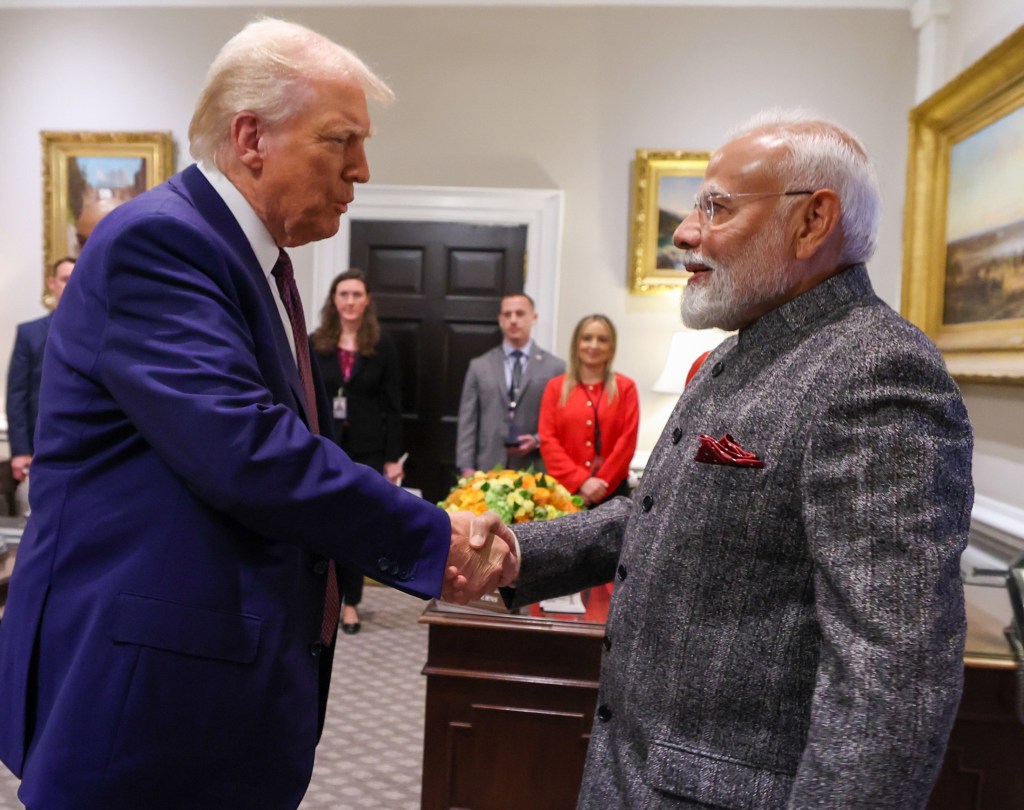
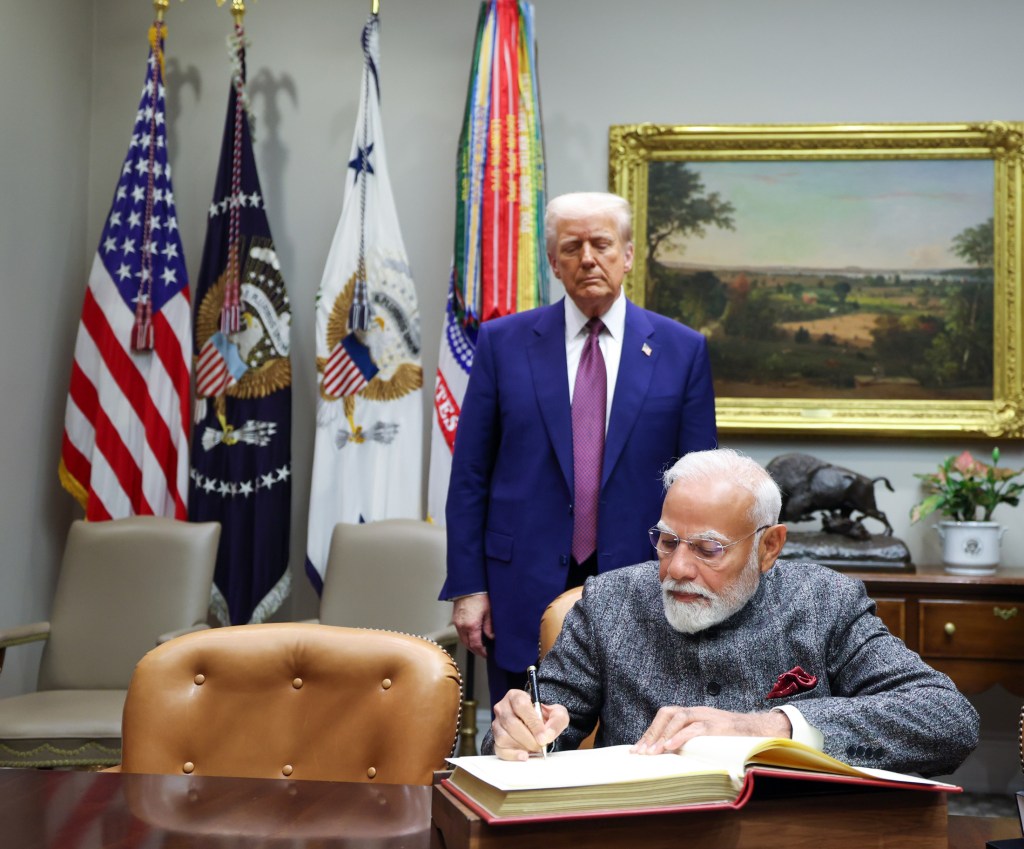
Washington, D.C: In a significant development, U.S. President Donald J. Trump hosted Indian Prime Minister Narendra Modi for an official working visit on February 13, 2025. The two leaders unveiled the “U.S.-India COMPACT (Catalyzing Opportunities for Military Partnership, Accelerated Commerce & Technology) for the 21st Century,” aiming to drive transformative change across key areas of cooperation.
Defense Collaboration
Emphasizing the deepening strategic ties, both nations plan to sign a new ten-year Framework for the U.S.-India Major Defense Partnership within this year. This framework will focus on joint development, co-production, and technology transfer, enhancing defense interoperability. Notably, the U.S. will expand defense sales and co-production with India, including procurements of “Javelin” Anti-Tank Guided Missiles and “Stryker” Infantry Combat Vehicles. Additionally, both countries will review arms transfer regulations to streamline defense trade and technology exchange.
In a notable development, President Trump announced plans to increase military sales to India, including the potential provision of F-35 stealth fighter jets. This points to a deepening of defense ties between the two nations. The acquisition process for such an advanced aircraft may take many years to finalise.
Economic and Trade Initiatives
Aiming to bolster economic ties, the leaders set an ambitious goal to double bilateral trade to $500 billion by 2030, termed “Mission 500.” Negotiations for a mutually beneficial Bilateral Trade Agreement are expected to conclude by fall 2025. Both nations have committed to reducing trade barriers, enhancing market access, and deepening supply chain integration. Recent measures include India’s reduction of tariffs on select U.S. products and increased market access for American agricultural goods.
Energy Security and Technological Cooperation
Recognizing the importance of energy security, both countries reaffirmed their commitment to the U.S.-India Energy Security Partnership, focusing on oil, gas, and civil nuclear energy. Collaborative efforts will also target emerging technologies such as Artificial Intelligence, semiconductors, quantum computing, and biotechnology. The launch of the “INDUS Innovation” initiative aims to foster industry and academic partnerships in these sectors.
Space Exploration and Multilateral Engagements
The partnership in space exploration is set to advance with the upcoming launch of the “NISAR” satellite, a collaborative project between ISRO and NASA. Both leaders emphasized the importance of multilateral cooperation, particularly in the Indo-Pacific region, and plan to enhance engagements through platforms like the Quad. Upcoming initiatives include joint military exercises and infrastructure investments in the Indian Ocean Region.
Counterterrorism and People-to-People Ties
Reaffirming their commitment to combat terrorism, the U.S. has approved the extradition of Tahawwur Rana to India, addressing the 2008 Mumbai attacks. To strengthen people-to-people connections, India will open new consulates in Los Angeles and Boston, and has invited American educational institutions to establish offshore campuses in India.
Prime Minister Modi expressed gratitude for President Trump’s hospitality and extended an invitation for a visit to India, highlighting the enduring partnership between the two democracies.
 This is News