
Uday Kumar Varma
‘Flat’, ‘without Substance’ and ‘a budget from a government on its way out’ are some of the epithets that greeted the Interim budget presented earlier in the day. Clearly, these were voiced by the critics, not from the economist community, but largely from the opposition parties. And yet, if the budget had incorporated any major policy initiative, the same opposition may have trooped to Election Commission next door in trenchant protest.
An Exercise In Constraint
Given the constraints of an interim budget, which is essentially to seek a vote on account to largely meet the financial commitment of the government, an interim budget is considerably constrained. The one presented today clearly carried the imprints of this constraint. There were no policy announcement, no major concessions, no reliefs or assistance to any sector, not even to the massive middle class that constitute India’s largest vote bank and opinion maker.
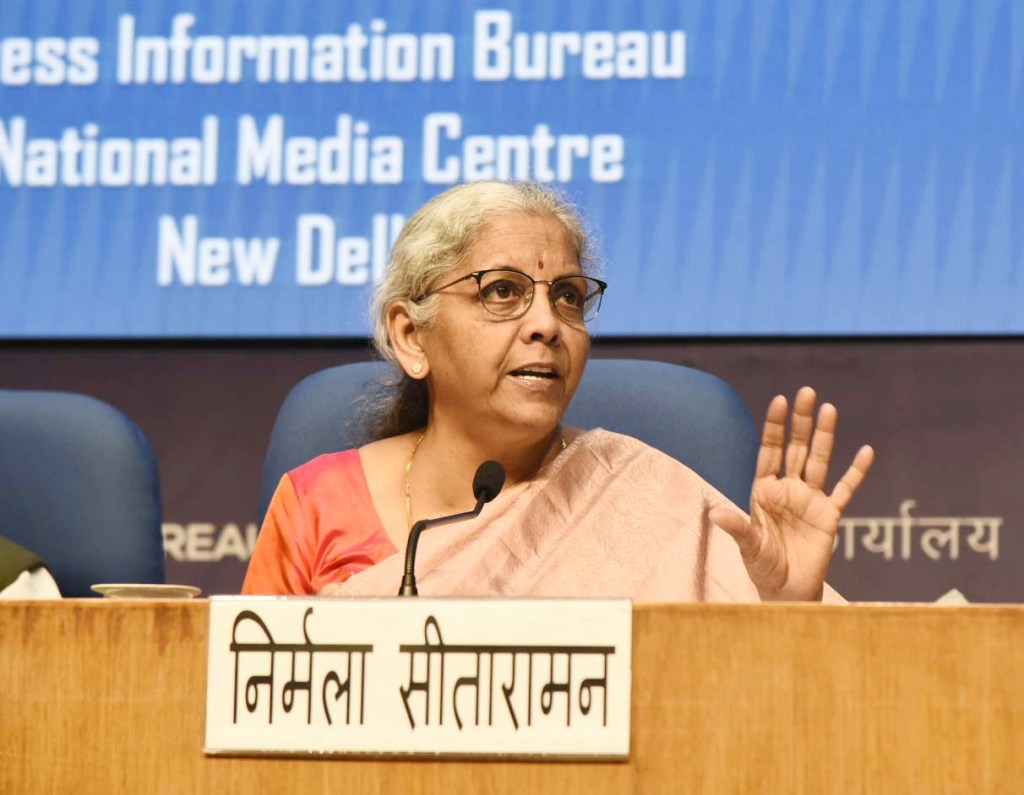
But, what the budget did not spell out explicitly, Finance Minister did far more eloquently in her cleverly and thoughtfully crafted speech. It reasonably convinced the listeners of the considerable stride that Indian economy has taken in these last ten years because of Government’s policies. Backed by statistics that made sense, and expanding on the intent of the government to do when it is back in power, the speech was a triumph of quiet confidence and a resolute determination.
This year, the customary ‘Economic Survey’ was substituted by a more modest report titled ‘Indian Economy–A Review’ on India’s journey for the past 10 years. The report exuded both pride and promise. It talked about accomplishments and projected a $5 trillion economy in next three years and a $7 trillion economy by 2030.
Notwithstanding the constraints of an interim budget, FM’s speech was strong indication of not only continuing economic growth but further consolidation and acceleration of this process. All statistics given by her on inter alia, growth rate, fiscal deficit, revenue receipts, tax collections, infrastructure investment, social sector spending wore a firm stamp of a government whose vision and priorities are clear.
A Green Initiative
Among the few significant announcements made in the speech the one on providing roof top solar panels to one crore household was clearly path -breaking. It will serve multiple purposes, the least of all additional power generation. By getting power up to 300 units free of cost, the surplus generated would convert to an additional income of Rs 12,000-Rs 15,000 to individual households. Its environmental spin offs would be considerable. The opportunities of employment will be immense, from manufacturing of solar panels, to their installation, and maintenance. And these jobs may not need a long gestation period. But the best aspect of this novel initiative will be that it becomes an effective counter to the prevailing political malaise of offering freebees that gains them votes but costs the tax payer so dearly.
For many people and above all, the media looks forward to tweaking of tax rates with disproportionate anticipation and excitement. Predictably, the FM had maintained the prevailing tax rates, a decision completely in accordance with the convention, propriety and the dignity of the circumstances. Yet, deftly she also introduced a relief for tax payers whose tax liability remains disputed. Likely to benefit about one crore tax payers, the tax authorities’ imposition of income tax up to Rs 25,000 till the period 2009-2010 and up to 10,000 for the period 2013-14 shall be written off the records. This measure may not appear to be a major one, but the range of its coverage is enormous and not likely to miss wide appreciation.
Several announcements concerning Start-Ups are again not only desirable but very welcome. India ranking third in Innovation in the world, needs to harness this strength purposefully and urgently.
The New Castes
But perhaps the most significant and enduring aspect of the budget speech was to view and envision the progress of the nation in terms of a new matrix of the pernicious caste dynamics in the country. That we need to consider only four castes in the country namely, the poor, the youth, the women, and the farmers, that prime Minister Modi ceaselessly and relentlessly reminds us, is a revolutionary way of looking at the prevailing social structure of the country. It is a paradigm that may in one stroke resolve endless contradictions. In economic terms, it offers a framework and a model that is not only visionary and epoch-changing but one that will integrate and unite this country as never before.
An Assertion of Confidence and Commitment
The interim budget, on the balance, comes out as a firm and confident posturing of a government, brimming with a determination and commitment to usher the country at the apex of global order, both economically and politically. Many, who don’t understand the intricacies and imperatives of budget making exercise, may feel somewhat disappointed as this is a budget devoid of any sops, but the spirit of this budget is going to resoundingly echo all-around.
This budget, thus, is an eloquent statement of a quiet strength and an unflinching commitment. It is a signal and a message to its countrymen that Government knows what is best for the country.
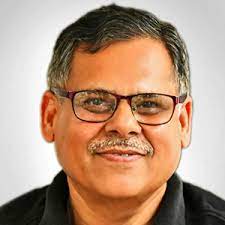
Uday Kumar Varma, a 1976 batch IAS officer of Madhya Pradesh cadre, was Secretary Information & Broadcasting, member of the Central Administrative Tribunal (CAT) and member of the Broadcasting Content Complaints Council, a self-regulatory body for general entertainment channels. As Secretary I&B, he spearheaded the nationwide digitisation programme.
