
Uday Kumar Varma
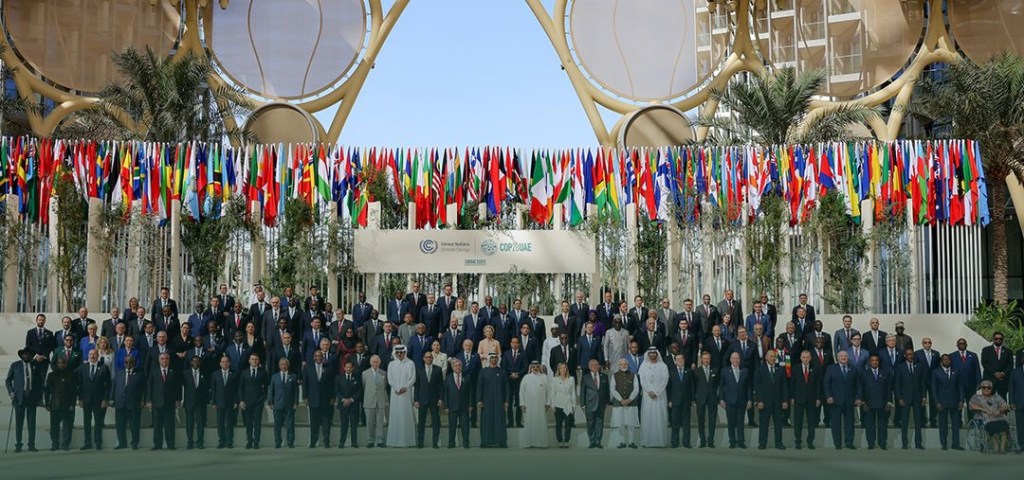
As the Dubai sky bathed in the morning light on December 13th, the curtains fell on COP28, marking a significant yet nuanced chapter in the global pursuit of environmental sustainability. Against the backdrop of a world grappling with diverse challenges, the conference ended with a mix of hope, caution, and of course the stark and often disappointing reality of geopolitical complexities.

Historic Strides or Faint Echoes?
The concluding moments of COP28 saw the approval of a pivotal agreement, signalling a transition away from fossil fuels. The objective was clear – achieving net-zero greenhouse gas emissions globally by 2050. This decision, the most significant outcome of the Conference, referred to as a global stocktake, emerged after intense deliberations and a night of fervent negotiations. President Sultan al-Jaber characterized it as a plan propelled by science, describing it as an enhanced, balanced, and historic package to expedite climate action.
Yet, despite the optimism, the agreement’s language on fossil fuels fell short of the expectations of many. Rather than endorsing a phased-out approach, as advocated by over 100 nations, the agreement called for a more measured “transitioning away from fossil fuels in energy systems, in a just, orderly and equitable manner, accelerating action in this critical decade.”
The Alliance of Small Island States as also many other countries expressed dissatisfaction, deeming the text incremental rather than transformational and pointing out perceived loopholes. This discontent highlighted the deep divides within the global community on environmental priorities.
A Beacon in the Darkness: Loss and Damage Fund
Amidst the complexities, COP28’s outset offered a glimmer of hope. Diplomats from nearly 200 countries came together to approve a plan for a ‘loss and damage’ fund, a demand championed by developing nations for over three decades. This fund, currently backed by pledges totalling $549 million, aims to provide assistance to vulnerable countries grappling with the aftermath of climate-related disasters.
The contributions to the fund vary, with the UAE and Germany leading the way with $100 million each. The UK and Japan pledged $75 million and $10 million, respectively. However, the U.S. commitment of $17.5 million drew disappointment, considering its status as the largest economy and the considerable impact it has had on climate change.
UNFCCC Reports: A Call for Urgent Action
The prelude to COP28 featured crucial reports from the UNFCCC Secretariat on Nationally Determined Contributions (NDCs) and long-term low-emission development strategies (LT-LEDS) under the Paris Agreement. These reports, instrumental in shaping discussions at COP28, underscored the pressing need for accelerated global efforts to alter the trajectory of emissions.
The analysis of NDCs revealed a projection that emissions in 2030 would be 2% below 2019 levels. However, the absence of a rapid downward trend raised concerns. The peaking of emissions before 2030 was deemed contingent on implementing the conditional elements of NDCs, which in turn depended on enhanced financial resources, technology transfer, and capacity-building support.
The second report focused on LT-LEDS, incorporating submissions from 75 parties representing a substantial portion of the world’s GDP, population, and greenhouse gas emissions. Despite many nations targeting net-zero emissions, uncertainties, and a deferral of critical actions to the future were evident.
COP28: A Confluence of Challenges
Even before the conference commenced, doubts lingered regarding its potential outcomes. The shadow of terrorist attacks across the globe, driven by groups prioritizing hatred and violence over environmental concerns, cast a pall over the event. The Middle East crisis, the Hamas-Israel conflict, and the Russo-Ukraine war further overshadowed COP28, diverting global attention and impacting the intensity of discussions in Dubai.
In this challenging context, COP28 faced a formidable and fractious task. The global stage was set, and the expectations were high, but the hurdles were numerous.
India’s Impact: From a 12-Year-Old’s Activism to Prime Ministerial Commitments
India played a noteworthy role at COP28, capturing attention on multiple fronts. The dramatic entrance of Licypriya Kangujam, a 12-year-old climate justice activist from India, onto the COP28 stage sent ripples through the conference. Holding a sign that read “End fossil fuels. Save our planet and our future,” Kangujam’s brief appearance electrified the atmosphere, symbolizing the urgency felt by the younger generation.
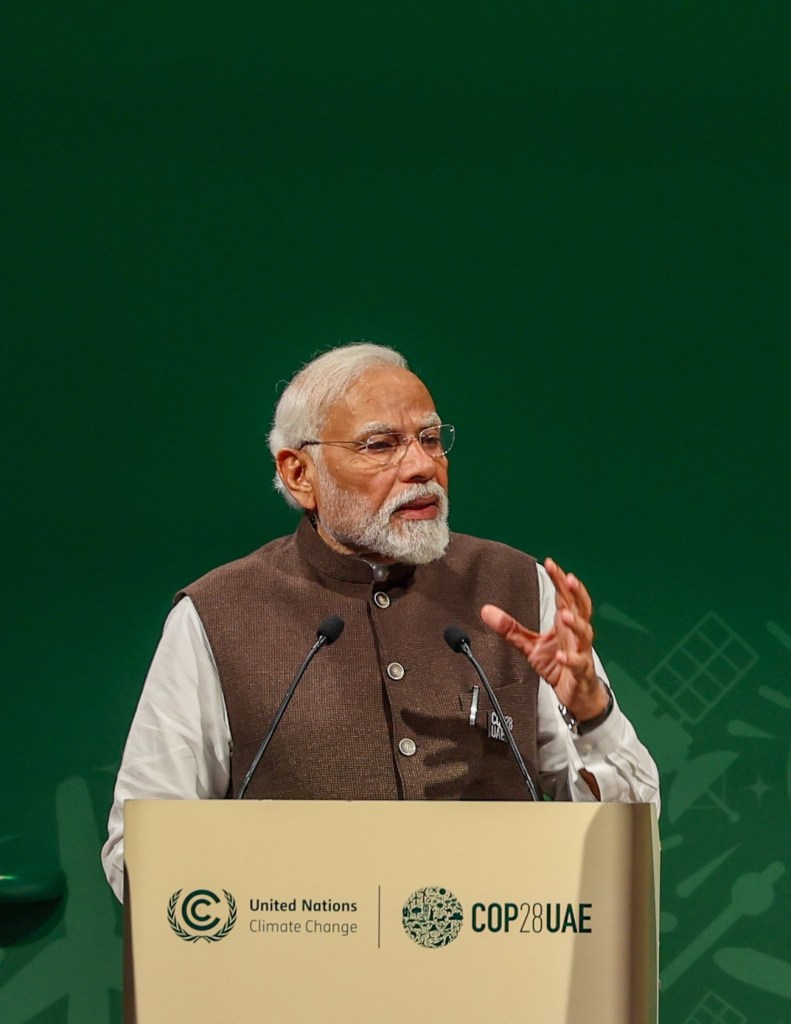
Prime Minister Narendra Modi’s presence at the conference underscored India’s commitment to environmental issues. In his address on December 1st, Modi proposed hosting COP33 in India in 2028, emphasizing India’s role in shaping global climate discourse. The launch of LeadIT 2.0, focusing on inclusive industry transition, showcased India’s proactive stance in the pursuit of sustainable practices.
Addressing a session on Transforming Climate Finance, Modi urged developed countries to significantly reduce carbon footprint intensity by 2050. Environment Minister Bhupendra Yadav echoed these sentiments, emphasizing equity and climate justice as foundational principles for global climate action. He outlined India’s contributions, including initiatives like the International Solar Alliance, Coalition for Disaster Resilient Infrastructure, and the Global Biofuel Alliance.
Terrorism: An Uncharted Territory in Environmental Discourse
COP28 unfolded against the grim backdrop of global terrorism, with the Middle East crisis, the Hamas-Israel conflict, and the Russo-Ukraine war dominating headlines. While terrorism has traditionally been excluded from environmental discussions, there is a growing recognition of its indirect impact on sustainability.
Several arguments elucidate the links between terrorism and environmental threats, ranging from resource diversion due to counterterrorism efforts to the economic impact of terrorism diverting attention from green technologies. The need for acknowledging terrorism’s role in impeding environmental progress deserves both urgency and seriousness, considering its implications for global stability and cooperation.
An Honest Assessment: Unfinished Business
In a letter preceding COP28, the incoming UAE Presidency had outlined four paradigm shifts: fast-tracking the energy transition, transforming climate finance, prioritizing nature and people in climate action, and aiming for the most inclusive COP ever. As the conference concludes, an honest assessment reveals limited progress in the first three shifts, with the fourth remaining largely aspirational.
And yet, as one participating minister aptly observed, ‘There is an acknowledgement of the elephant in the room’, this by itself is a great progress. The reaffirmation of environmental ambitions, while facing deferral in the face of present complexities, does stand out as a reassuring signal of collective intent.
COP28, with all its complexities and challenges, becomes a pivotal chapter in the ongoing narrative of global environmental commitments. As the world grapples with evolving crises and shifting geopolitical dynamics, the quest for sustainability continues, framed by the echoes of COP28 and the challenges that lie ahead.

The author, Uday Kumar Varma, a 1976 batch IAS officer of Madhya Pradesh cadre, was Secretary Information & Broadcasting, member of the Central Administrative Tribunal (CAT) and member of the Broadcasting Content Complaints Council, a self-regulatory body for general entertainment channels. As Secretary I&B, he spearheaded the nationwide digitisation programme.
